• HOME
  • NEWS
  • EXPLORE
    • CAREER
      • Companies
      • Jobs
    • EVENTS
    • iGEM
      • News
      • Team
    • PHOTOS
    • VIDEO
    • WIKI
  • BLOG
  • COMMUNITY
    • FACEBOOK
    • INSTAGRAM
    • TWITTER
Wednesday, October 21, 2026
BIOENGINEER.ORG
No Result
View All Result
  • Login
  • HOME
  • NEWS
  • EXPLORE
    • CAREER
      • Companies
      • Jobs
        • Lecturer
        • PhD Studentship
        • Postdoc
        • Research Assistant
    • EVENTS
    • iGEM
      • News
      • Team
    • PHOTOS
    • VIDEO
    • WIKI
  • BLOG
  • COMMUNITY
    • FACEBOOK
    • INSTAGRAM
    • TWITTER
No Result
View All Result
Bioengineer.org
No Result
View All Result
Home NEWS Science News Cancer

GFPT1 silencing curbs aggressive esophageal cancer cell behavior through ER stress

by
October 21, 2026
in Cancer
Reading Time: 2 mins read
0
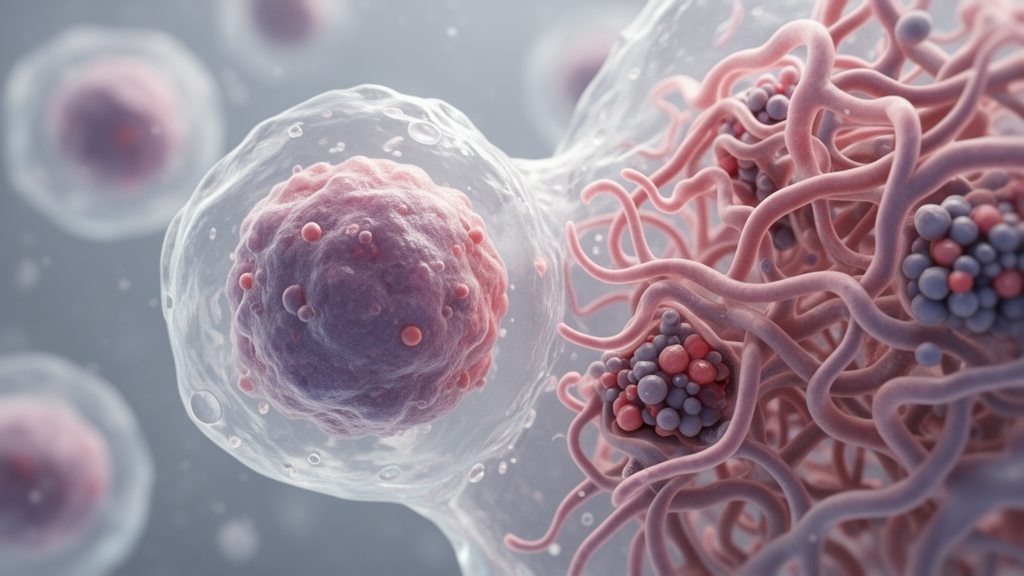
GFPT1 silencing curbs aggressive esophageal cancer cell behavior through ER stress

GFPT1 silencing curbs aggressive esophageal cancer cell behavior through ER stress

Share on FacebookShare on TwitterShare on LinkedinShare on RedditShare on Telegram

Reducing GFPT1 weakened proliferation, migration and invasion in esophageal cancer cells while increasing apoptosis, according to a preclinical study published in Medical Oncology. The researchers combined analysis of public datasets, tissue-based expression measurements and cell experiments, finding that GFPT1 depletion also increased markers associated with endoplasmic reticulum stress and autophagy. A rescue experiment indicated that ER stress contributed at least partly to the changes in cell behavior.

The study focused on GFPT1, identified in the paper as the rate-limiting enzyme of the hexosamine biosynthesis pathway. Investigators assessed GFPT1 expression in esophageal cancer tissues using public datasets, western blotting and immunohistochemistry, and found that it was highly expressed. They then established GFPT1-silenced cells with small interfering RNA and compared their behavior with controls in laboratory assays designed to measure proliferation, migration, invasion and apoptosis.

CCK-8 and colony-formation assays indicated reduced proliferation in GFPT1-silenced cells. Wound-healing and Transwell assays showed reduced migration and invasion, while flow cytometry indicated increased apoptosis. These observations came from manipulated cultured cells rather than patients, and the study does not establish that GFPT1 silencing would prevent tumor progression or improve survival in people with esophageal cancer.

Mechanistic testing produced changes in several ER-stress markers after GFPT1 depletion: GRP78, GRP94, phosphorylated PERK and phosphorylated eIF2α levels increased. Autophagy-related marker changes also occurred, including a higher LC3-II/LC3-I ratio, increased ATG5 and ATG7, and reduced p62. LC3 immunofluorescence and western blotting were used to examine these markers, while overall O-GlcNAcylation was also measured by western blot and found to be reduced after GFPT1 depletion.

The researchers then treated GFPT1-knockdown cells with 4-PBA, an ER-stress inhibitor, in a rescue experiment. The treatment significantly reversed the knockdown-associated suppression of proliferation, migration and invasion and restored changes in ER-stress markers. This supports a causal contribution from the ER-stress pathway to the observed cellular phenotypes. The autophagy-marker results accompanied these effects, but the supplied findings do not show whether the changes represent increased autophagic flux or altered marker abundance alone, nor do they establish that excessive autophagy was the mechanism. Overall, the study provides mechanistic evidence from cells and tissue-expression data, with no reported clinical testing of GFPT1 inhibition or evidence of safety, efficacy or achievable dosing in patients.

Subject of Research: Preclinical analysis of GFPT1, ER stress and autophagy-related changes in esophageal cancer cells.

Article Title: GFPT1 drives esophageal cancer progression by inhibiting ER stress-mediated excessive autophagy

Article References: Zhu, J., Niu, S., Li, X., & Tian, L. (2026). GFPT1 drives esophageal cancer progression by inhibiting ER stress-mediated excessive autophagy. Medical Oncology, 43(11), Article 351. https://doi.org/10.1007/s12032-026-03476-3

Image Credits: AI Generated

DOI: 10.1007/s12032-026-03476-3

Keywords: GFPT1, esophageal cancer, endoplasmic reticulum stress, autophagy markers, O-GlcNAcylation, cell proliferation, cell migration, cell invasion, apoptosis, cancer cell models, drives, esophageal

News Source: Nathaniel Bowman. (October 21, 2026). GFPT1 silencing curbs aggressive esophageal cancer cell behavior through ER stress. Scienmag.


Tags: Apoptosisautophagy markerscancer cell modelscell invasioncell migrationCell proliferationdrivesendoplasmic reticulum stressesophagealEsophageal CancerGFPT1O-GlcNAcylation
Share12Tweet7Share2ShareShareShare1

Related Posts

Long weekend sleep associated with prostate cancer death in prospective cohort

Long weekend sleep associated with prostate cancer death in prospective cohort

October 21, 2026
NO2 linked to higher lung cancer risk in cohort studies outside Europe

NO2 linked to higher lung cancer risk in cohort studies outside Europe

October 21, 2026

Review links ncRNA signaling to macrophage states in colorectal cancer

October 21, 2026

Artificial intelligence for symptom assessment and patient-reported outcomes in neuro-oncology

October 21, 2026

POPULAR NEWS

  • Campus butterflies and spiders show stable diversity across an urbanization gradient

    Campus butterflies and spiders show stable diversity across an urbanization gradient

    29 shares
    Share 12 Tweet 7
  • Scoping review maps invasive bacterial infections and colonic tumors regionally

    29 shares
    Share 12 Tweet 7
  • GFPT1 silencing curbs aggressive esophageal cancer cell behavior through ER stress

    29 shares
    Share 12 Tweet 7
  • Diet Linked to Skin Cancer Prevention After Solid Organ Transplant

    29 shares
    Share 12 Tweet 7

About

We bring you the latest biotechnology news from best research centers and universities around the world. Check our website.

Follow us

Recent News

Campus butterflies and spiders show stable diversity across an urbanization gradient

Scoping review maps invasive bacterial infections and colonic tumors regionally

GFPT1 silencing curbs aggressive esophageal cancer cell behavior through ER stress

Subscribe to Blog via Email

Enter your email address to subscribe to this blog and receive notifications of new posts by email.

Join 85 other subscribers
  • Contact Us

Bioengineer.org © Copyright 2023 All Rights Reserved.

Welcome Back!

Login to your account below

Forgotten Password?

Retrieve your password

Please enter your username or email address to reset your password.

Log In
No Result
View All Result
  • Homepages
    • Home Page 1
    • Home Page 2
  • News
  • National
  • Business
  • Health
  • Lifestyle
  • Science

Bioengineer.org © Copyright 2023 All Rights Reserved.