Solid organ transplant recipients face an exceptionally high risk of skin cancer, and a review of current evidence suggests that dietary patterns rich in plants and omega-3 fatty acids may help reduce that risk, although transplant-specific trials remain limited and inconsistent. The perspective, published in Frontiers in Transplantation, assessed evidence from clinical studies, observational cohorts and laboratory models concerning diet, nutritional supplements and cutaneous chemoprevention in kidney, liver, lung and other transplant recipients. The authors describe diet as a potentially low-risk adjunct, not a replacement for established measures such as photoprotection, skin surveillance and pharmacologic prevention.
The heightened risk arises from the biological conflict created by lifelong immunosuppression. Immunosuppressive drugs protect transplanted organs but impair immune surveillance, DNA repair and the elimination of abnormal skin cells. Solid organ transplant recipients have approximately 10 times the risk of basal cell carcinoma, 65 to 250 times the risk of squamous cell carcinoma and three times the risk of melanoma compared with the general population, according to the review.
About half are expected to develop at least one skin cancer during their lifetime. These cancers can grow quickly, recur more often and metastasize more readily, making additional prevention strategies a continuing clinical need. Ultraviolet radiation is a major driver of this disease because it damages cellular DNA, generates reactive oxygen species and alters signaling pathways involved in proliferation, inflammation and programmed cell death.
UV exposure also suppresses local immune responses by increasing anti-inflammatory interleukin-10, reducing cytokines such as interleukin-12, tumor necrosis factor alpha and interferon-gamma, and impairing the activity and migration of epidermal Langerhans cells. Immunosuppressive medicines add further stress: calcineurin inhibitors can reduce repair of UV-induced DNA damage, inhibit apoptosis and promote angiogenic signaling, while azathioprine can amplify UV absorption through accumulation of 6-thioguanine in DNA. Oxidative stress, defective repair and weakened immunity therefore converge in the development of cutaneous malignancies.
Diet may influence these processes through compounds involved in redox balance, inflammatory signaling and cellular repair. The most coherent signals in transplant-specific research concern omega-3 polyunsaturated fatty acids, including eicosapentaenoic acid and docosahexaenoic acid, found in fatty fish and supplements, as well as alpha-linolenic acid from plant sources. Omega-3 fatty acids can generate anti-inflammatory eicosanoids such as resolvins and protectins.
They also compete with omega-6-derived arachidonic acid for cyclooxygenase enzymes, potentially reducing production of prostaglandin E-2, which can promote cutaneous tumors. In a cohort of 449 kidney and liver transplant recipients, high long-chain omega-3 intake was associated with lower squamous cell carcinoma risk, while high alpha-linolenic acid intake was associated with lower basal cell carcinoma incidence. Observational results in the review indicated that recipients with high long-chain omega-3 intake had an adjusted 60% lower risk of basal cell carcinoma, while regular high intake of omega-3 polyunsaturated fatty acids was associated with an adjusted 67% reduction in squamous cell carcinoma risk.
These estimates do not establish causation because dietary exposure was measured observationally and confounding remains possible. More direct evidence came from a small pilot randomized trial in 49 lung transplant recipients: participants receiving an omega-3 supplement four times daily had fewer skin cancers than those assigned olive oil, but the difference did not reach statistical significance. Mouse studies also found lower incidence and longer latency for UVB-induced skin cancer among animals fed fish-oil-rich diets, although animal findings cannot by themselves demonstrate clinical benefit in transplant recipients.
Nicotinamide, or niacinamide, has generated stronger results in broader populations but mixed evidence among transplant recipients. It is a form of vitamin B3 and a precursor of NAD+, a molecule involved in cellular energy production. In the phase III ONTRAC trial, 500 mg of nicotinamide twice daily reduced new squamous cell carcinomas, basal cell carcinomas and actinic keratoses by 23% at 12 months among generally healthy adults with previous non-melanoma skin cancers.
A phase II trial in 22 kidney transplant recipients found nonsignificant reductions of 35% for non-melanoma skin cancers and 16% for actinic keratoses after six months. The subsequent ONTRANS trial enrolled 158 transplant recipients but found no statistically significant difference in actinic keratoses or non-melanoma skin cancers after one year. The authors emphasize that ONTRANS recruited fewer participants and observed fewer tumors than its prespecified power calculation anticipated, while substantial dropout further limited its ability to detect a difference.
Smaller studies have also produced conflicting findings, including one open-label trial that found no reduction in actinic keratosis among 21 kidney transplant recipients and a study that did report benefit. Retrospective evidence is more consistently favorable. Among 47 transplant recipients, nicotinamide use was associated with fewer squamous cell carcinomas and squamous cell carcinomas in situ, but not basal cell carcinomas.
A larger analysis of 1,334 transplant recipients in US Veterans Affairs data found an association between oral nicotinamide and reduced cutaneous squamous cell carcinoma risk, particularly when treatment began soon after the first skin cancer. Plant-derived compounds were also evaluated, including polyphenols from tea, coffee, fruit, wine and other foods, and carotenoids such as beta-carotene, lycopene, lutein and zeaxanthin. Polyphenols can scavenge reactive oxygen species, activate the Nrf2 antioxidant pathway and inhibit UV-induced MAPK and NF-kB signaling.
Topical tea extracts have reduced UV-associated erythema, edema and DNA damage in some studies, but an oral green-tea trial did not improve minimal erythema dose. Black tea consumption has been associated with lower squamous and basal cell carcinoma risk, although caffeine itself has also shown inverse associations with basal cell carcinoma. Carotenoid supplement trials have generally not reduced non-melanoma skin cancers, while dietary intake and blood concentrations of several carotenoids have been associated with lower overall cancer risk.
Associations involving individual foods, beverages and nutrients remain vulnerable to recall bias and confounding. Whole dietary patterns have also yielded mixed results. A systematic review of randomized trials lasting at least one year found benefits of low-calorie, low-fat and Mediterranean diets for selected cancer biomarkers and outcomes, but most involved breast cancer in people without transplant-related immunosuppression.
Observational studies have linked Mediterranean or Dietary Approaches to Stop Hypertension diets with lower basal cell carcinoma incidence, and some melanoma studies have found similar associations among women and people with higher vegetable intake. By contrast, low-fat dietary trials involving actinic keratosis and non-melanoma skin cancer have produced inconsistent findings. A low-fat intervention in 101 patients with non-melanoma skin cancer reported reduced incidence, whereas a post-hoc analysis of 48,835 postmenopausal women in the Women’s Health Initiative found no reduction in non-melanoma skin cancer with a low-fat diet.
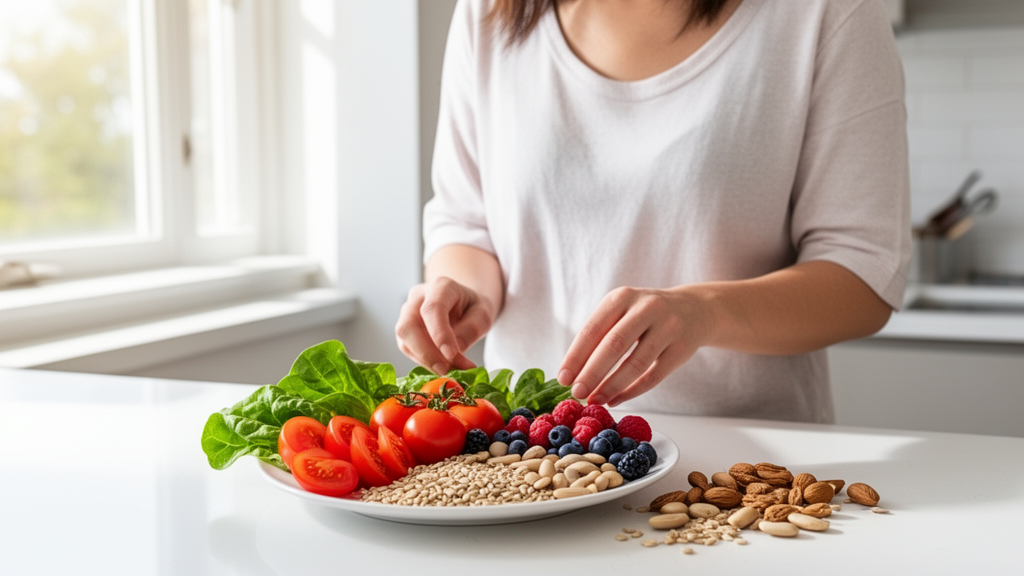
Overall, the review finds the most promising direction in pragmatic trials centered on complete dietary patterns rather than isolated supplements, with particular attention to plant-rich, Mediterranean-style eating and omega-3 sources while limiting excess omega-6 intake. The authors say evidence for Mediterranean and DASH diets in primary prevention of non-melanoma skin cancer is limited or weak, while secondary-prevention signals for low-fat approaches are exploratory. Omega-3 fatty acids have the strongest combined biological and clinical rationale, but randomized evidence in transplant recipients has not yet reached statistical significance.
Nicotinamide may be more plausible for primary or early secondary prevention than for recipients with extensive prior non-melanoma skin cancer, but further investigation is needed before supplementation recommendations can be made. Integrating diet into transplant dermatology care would require dietitians and other specialists, attention to affordability and access, and monitoring for nutrient-drug interactions, the authors argue. These steps would be adjuncts to, not replacements for, rigorous sun protection, regular skin examinations and established pharmacologic chemoprevention such as systemic retinoids.
The review’s central conclusion is therefore cautious: dietary modification may offer a safe and economically accessible way to influence skin cancer risk among transplant recipients, but much of the evidence comes from immunocompetent populations, observational studies or laboratory models. Larger, adequately powered and longer clinical trials are needed to determine whether dietary counseling meaningfully lowers actinic keratosis, keratinocyte cancer and melanoma incidence in this high-risk population.
Subject of Research: Evaluation of dietary approaches for skin cancer chemoprevention in solid organ transplant recipients
Article Title: A dietary approach to skin cancer prevention in solid organ transplant recipients
Article References: Yang, K., Li, M., Skinner, T., Zeng, D., Sosa, G., Han, J. Y., & Jafarian, F. (2026). A dietary approach to skin cancer prevention in solid organ transplant recipients. Frontiers in Transplantation, 5, Article 1949295. https://doi.org/10.3389/frtra.2026.1949295
Image Credits: AI Generated
DOI: 10.3389/frtra.2026.1949295
Keywords: solid organ transplantation, skin cancer prevention, cutaneous chemoprevention, omega-3 fatty acids, nicotinamide, Mediterranean diet, polyphenols, carotenoids, immunosuppression, nutritional epidemiology, dietary, approach
News Source: Daisy Hatcher. (October 21, 2026). Diet Linked to Skin Cancer Prevention After Solid Organ Transplant. Scienmag.