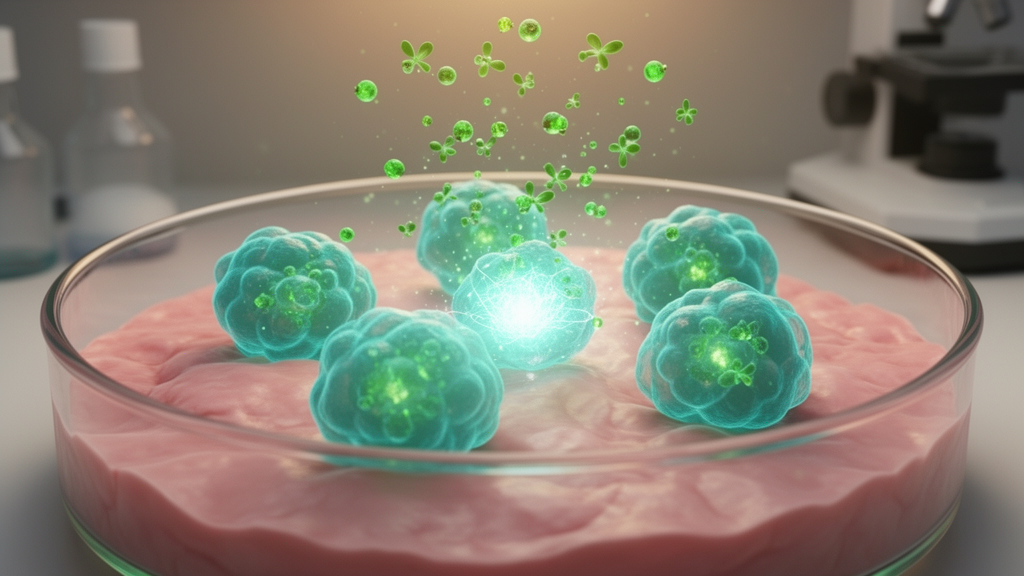
The published abstract of a 2026 systematic review reports that natural products impaired viability or proliferation and primarily induced apoptosis in human mucoepidermoid carcinoma cell models. The review included 14 in vitro studies, four of which also contained xenograft validation. Across the studies, the observed cellular effects were associated with changes in nuclear morphology, Annexin V/PI and sub-G1 fractions, mitochondrial membrane depolarization, caspase activation, and PARP cleavage, according to the abstract.
The review followed PRISMA guidance and was registered with PROSPERO as CRD420261404862. PubMed, Scopus, ProQuest, ScienceDirect, and Taylor & Francis were searched through July 2026. Eligible studies evaluated natural products in human mucoepidermoid carcinoma cell lines; studies with corresponding in vivo xenograft components were also admitted, with their findings extracted separately as supportive translational evidence. Viability, apoptosis, cell-cycle, and molecular-pathway data were synthesized narratively and mechanistically. Methodological quality was assessed with QUIN and SciRAP.
The abstract identifies convergence around several survival-related signaling pathways, including ERK/MAPK, Mcl-1, XIAP, and STAT3. It describes disruption of these signals as linked to mitochondrial apoptosis and the caspase execution phase, with Mcl-1 emerging as the most frequently identified anti-apoptotic regulator. Autophagy was evaluated in two studies, where its measured effects were characterized as cytoprotective. The review therefore presents natural products as having antiproliferative and proapoptotic activity in cell-based mucoepidermoid carcinoma models, rather than demonstrating clinical efficacy in patients.
Important limitations constrain comparisons among the interventions. The included studies used different natural products, concentrations, cell lines, and measurement methods, making it difficult to compare potency across candidates. The available evidence also combines cell-culture findings with a smaller number of supportive xenograft results, and the abstract does not establish that the observed effects would translate into safe or effective human treatments. Within the scope of the reviewed preclinical evidence, however, the findings support natural products as a source of lead compounds for further development. The conclusion is based on the review’s synthesis of 14 in vitro studies, not on a clinical trial or demonstration of patient benefit.
Subject of Research: Preclinical natural-product activity in human mucoepidermoid carcinoma cell models
Article Title: Natural products targeting the molecular pathology of salivary gland mucoepidermoid carcinoma: A systematic review of In vitro studies
Article References: Marleen, S., Miskad, U. A., Cangara, M. H., Prihantono, P., Putra Tandi, Y. Y., Amalia, N., Hendrawan, A. F., & Nurkolis, F. (2026). Natural products targeting the molecular pathology of salivary gland mucoepidermoid carcinoma: A systematic review of In vitro studies. Molecular Biology Reports, 53(1), Article 1563. https://doi.org/10.1007/s11033-026-12751-5
Image Credits: AI Generated
DOI: 10.1007/s11033-026-12751-5
Keywords: mucoepidermoid carcinoma, salivary gland cancer, natural products, in vitro studies, apoptosis, cell proliferation, molecular pathways, xenograft models, systematic review, preclinical research, Natural, products
News Source: Nathaniel Bowman. (October 20, 2026). Systematic review of 14 in vitro studies links natural products to apoptosis in salivary gland mucoepidermoid carcinoma. Scienmag.