• HOME
  • NEWS
  • EXPLORE
    • CAREER
      • Companies
      • Jobs
    • EVENTS
    • iGEM
      • News
      • Team
    • PHOTOS
    • VIDEO
    • WIKI
  • BLOG
  • COMMUNITY
    • FACEBOOK
    • INSTAGRAM
    • TWITTER
Tuesday, October 20, 2026
BIOENGINEER.ORG
No Result
View All Result
  • Login
  • HOME
  • NEWS
  • EXPLORE
    • CAREER
      • Companies
      • Jobs
        • Lecturer
        • PhD Studentship
        • Postdoc
        • Research Assistant
    • EVENTS
    • iGEM
      • News
      • Team
    • PHOTOS
    • VIDEO
    • WIKI
  • BLOG
  • COMMUNITY
    • FACEBOOK
    • INSTAGRAM
    • TWITTER
No Result
View All Result
Bioengineer.org
No Result
View All Result
Home NEWS Science News Cancer

Review proposes SFRP4–integrin interaction may restrain tumor angiogenesis

by
October 20, 2026
in Cancer
Reading Time: 2 mins read
0
Review proposes SFRP4–integrin interaction may restrain tumor angiogenesis

Review proposes SFRP4–integrin interaction may restrain tumor angiogenesis

Share on FacebookShare on TwitterShare on LinkedinShare on RedditShare on Telegram

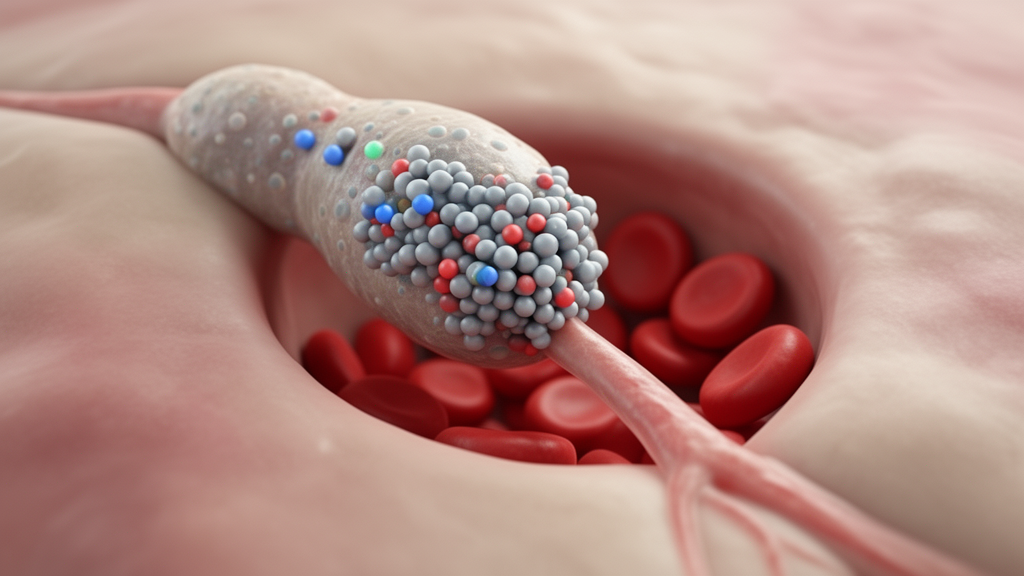
A review in Medical Oncology proposes that secreted frizzled related protein 4 (SFRP4), a Wnt-signaling antagonist, may interfere with tumor angiogenesis through an interaction with integrin. The proposed mechanism would connect SFRP4 to the β-catenin–VE-cadherin–integrin signaling triad and potentially reduce the angiogenic program influenced by vascular endothelial growth factor (VEGF). The authors frame this as a mechanistic proposal rather than a demonstrated effect in humans or an established anti-cancer treatment.

Angiogenesis is the physiological formation of blood vessels that supplies cells with oxygen and nutrients. It is carried out by endothelial cells, the innermost layer of blood vessels, and depends on pro-angiogenic growth factors, cell-adhesion proteins, and signaling pathways. These pathways regulate different stages of vessel formation, including endothelial-cell proliferation, differentiation, migration, polarity, and survival.

In tumors, dysregulation of these pathways can contribute to uncontrolled angiogenesis, according to the review. The paper examines how VEGF, β-catenin, VE-cadherin, and integrin are associated with Wnt–β-catenin signaling in this process. Wnt–β-catenin signaling is presented as an important pathway for cell proliferation.

The review notes that anomalous activity in this pathway can enhance the expression of pro-angiogenic genes, including VEGF and fibronectin. Within the authors’ model, β-catenin, VE-cadherin, and integrin form an interconnected signaling triad associated with angiogenesis. SFRP4 enters this proposed network because it is a Wnt antagonist with established anti-tumorigenic, anti-angiogenic, and pro-apoptotic roles.

The review’s central proposal is that SFRP4 may act on integrin in a way that disrupts Wnt signaling and thereby inhibits angiogenesis. This extends the proposed connection between SFRP4 and integrin into an explanation for how the Wnt pathway and the broader angiogenic network may interact in tumors. Instead, it reviews angiogenic factors and organizes them into a conceptual model centered on the interplay among SFRP4, integrin, β-catenin, VE-cadherin, and VEGF.

The supplied abstract describes the SFRP4–integrin interaction as a novel proposed role and states that it could disrupt Wnt signaling and inhibit angiogenesis. The available evidence supports the established biological roles summarized by the authors, while the mechanism connecting SFRP4 directly to integrin remains a hypothesis presented by the review. Accordingly, the work provides a framework for understanding possible regulation of the tumor angiogenic loop, but the supplied material does not support claims about human efficacy or clinical application.

The review was published in Medical Oncology in 2026 as volume 43, article 340.

Subject of Research: Proposed SFRP4–integrin regulation of Wnt–β-catenin signaling in tumor angiogenesis

Article Title: The interplay of integrin, VE-cadherin, and β-catenin signaling triad in angiogenesis: regulation by Wnt antagonist, secreted frizzled related protein 4 in the tumor angiogenic loop

Article References: Janaki P, A., Gamit, N., Agarwal, P., Dharmarajan, A., & Warrier, S. (2026). The interplay of integrin, VE-cadherin, and β-catenin signaling triad in angiogenesis: regulation by Wnt antagonist, secreted frizzled related protein 4 in the tumor angiogenic loop. Medical Oncology, 43(11), Article 340. https://doi.org/10.1007/s12032-026-03443-y

Image Credits: AI Generated

DOI: 10.1007/s12032-026-03443-y

Keywords: SFRP4, tumor angiogenesis, integrin, Wnt signaling, β-catenin, VE-cadherin, VEGF, endothelial cells, cancer biology, mechanistic review, interplay, catenin

News Source: Nathaniel Bowman. (October 20, 2026). Review proposes SFRP4–integrin interaction may restrain tumor angiogenesis. Scienmag.


Tags: cancer biologyCateninEndothelial Cellsintegrininterplaymechanistic reviewSFRP4Tumor angiogenesisVE-cadherinVEGFWnt Signalingβ-catenin
Share12Tweet7Share2ShareShareShare1

Related Posts

Soybean okara composite retains wound-care activity after 3D printing

Soybean okara composite retains wound-care activity after 3D printing

October 20, 2026
Research report: Bladder preservation is still feasible in the rare aggressive small cell carcinoma subtype

Research report: Bladder preservation is still feasible in the rare aggressive small cell carcinoma subtype

October 20, 2026

Application of machine learning to identify risk factors for bloodstream infections caused by different antimicrobial resistance phenotypes in chemotherapy patients

October 20, 2026

MG53 degrades AMPKα and suppresses bladder cancer in preclinical models

October 20, 2026

POPULAR NEWS

  • 2022 Cross-Sectional Study Links Multisetting Generalist Groups to Lower Medicare MIPS Scores

    2022 Cross-Sectional Study Links Multisetting Generalist Groups to Lower Medicare MIPS Scores

    29 shares
    Share 12 Tweet 7
  • Review proposes SFRP4–integrin interaction may restrain tumor angiogenesis

    29 shares
    Share 12 Tweet 7
  • Two new psyllid species and a revised identification from Mount Kinabalu

    29 shares
    Share 12 Tweet 7
  • Sepsis Treatments Shift Toward Precision, Multi-System Pharmacology

    29 shares
    Share 12 Tweet 7

About

We bring you the latest biotechnology news from best research centers and universities around the world. Check our website.

Follow us

Recent News

2022 Cross-Sectional Study Links Multisetting Generalist Groups to Lower Medicare MIPS Scores

Review proposes SFRP4–integrin interaction may restrain tumor angiogenesis

Two new psyllid species and a revised identification from Mount Kinabalu

Subscribe to Blog via Email

Enter your email address to subscribe to this blog and receive notifications of new posts by email.

Join 85 other subscribers
  • Contact Us

Bioengineer.org © Copyright 2023 All Rights Reserved.

Welcome Back!

Login to your account below

Forgotten Password?

Retrieve your password

Please enter your username or email address to reset your password.

Log In
No Result
View All Result
  • Homepages
    • Home Page 1
    • Home Page 2
  • News
  • National
  • Business
  • Health
  • Lifestyle
  • Science

Bioengineer.org © Copyright 2023 All Rights Reserved.