A peer-reviewed experimental study has transformed okara, the protein-rich residue left from processing soybeans into tofu and soy-based beverages, into a composite material that can be 3D printed and retains biological activity relevant to skin repair. Researchers from the University of Milan, Politecnico di Milano and Niguarda Hospital in Milan produced a protein hydrolysate containing bioactive peptides from the by-product, then incorporated it into poly(ε-caprolactone), or PCL, a biocompatible and biodegradable polymer used in biomedical research. Laboratory tests reported in Communications Materials found that the resulting blend had antioxidant and anti-inflammatory activity and promoted migration of human dermal fibroblasts, a process associated with tissue repair. The findings also persisted after the composite was 3D printed.
Because okara is generally considered a soybean-processing waste stream but retains a significant protein component, the researchers treated it as a potential source of biologically active molecules. They broke its proteins into short chains of amino acids through hydrolysis, creating an okara hydrolysate rich in bioactive peptides. The team then evaluated the hydrolysate in vitro using human dermal fibroblasts, cells that contribute to maintaining skin structure and participate in tissue-repair processes. In this cell-based system, the hydrolysate showed antioxidant and anti-inflammatory activity and encouraged fibroblast migration.
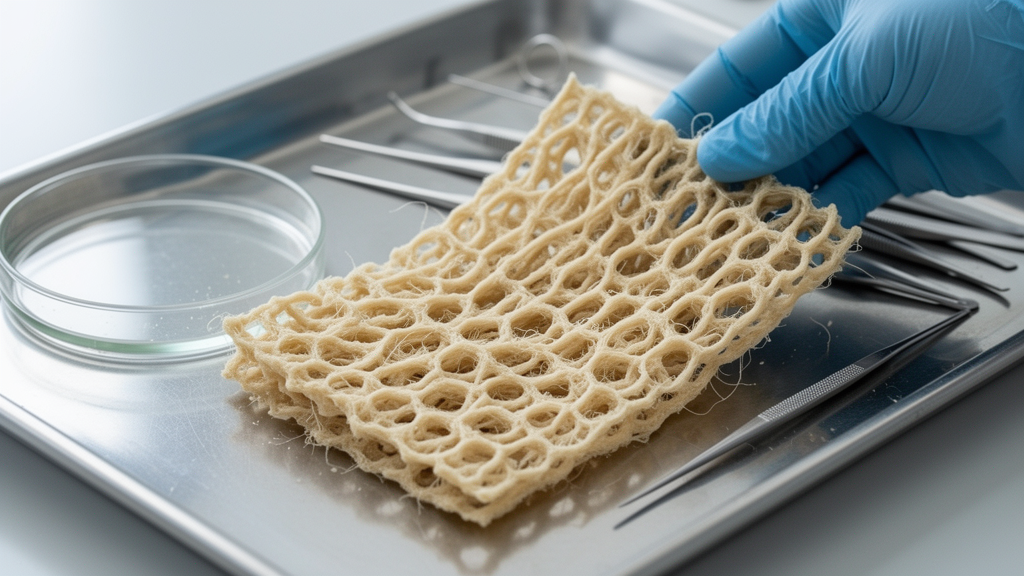
The researchers incorporated the okara hydrolysate into PCL to translate the cellular observations into a printable material. Mechanical, thermal and structural analyses indicated that adding the hydrolysate preserved the principal properties of PCL, while the blend supported the extended release of bioactive peptides over time. After fabrication, the printed composite continued to show antioxidant, anti-inflammatory and pro-regenerative features in laboratory testing. It could also be formed into structures with complex geometries, supporting the technical feasibility of using additive manufacturing to produce custom-shaped biomedical products. However, the study did not test a completed wound-care device, healing in people, or performance within living tissue.
The work forms part of the European Union-funded 3DBioPad project, which aims to design and 3D print a biocompatible, bioactive pad for the topical treatment of pain associated with breastfeeding and recovery after breast cancer surgery. Carmen Lammi, a professor at the University of Milan’s Department of Pharmaceutical Sciences, coordinated the interdisciplinary research with Serena Graziosi, a professor in Politecnico di Milano’s Department of Mechanical Engineering, and Raffaele Pugliese, a researcher at the NeMo Lab Research Center at Niguarda Hospital. The project combines pharmaceutical and food science with mechanical design, materials engineering, product design and additive manufacturing, with the broader aim of valorizing a food-industry by-product while developing potential biomedical solutions.
As a materials-development and in-vitro proof of concept, the study shows that peptides extracted from soybean-processing residue can be incorporated into a biodegradable PCL composite without eliminating the polymer’s main properties, and that measurable biological activities can remain after printing. The researchers said they would next produce a biomimetic phantom, an experimental model intended to reproduce some characteristics of breast skin tissue, so the material could be studied under controlled conditions before subsequent validation phases. Until those steps and clinical evaluation occur, the results should not be interpreted as evidence that the composite effectively treats skin wounds, breastfeeding pain or post-surgical pain. Its demonstrated value lies in a laboratory-stage method for producing customizable, biologically active and potentially sustainable materials for future biomedical applications.
Subject of Research: Experimental development of a 3D-printable soybean-okara peptide composite for wound-care applications.
Article Title: From soybean waste to 3D printing: A new biomaterial for skin repair
Article References: From soybean waste to 3D printing: A new biomaterial for skin repair. Original publication (Bibliographic details unavailable.)
Image Credits: AI Generated
DOI: Not provided
Keywords: soybean okara, bioactive peptides, 3D printing, wound care, polycaprolactone, dermal fibroblasts, biodegradable materials, food-waste valorization, in-vitro research, soybean, waste, printing
News Source: Denise Maddox. (October 20, 2026). Soybean okara composite retains wound-care activity after 3D printing. Scienmag.