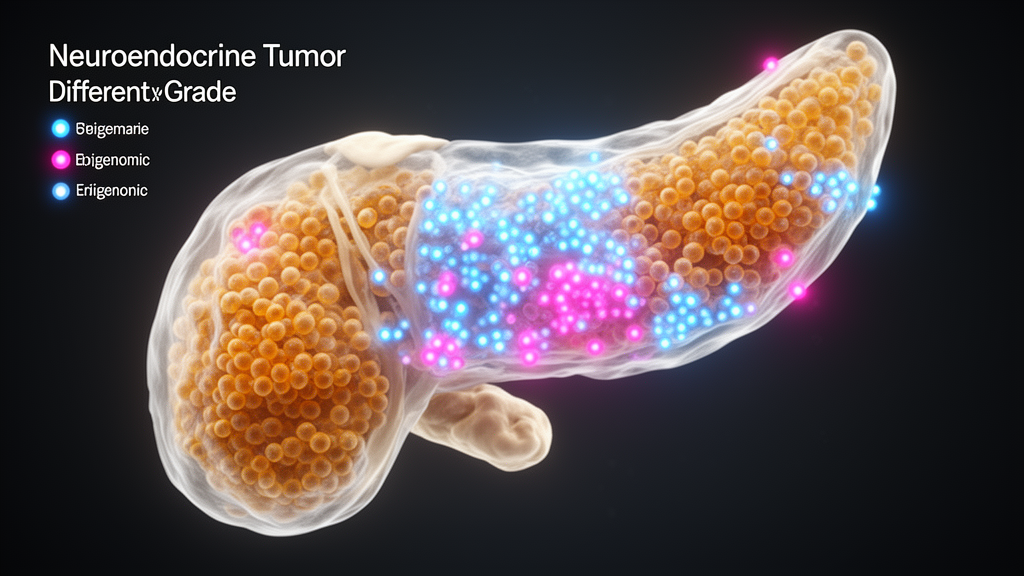
Non-functional pancreatic neuroendocrine tumors, or NF-PanNETs, are among the most quietly dangerous malignancies in medicine. They account for 60 to 90 percent of all pancreatic neuroendocrine tumors and often grow without the hormonal syndromes that would announce their presence. By the time of diagnosis, an estimated 40 to 80 percent of patients already carry distant metastases, most frequently in the liver, and their prognosis is significantly worse as a result. Current treatment decisions rest mainly on tumor grade and stage, and while chemotherapy, mTOR inhibitors, somatostatin analogs, and radioligand therapy can extend progression-free survival, their impact on overall survival remains limited. A team led by researchers at Yale School of Medicine has now opened a new window onto why these tumors behave so differently from one patient to the next, by mapping not their genes but their epigenomes, and by doing so in intact tissue rather than in dissociated cells.
The study, published in iScience, combined two complementary chromatin accessibility technologies: single-nucleus ATAC-seq and spatial ATAC-seq. ATAC-seq exploits a bacterial transposase that preferentially fragments DNA in open chromatin, allowing researchers to identify which regulatory elements, promoters, and enhancers are active in a given cell. Bulk ATAC-seq averages these signals across millions of cells, hiding the heterogeneity within a tumor, while single-cell versions lose the spatial context that is destroyed during sample processing. Spatial ATAC-seq, a newer approach, restores that context by profiling chromatin accessibility within intact tissue architecture, enabling the mapping of epigenetic states to specific anatomical locations and microenvironmental niches. The Yale team applied both methods to treatment-naive NF-PanNET specimens, generating profiles from 38,198 nuclei across nine tumors by snATAC-seq and from twelve tumors by spatial ATAC-seq, six of which were analyzed with both modalities.
Unsupervised clustering of the single-nucleus data identified four major cell populations: tumor, immune, fibroblast, and exocrine cells. Across these populations, the researchers identified 62,896 accessible chromatin regions and 5,540 cell-type-specific differentially accessible regions. Tumor cells showed increased accessibility near genes such as KCNH2, implicated in proliferation and epithelial-mesenchymal transition in pancreatic cancer, and KIF1A, linked to neuroendocrine differentiation. Transcription factor activity analysis revealed that tumor cells displayed elevated activity of RFX-family motifs, while immune populations showed increased ETS-family motif activity, consistent with the established roles of ETS factors across T cells, B cells, macrophages, neutrophils, and dendritic cells. Footprinting analysis confirmed distinct accessibility profiles surrounding RFX binding motifs in tumor cells, validating the computational inference of transcription factor engagement.
Isolating tumor cells from the dataset revealed nine chromatin-defined tumor subclusters whose distribution differed markedly between histological grades. Grade 1 tumors were predominantly represented by subclusters Tumor_1 through Tumor_4, whereas grade 2 tumors were enriched for Tumor_5 through Tumor_9. The researchers examined whether these states mapped onto the five transcription factor-defined molecular subtypes previously established for poorly differentiated neuroendocrine carcinomas, characterized by ASCL1, NEUROD1, HNF4A, POU2F3, and YAP1. Tumor_1 through Tumor_3, associated with grade 1, showed overlapping NEUROD1- and HNF4A-associated features, while Tumor_5, enriched in grade 2, displayed the clearest POU2F3-associated profile. However, several grade 2 subclusters lacked canonical subtype markers and instead showed increased activity of genes such as PCSK1, PTEN, TRIM24, and TRIM28, indicating regulatory diversity beyond classical subtype definitions. Pathway enrichment revealed differential programs across subpopulations, including cell proliferation, EMT, and immune-related pathways, with Tumor_4 enriched for E2F targets, G2M checkpoint, and MYC targets, while Tumor_1 and Tumor_5 showed enrichment of KRAS signaling and inflammatory response programs.
Transcription factor motif analysis across grades uncovered a striking regulatory divide. Grade 1 tumors showed higher activity of HNF1A, HNF4A, and HNF4G motifs, consistent with differentiated neuroendocrine states, while grade 2 tumors showed greater activity of ETS2, E2F2, and E2F1 motifs, reflecting enhanced proliferative and cell-cycle-associated programs. Motif enrichment on differentially accessible regions further refined this picture: KLF and EGR family motifs were enriched in grade 1 tumors, TFEB and YY1 motifs predominated in low-proliferative grade 2 tumors with Ki-67 indices of 3 to 10 percent, and AP-1 motifs were significantly enriched in highly proliferative grade 2 tumors with Ki-67 indices of 10 to 20 percent. Given the established involvement of AP-1 family factors in proliferation, differentiation, apoptosis, angiogenesis, and invasion, this enrichment points to a distinct stress-responsive regulatory landscape in the most proliferative grade 2 tumors. Pseudotime trajectory inference organized these states along a continuum, with grade 1 cells enriched toward one end and grade 2 cells toward the other, capturing a graded continuum of chromatin regulatory states without implying a direct temporal transition between grades.
The immune microenvironment proved equally heterogeneous. The team subdivided immune cells into myeloid and lymphoid compartments, identifying T cells, B cells, and natural killer cells, whose accessible regions were enriched for NK cell-mediated cytotoxicity, Fc gamma R-mediated phagocytosis, and antigen processing pathways. Myeloid cells showed broader enrichment across chemokine, MAPK, cAMP, Rap1, and Ras signaling pathways, and displayed increased C/EBP-family motif activity together with elevated gene activity for CEBPB, CEBPE, and CEBPG, suggesting the presence of myeloid-derived suppressor cell-like regulatory features within the myeloid compartment. Reclustering of macrophages into four subsets revealed that none conformed strictly to canonical M1/M2 polarization, with one subset showing lipid-metabolic reprogramming through SREBF1/2 motif activity and another displaying inflammatory and suppressive pathway enrichment with elevated HMGB1 and CCL18. T cell analysis identified three chromatin-defined clusters, with clusters 0 and 2 predominantly enriched in grade 2 tumors and cluster 1 the major subset in grade 1 tumors. Cluster 0 displayed elevated gene activity for TOX, CD96, CD44, and IKZF2, consistent with an exhaustion-associated regulatory state, yet key inhibitory receptors such as PDCD1 and CTLA4 did not show prominent gene activity, consistent with prior findings that PD-1/PD-L1 expression is generally low or absent in pancreatic neuroendocrine tumors. Grade 2 T cells showed significant enrichment of TFE3 and CREM motifs, implicated in stress responses and T cell tolerance, while grade 1 T cells exhibited increased accessibility of POU family motifs linked to stem-like regulatory programs.
Cancer-associated fibroblasts, major components of the tumor microenvironment implicated in tumor growth and matrix remodeling, resolved into five distinct subclusters with unique chromatin landscapes. Clusters 0 and 1 were identified as classical myofibroblastic CAFs, characterized by elevated activity of ACTA2, TAGLN, FN1, and FAP. Cluster 3 displayed an immunomodulatory phenotype with high activity of CD74 and THY1, suggestive of antigen-presenting CAFs, while cluster 4 represented a matrix-remodeling subcluster with elevated gene activity of MMP11 and HOPX. Grade-associated motif analysis within CAFs revealed that grade 2 fibroblasts were strongly enriched for motifs of SNAI1, ZEB1, and TCF family members, all implicated in EMT and invasion, whereas grade 1 CAFs showed enrichment of FOSL2/JUNB, CREB3L1, and BHLHE41 motifs associated with stress response and differentiation. These findings indicate that stromal chromatin states vary across tumor grades and may reflect broader differences in tissue remodeling within the microenvironment.
The spatial ATAC-seq analysis, performed on twelve primary tumors annotated by pathologists, revealed six distinct spatial clusters and 93,119 differentially accessible regions. Grade 1 and grade 2 tumors were predominantly represented by clusters c0 through c4, whereas cluster c5 was predominantly associated with the single grade 3 tumor, localizing within the pathologist-annotated tumor region. Motif enrichment in the grade 3 sample PNET15 revealed overrepresentation of TCF3 and TCF12 motifs, implicated in EMT, invasion, and stemness across pancreatic cancer, glioblastoma, and breast cancer. Most notably, YAP1, a downstream effector of the Hippo pathway with established roles in tissue repair, extracellular matrix remodeling, and tumorigenesis, showed significantly higher gene activity in grade 3 tumors than in grade 1 and grade 2 tumors, together with increased chromatin accessibility at the YAP1 locus. Previous studies have linked elevated YAP1 activity to aggressive behavior and adverse outcomes in pancreatic ductal adenocarcinoma, and these findings extend that association to high-grade NF-PanNETs. Integration of tumor-associated spatial clusters from grade 1 and grade 2 tumors identified ten subclusters and confirmed the grade-associated continuum observed in the single-nucleus data, with HNF1A, HNF4A, and FOXA2 motif activity higher toward the grade 1 end of the trajectory.
Perhaps the most compelling discovery emerged from the spatial relationship between tumor states and fibroblast niches. In sample PNET8, two distinct tumor-associated accessibility states, designated Tumor1 and Tumor2, were identified, with Tumor2 notably adjacent to regions enriched for high ACTA2 and FAP gene activity, consistent with spatial proximity to myCAF-associated regions. Quantitative distance analysis confirmed that Tumor2-associated spots were significantly closer to myCAF-associated regions, and pathway enrichment revealed that Tumor2 was enriched in E2F targets, MYC targets, and mTORC1 signaling, alongside oxidative phosphorylation, while Tumor1 exhibited enrichment of KRAS signaling. This pattern extended across other samples: tumor-associated regions in PNET1, PNET4, and PNET6 were located near high ACTA2 and FAP regions and enriched in proliferative pathways, whereas those in PNET7 and PNET10 were spatially associated with lower ACTA2 and FAP activity and enriched in the KRAS pathway. Intra-tumor heterogeneity was also observed in PNET9, where Tumor2 was spatially associated with myCAF regions and enriched in proliferative pathways while Tumor1 showed KRAS pathway activity. E2F1 and E2F3 showed higher gene activity in Tumor2, and tumor-associated regions with stronger KRAS enrichment showed increased SNAI1, SNAI2, and SNAI3 motif activity, consistent with known links between KRAS signaling, SNAI-family regulatory programs, EMT, and invasive phenotypes.
The authors emphasize that these findings are discovery-oriented rather than causally established. The cohort was modest, with particularly limited representation of grade 3 tumors, the spatial measurements were analyzed at the spot level without formal deconvolution, and the recurrent grade-associated patterns have not yet been independently validated using orthogonal approaches such as multiplex immunofluorescence or spatial transcriptomics. The pseudotime analyses represent inferred continua of chromatin states rather than direct evidence of chronological transitions between grades, and the spatial associations identify local coupling between tumor and stromal regulatory states without establishing the direction of interaction. Nevertheless, the recurrent grade-associated programs involving HNF/FOXA2, E2F/AP-1, YAP/TEAD, and SNAI-associated factors provide concrete hypotheses for future mechanistic investigation, while the spatial association between tumor accessibility states and fibroblast-rich regions underscores the importance of local tissue context when interpreting tumor regulatory states. The datasets and analysis code are publicly available, offering a chromatin-level and spatial framework that could ultimately inform molecular stratification and reveal therapeutic vulnerabilities in this enigmatic malignancy.
Subject of Research: Spatial and single-nucleus ATAC-seq mapping of grade-associated chromatin regulatory programs and stromal niches in non-functional pancreatic neuroendocrine tumors
Article Title: Spatial epigenomics reveals stromal niche-associated regulatory programs across pancreatic neuroendocrine tumor grades
Article References: Wang, D., Di, X., Gao, F., Li, G., Lin, L., He, S., Zhang, D., Xu, J., Jin, Y., Liang, Y., Cecchini, M., Lacy, J., Kunstman, J., Kunz, P., Du, J., & Liu, Y. (2026). Spatial epigenomics reveals stromal niche-associated regulatory programs across pancreatic neuroendocrine tumor grades. iScience, 29(11), Article 117953. https://doi.org/10.1016/j.isci.2026.117953
Image Credits: AI Generated
DOI: 10.1016/j.isci.2026.117953
Keywords: spatial ATAC-seq, snATAC-seq, pancreatic neuroendocrine tumors, epigenomics, chromatin accessibility, tumor microenvironment, cancer-associated fibroblasts, transcription factors, tumor grades, YAP1, KRAS signaling, Spatial
News Source: Nathaniel Bowman. (October 19, 2026). Spatial epigenomics reveals stromal niche-associated regulatory programs across pancreatic neuroendocrine tumor grades. Scienmag.