Most people who die from colon cancer do not die from the original tumor. They die from cells that quietly slipped out of the bowel and took root elsewhere, most often in the liver. For decades, researchers hunting the genetic mutations behind that deadly spread have largely come up empty-handed. Now a team at the Massachusetts Institute of Technology reports that the key may lie not in the cancer’s DNA, but in a regenerative program that tumor cells hijack from the gut itself — and that a high-fat diet can switch that program on.
The study, published in the journal Science, identifies a cellular pathway controlled by the protein YAP1 as a necessary engine of colorectal cancer metastasis. YAP1 is no villain in healthy tissue. It normally drives organ development, stem cell maintenance and wound repair, switching on genes that allow the intestinal lining to rebuild itself after severe injury or infection. The MIT researchers found that colon cancer cells can co-opt this fetal-like repair state, using it to break free from the primary tumor, migrate through the body and colonize new organs.
“We’ve found a pathway that we think is druggable. If we shut down the enzymes that make ceramides, tumor cells can’t switch on this regenerative program, and they largely fail to seed metastases in the liver,” said Omer Yilmaz, director of the MIT Stem Cell Initiative, a professor of biology at MIT and a member of the Koch Institute for Integrative Cancer Research, who is also a gastrointestinal pathologist at Beth Israel Deaconess Medical Center.
The discovery emerged from a systematic search for epigenetic programs — patterns of gene activation and silencing that do not involve changes to the DNA sequence itself — that distinguish metastatic cells from those that stay put. Using tumor organoids, three-dimensional clusters of cancer cells grown in the laboratory, derived from mouse models of several colon cancer types and from patients with colorectal cancer, the team found that metastatic cells shared one defining feature: activation of the YAP1 program. In the gut, this program normally runs through a rare, fetal-like cell type that appears only briefly to regenerate the intestinal lining after damage. YAP1 has been linked to cancer for years, but the new work shows that diet-derived lipids can push tumor cells into this specific regenerative state, and that the state itself is what licenses metastasis.
“The regenerative program that we described is generally observed in the gut when there is severe injury or infection and the gut needs to regenerate. We see the tumor cells hijack this program to drive metastatic progression,” said Swagata Goswami, an MIT postdoctoral researcher and one of the study’s lead authors, alongside fellow postdocs Qiming Zhang and Abdullah Burak Yildiz.
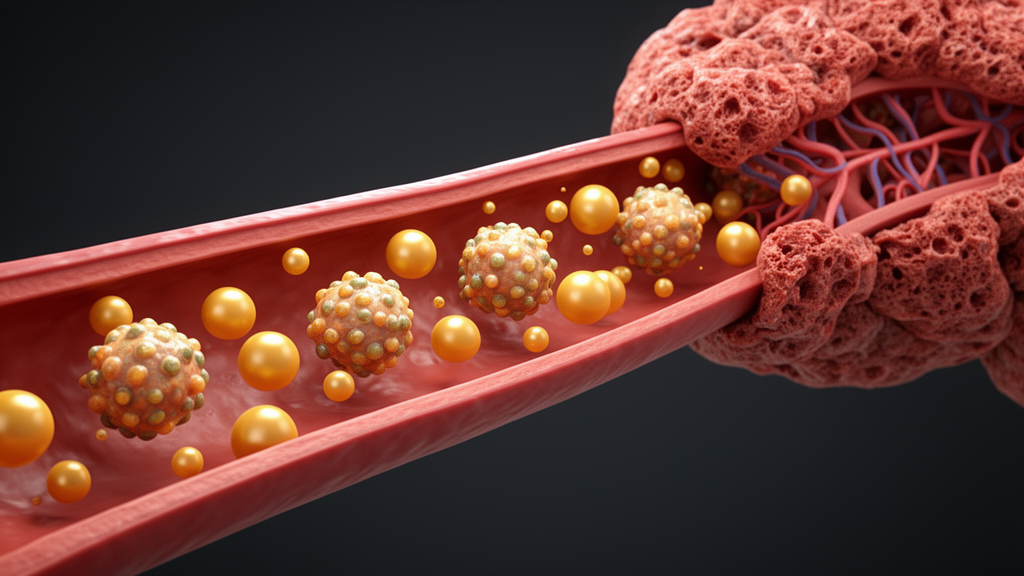
The link to diet came as a striking surprise. In mouse experiments, cancer cells in animals fed a high-fat diet switched on YAP1 to a far greater extent than cells in mice eating a healthy diet. Tracing the mechanism, the researchers found that a fatty diet activates enzymes that produce ceramides, a class of lipid molecules best known for their role in skin barriers and cell signaling. Ceramides then release the molecular brake that normally keeps YAP1 inactive, freeing the protein to move into the cell’s nucleus and switch on its target genes. In other words, the fat on the plate is translated, molecule by molecule, into a genetic program that makes cancer mobile.
The therapeutic implications are considerable. When the researchers genetically targeted YAP1, or the genes involved in ceramide production, the spread of colon cancer to the liver in mice dropped markedly. That suggests a concrete intervention point: drugs that block ceramide synthesis, particularly by inhibiting two of the enzymes involved, known as DEGS1 and DEGS2, could potentially prevent metastasis in patients diagnosed with colon cancer. The team now plans to develop such inhibitors. Because ceramides are also essential in healthy tissues, any drug targeting their production will have to clear a high bar for selectivity, the researchers caution.
To determine whether the same program operates in humans, the team analyzed RNA sequencing data from patients with colorectal cancer. The pattern held. YAP1 was more active in metastatic cancer cells than in primary tumors, and patients with higher body mass index showed higher expression of the genes activated by YAP1 than patients of normal weight. Strikingly, patients with elevated levels of those YAP-driven genes also had lower survival rates, tying the molecular signature directly to clinical outcomes.
The findings may help explain a long-standing epidemiological observation: obesity is a known risk factor for the progression of colorectal cancer, but the mechanism has been murky. “We don’t think that the YAP1 program is specific to obesity. It’s just that it becomes accentuated in obesity, and that may account for why obesity is known to drive the progression of colorectal cancer,” Yilmaz said. In this framing, excess dietary fat does not create a new cancer program so much as amplify one that tumor cells are already poised to exploit.
The work also reframes how scientists think about metastasis itself. Many studies have searched for a genetic driver of spread and found none; there is no defining mutational signature that separates metastatic cells from the primary tumor. That absence, Yilmaz noted, points to metastasis being driven largely by changes in which genes are switched on and off, rather than by new mutations. If that is true, then the epigenetic and metabolic states of tumor cells — influenced by diet, inflammation and tissue environment — may be as important as the mutations that started the cancer in the first place. For the roughly one-third of patients with stage 2 or 3 colon cancer who relapse with metastatic disease even after successful surgery, a druggable pathway that blocks the seeding of liver metastases could transform the outlook for one of the world’s most common cancers. The researchers caution, however, that the findings do not yet translate into dietary advice for patients already diagnosed, and that clinical application will depend on the safety and selectivity of the ceramide-blocking drugs now in development.
Subject of Research: The role of YAP1 activation and ceramide synthesis in colorectal cancer metastasis
Article Title: Biologists identify a cellular pathway that allows colorectal cancer to metastasize
Article References: Biologists identify a cellular pathway that allows colorectal cancer to metastasize. (n.d.). Original publication
Image Credits: AI Generated
DOI: Not provided
Keywords: colorectal cancer, metastasis, YAP1, ceramides, high-fat diet, obesity, liver metastasis, tumor organoids, epigenetics, regeneration, DEGS1, DEGS2
News Source: Nathaniel Bowman. (October 18, 2026). How a high-fat diet may help colon cancer spread to the liver. Scienmag.