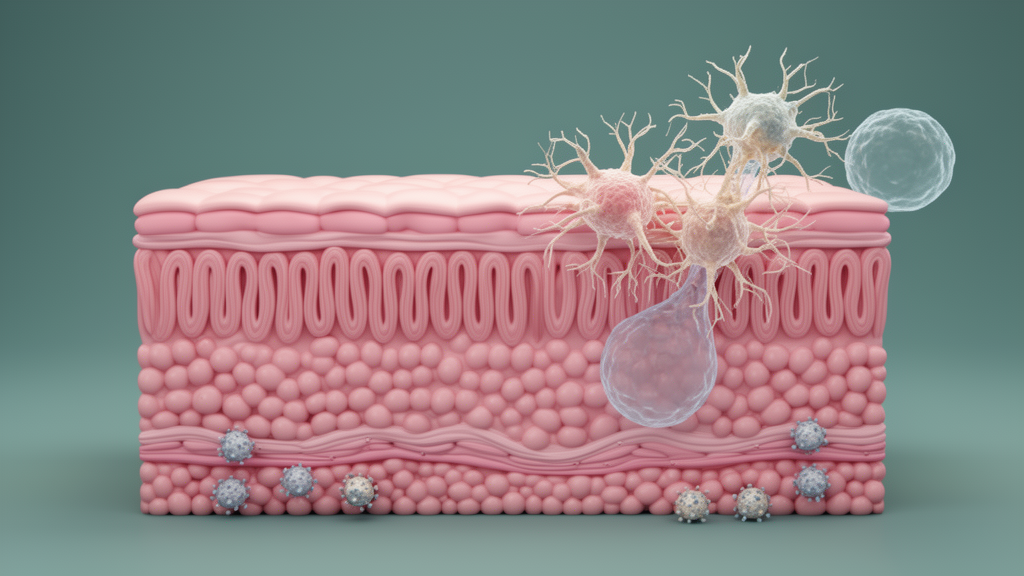
Cervical cancer remains one of the leading causes of cancer-related mortality among women worldwide, and persistent infection with high-risk human papillomavirus (HPV) stands as its primary etiological factor. A comprehensive review published in Cellular and Molecular Life Sciences by Yubing Zhou, Yunxiao Ge, Kangdong Liu, Hui Liu, Zigang Dong and colleagues at Zhengzhou University, the China-US (Henan) Hormel Cancer Institute and Karolinska Institutet maps the full trajectory from initial HPV infection to cervical precancerous lesions, integrating molecular mechanisms, the immune microenvironment and emerging diagnostic technologies. The work, which is open access and carries the DOI 10.1007/s00018-026-06473-x, positions precancerous lesions such as high-grade squamous intraepithelial lesions (HSIL) and adenocarcinoma in situ (AIS) as the critical window for intervention before invasive cancer develops.
At the molecular level, the review highlights the central role of dysregulated tumor suppressors and signaling pathways in the transformation of HPV-infected epithelium. The cyclin-dependent kinase inhibitor p16, encoded by the CDKN2A gene, emerges as a key dysregulated tumor suppressor whose altered expression marks the transition toward precancer. Alongside p16, major signaling cascades including the PI3K/AKT/mTOR pathway and the Wnt/β-catenin pathway are repeatedly implicated in driving carcinogenesis. These pathways govern cell proliferation, survival and differentiation, and their dysregulation in the context of persistent high-risk HPV infection provides the proliferative push that converts a controlled viral episode into clonal epithelial expansion. The mitogen-activated protein kinase (MAPK) cascade, spanning EGFR, RAS, RAF, MEK and ERK1/2, further illustrates how growth factor signaling is hijacked during transformation, while epithelial-mesenchymal transition (EMT) and remodeling of the extracellular matrix (ECM) prepare the tissue for potential invasion.
The review emphasizes that HPV infection alone does not tell the whole story. Additional cofactors such as immunosuppression, smoking and the composition of the local microbiome play crucial roles in determining whether an infection progresses to cervical precancerous lesions. Immunosuppression, for instance in the setting of HIV coinfection, impairs the clearance of virally transformed cells, while smoking introduces carcinogenic exposures that compound genomic damage. The microbiome, a rapidly evolving area of cervical carcinogenesis research, modulates inflammation and immune signaling in the cervical microenvironment, potentially tipping the balance toward lesion persistence and progression. These cofactors explain why only a fraction of high-risk HPV infections ever reach the precancerous stage, and why personalized risk assessment must extend beyond virological status alone.
Turning to the tumor microenvironment, the review describes a dynamic immune landscape that critically shapes cancer progression. Carcinoma-associated fibroblasts (CAFs), including matrix-fibroblast subpopulations, remodel the stroma and secrete signaling molecules such as secreted phosphoprotein 1 (SPP1) and neuregulin 1 (NRG1) that engage Erb-B2 receptor tyrosine kinase 3 (ERBB3) on neighboring cells. Immune cell populations within the microenvironment, including lipid-associated macrophages (LAMs), plasmacytoid dendritic cells (pDCs) and regulatory T-cells (Tregs), collectively determine whether the immune system recognizes and eliminates transformed epithelium or tolerates it. Inflammatory signaling through nuclear factor kappa B (NF-κB), toll-like receptors (TLRs) and tumor necrosis factor receptors (TNFRs) links tissue damage and microbial stimuli to transcriptional programs that can either promote antiviral immunity or fuel protumor inflammation. Transforming growth factor β (TGF-β) signaling adds another layer, bridging stromal and immune compartments in the regulation of epithelial proliferation and EMT.
This immune microenvironment perspective suggests substantial potential for immunotherapy in cervical precancer and cervical cancer. By characterizing which immune cell subsets infiltrate lesions and which checkpoint or cytokine axes they engage, the review lays the groundwork for therapeutic strategies that reawaken antitumor immunity at the precancerous stage. The identification of specific stromal and immune signatures, such as the presence of particular CAF phenotypes or the balance of effector and regulatory T-cells, could guide patient selection for immunotherapeutic interventions. Such approaches would complement existing HPV vaccination, screening and treatment programs, which have reduced cancer incidence but must, according to the authors, be complemented by personalized approaches that target the molecular mechanisms driving carcinogenesis.
Biomarkers occupy a central place in the review’s translational vision. Established proliferation and transformation markers such as p16 and Ki67, together with cell cycle markers including CDC6, MCM5, TOP2A and KRT17, already underpin diagnostic and risk-stratification tools for cervical intraepithelial neoplasia (CIN). MicroRNAs add a regulatory dimension, offering potential as circulating or tissue-based indicators of lesion severity. The review argues, however, that these biomarkers require integration with advanced technologies such as single-cell RNA sequencing (scRNA-seq) and spatial transcriptomics (ST) to deliver deeper insight into tumor heterogeneity and microenvironment dynamics. Single-cell approaches resolve the diversity of epithelial, stromal and immune states within a lesion, while spatial transcriptomics preserves the anatomical context, revealing how keratin 17-positive epithelial subpopulations, fibroblast niches and immune aggregates are arranged relative to one another in the precancerous landscape.
The review catalogues a rich set of molecular signatures emerging from these high-resolution technologies. Epithelial subpopulations marked by genes such as PAX2, CDH6, GFRA1, GATA4, KCNIP4, LHX8, carbonic anhydrase 10 (CA10), dipeptidyl peptidase like 10 (DPP10), hyaluronan synthase 1 (HAS1), ZSCAN1, ST6GALNAC5 and the pseudogene ANKRD18CP illustrate the transcriptional complexity of cervical epithelium during transformation. Stromal and immune compartments contribute their own markers, including SPP1, NRG1 and ERBB3 in fibroblast-epithelial signaling, and high-mobility group box 1 (HMGB1) in damage-associated inflammatory responses. Notch signaling, mediated through the notch intracellular domain (NICD) and its transcriptional partner RBPJ, further connects cell fate decisions in the epithelium to microenvironmental cues. Together, these signatures demonstrate how genomics and transcriptomics can pinpoint the molecular events that distinguish self-resolving infection from progressive precancer.
Artificial intelligence represents the third pillar of the review’s forward-looking analysis. Deep learning models hold promise in improving diagnostic accuracy for cervical intraepithelial neoplasia, particularly through automated visual evaluation (AVE) of cervical images, a machine learning (ML) application that could extend high-quality screening to settings with limited expert cytology. By learning the visual patterns associated with CIN grades, such systems could reduce interobserver variability and increase screening throughput. The review is careful to note, however, that significant challenges remain: data variability across populations, imaging devices and clinical protocols complicates model generalization, and the interpretability of deep learning decisions remains limited. Addressing these issues, the authors argue, is essential before AI-based diagnostics can be deployed responsibly at scale.
Synthesizing these strands, the review concludes that incorporating genomics, transcriptomics, immunotherapy and artificial intelligence will enable more personalized and effective interventions against cervical precancer, ultimately reducing the global burden of cervical cancer. The path forward it sketches is one in which a patient’s lesion is characterized not only by its histological grade but by its molecular pathway activations, immune microenvironment composition and biomarker profile, allowing therapy to be matched to the mechanisms actually driving that individual’s disease. In a field where vaccination and cytology-based screening have already transformed prevention, this integration of single-cell biology, spatial mapping and computational diagnostics marks the next frontier, one in which the critical window between HPV infection and invasive cancer can be monitored and exploited with unprecedented molecular precision.
Subject of Research: From HPV infection to cervical precancer: Molecular mechanisms, immune microenvironment and emerging technologies
Article Title: From HPV infection to cervical precancer: Molecular mechanisms, immune microenvironment and emerging technologies
Article References: Zhou, Y., Ge, Y., Liu, K., Liu, H., & Dong, Z. (2026). From HPV infection to cervical precancer: Molecular mechanisms, immune microenvironment and emerging technologies. Cellular and Molecular Life Sciences, 83(1), Article 383. https://doi.org/10.1007/s00018-026-06473-x
Image Credits: AI Generated
DOI: 10.1007/s00018-026-06473-x
Keywords: HPV, cervical precancer, p16, PI3K/AKT/mTOR, single-cell RNA sequencing, spatial transcriptomics, deep learning, tumor microenvironment, cervical intraepithelial neoplasia, immunotherapy, infection, cervical
News Source: Kristina Jarvis. (October 16, 2026). How Persistent HPV Infection Drives Cervical Precancer: Molecular Pathways, Immune Evasion and Emerging Technologies. Scienmag.