Metabolic dysfunction-associated steatotic liver disease, known as MASLD, has quietly become the most common chronic liver condition on the planet, affecting roughly 38 percent of adults worldwide. Formerly called non-alcoholic fatty liver disease, the condition was renamed by a multi-society Delphi consensus to reflect its true metabolic roots. A recent narrative review published in Frontiers in Systems Biology argues that the next frontier in treating this silent epidemic may lie not in the liver itself, but in the trillions of microbes residing in the human gut.
For decades, scientists explained fatty liver progression using a straightforward two-hit model: fat accumulation constituted the first hit, while oxidative stress and inflammation delivered the second. The new review, led by Shweta Sharma and colleagues at Parul University and the Deepak Foundation in Vadodara, India, embraces a more sophisticated multiple-hit paradigm. Under this framework, gut dysbiosis, an imbalance in the composition and function of the intestinal microbiota, acts as a central co-driver rather than a passive bystander, synergizing with insulin resistance, genetic susceptibility, and adipose tissue dysfunction to push simple steatosis toward steatohepatitis and fibrosis.
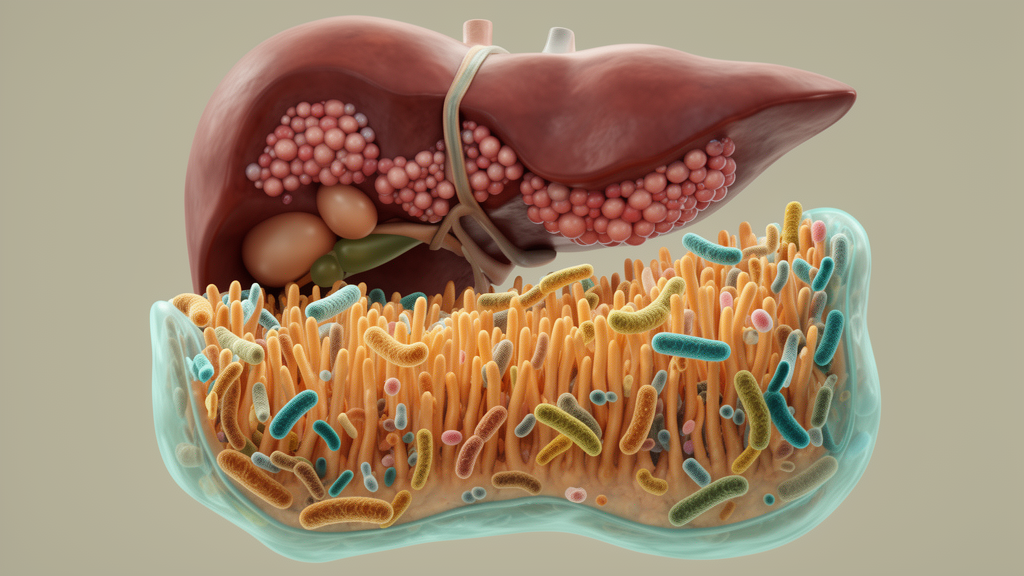
The mechanistic pathways connecting gut imbalance to liver injury are intricate. When Western-style diets rich in saturated fats and refined carbohydrates but low in fiber reshape the gut ecosystem, beneficial fiber-degrading bacteria such as Faecalibacterium and Akkermansia are depleted. This depletion weakens the intestinal epithelial barrier, a phenomenon often described as leaky gut, allowing bacterial products like lipopolysaccharides to translocate into portal blood. Once these endotoxins reach the liver, they activate Toll-like receptor 4 signaling on Kupffer cells and hepatic stellate cells, triggering oxidative stress, nuclear factor kappa B pathway activation, and a cascade of inflammation that worsens insulin resistance and drives fibrogenesis.
Beyond barrier disruption, the review highlights two additional metabolite pathways with strong consensus support. Gut microbes chemically modify bile acids, altering farnesoid X receptor and TGR5 signaling that normally regulate hepatic glucose metabolism and inflammation. Simultaneously, a disturbed balance in short-chain fatty acid production undermines epithelial integrity and immune restraint, since these metabolites typically support barrier function through G-protein-coupled receptor signaling. The review also describes contributions from altered choline metabolism, elevated trimethylamine N-oxide, and endogenous ethanol produced by certain gut bacteria, all of which reshape hepatic lipid handling and fuel liver injury.
One of the most striking findings concerns age-specific microbial signatures. In adult MASLD populations, Faecalibacterium is consistently depleted, yet pediatric cohorts paradoxically show enrichment of this beneficial bacterium. The authors suggest this discrepancy may reflect the still-developing nature of the childhood microbiome, compensatory responses to early metabolic stress, or distinct pediatric dietary habits selecting for different profiles. Over time, chronic inflammation and prolonged metabolic dysfunction appear to exhaust these protective commensals, explaining why adult disease shows the opposite pattern.
These microbial shifts are not merely academic curiosities; they hold diagnostic promise. Machine learning models trained on shotgun metagenomic data have distinguished MASLD from simple obesity with roughly 87 percent accuracy and MASH from MASLD with approximately 89 percent accuracy in pediatric cohorts. In adults, a three-genus microbial signature separated moderate-to-severe fibrosis from mild disease with an area under the curve of 0.93, while integrated microbiome-metabolite models approached 0.94. Combined host and microbe markers, such as Veillonella paired with alpha-fetoprotein, reached 0.996 in one subgroup of MASLD-associated hepatocellular carcinoma patients.
On the therapeutic front, the review synthesizes current interventions ranging from dietary modification to biotics and fecal microbiota transplantation. Mediterranean, high-fiber, plant-based, and calorie-restricted diets consistently enrich short-chain fatty acid or lactic acid producing bacteria and reduce opportunistic pathogens. Probiotics such as Lactobacillus rhamnosus GG have improved steatosis, inflammation, and barrier integrity in preclinical models. However, clinical evidence for fecal microbiota transplantation remains mixed. One randomized trial found significant reductions in hepatic fat at one month, with greater efficacy in lean patients, while a recent double-blind trial of three consecutive transplants detected no significant changes in liver fat, glucose tolerance, or biochemistry at twelve weeks.
The field is now transitioning toward precision microbiome therapies that move beyond broad ecosystem resets. Engineered bacteria designed to deliver therapeutic molecules, bacteriophage cocktails that selectively deplete pathobionts, synthetic consortia, and AI-guided patient stratification represent the next wave of translational platforms. The authors argue that matching therapy to the dominant dysfunction in each patient, whether bile acid dysregulation or barrier breakdown, using multi-omics profiling and non-invasive endpoints, will be essential for meaningful clinical impact.
Significant barriers remain before these approaches reach routine practice. Patient heterogeneity driven by sex, age, ethnicity, genetics, and lifestyle creates diverse MASLD sub-phenotypes, meaning microbial patterns found in one demographic rarely apply to another. The field also relies heavily on single-time-point cross-sectional studies, making it difficult to track long-term microbial shifts or predict individual treatment responses. Standardized protocols for donor selection, sample preparation, and dosing are lacking, and genuine safety concerns about pathogen transmission and horizontal gene transfer persist.
The recent approval of resmetirom in March 2024 and semaglutide 2.4 mg in August 2025 for non-cirrhotic MASH with F2-F3 fibrosis has fundamentally altered the clinical landscape, positioning microbiome-targeted interventions as adjunctive or combinatorial strategies rather than standalone treatments. The authors conclude that while current microbiome-centric therapies show promise in modulating hepatic inflammation and restoring mucosal integrity, their translation requires rigorous longitudinal validation. Ultimately, the future of MASLD management will depend on moving past one-size-fits-all ecosystem resets toward highly tailored, multi-omics-driven precision medicine that accurately targets each patient’s specific microbial deficits.
Subject of Research: Gut dysbiosis mechanisms and microbiome-targeted therapeutics in MASLD management
Article Title: Targeting gut dysbiosis: a new frontier in MASLD management
Article References: Sharma, S., Pachauri, A., Nagar, H., Thakkar, V., & Patel, K. (2026). Targeting gut dysbiosis: a new frontier in MASLD management. Frontiers in Systems Biology, 6, Article 1937809. https://doi.org/10.3389/fsysb.2026.1937809
Image Credits: AI Generated
DOI: 10.3389/fsysb.2026.1937809
Keywords: MASLD, gut dysbiosis, gut-liver axis, short-chain fatty acids, bile acids, fecal microbiota transplantation, probiotics, precision medicine, multi-omics, intestinal barrier, endotoxemia, liver fibrosis
News Source: Juliet Wilcox. (October 16, 2026). Targeting gut dysbiosis: a new frontier in MASLD management. Scienmag.