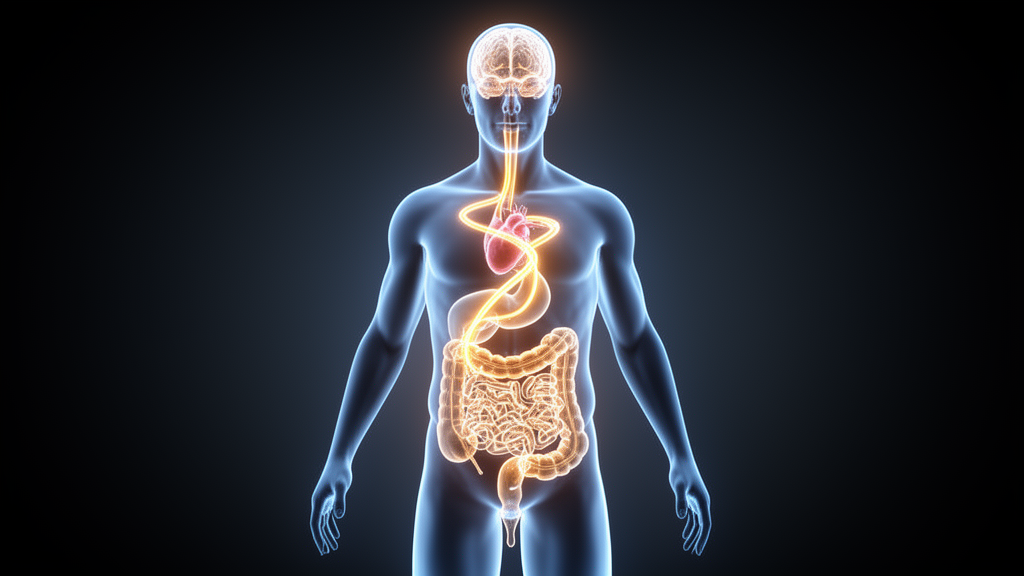
Bipolar disorder has long been described as a problem of neurotransmitter imbalance, a chemical seesaw between too much dopamine and too little serotonin. A new synthesis published in Frontiers in Integrative Neuroscience argues that this framing is not just incomplete but fundamentally misleading. Drawing on hundreds of studies across genetics, endocrinology, metabolism, immunology, and neuroscience, the review proposes that bipolar disorder is best understood as a disorder of dynamic dysregulation across multiple interacting biological systems—a hierarchically organized, bidirectionally coupled feedback network whose instability produces the oscillating mood states that define the illness. The author, presenting an integrative biological model rather than a parallel account of independent domains, lays out a specific causal cascade and, critically, three testable predictions that could reshape how researchers and clinicians approach the condition.
The scale of the problem is considerable. Bipolar disorder affects roughly 1 to 2.4 percent of adults worldwide, with onset most often in late adolescence or early adulthood. It is among the most heritable psychiatric conditions, with twin studies yielding estimates of 60 to 80 percent, yet even first-degree relatives of affected individuals face an absolute lifetime risk of only about 3.1 percent compared with 0.5 percent in matched controls. That gap between genetic liability and actual illness—what geneticists call missing heritability, since common variants identified in genome-wide association studies account for only 20 to 40 percent of the twin-study estimate—points to the decisive role of gene-environment interactions and epigenetic mechanisms. The review argues that these mechanisms are not peripheral but central to how vulnerability becomes disease.
At the top of the proposed cascade sits the hypothalamic-pituitary-adrenal axis, the body’s primary stress-response system. Genetic and epigenetic vulnerabilities, particularly methylation changes at the FKBP5 gene, are proposed to destabilize glucocorticoid receptor signaling and impair the negative feedback loop that normally terminates cortisol release. FKBP5 encodes a co-chaperone that modulates glucocorticoid receptor sensitivity, and the review describes how early-stage bipolar disorder is associated with higher FKBP5 methylation that preserves receptor function, while chronic illness and cumulative stress drive cortisol-induced hypomethylation, overexpression of the FKBP51 protein, and progressive glucocorticoid resistance. The physiological signature is a blunted dexamethasone suppression test and elevated hair cortisol concentration, a measure of cumulative cortisol output that has been found elevated across manic, depressive, and even euthymic states. Childhood trauma, reported by 50 to 80 percent of bipolar patients, appears to accelerate this epigenetic remodeling, linking early adversity to neuroendocrine instability, earlier onset, rapid cycling, and increased suicide risk.
The second node in the cascade—and what the author identifies as the central integrative hub—is mitochondrial bioenergetic dysfunction. Neuroimaging with magnetic resonance spectroscopy and positron emission tomography, along with metabolomic studies, consistently show a pattern of impaired oxidative phosphorylation compensated by increased glycolysis. During depressive phases, cerebral glucose metabolism falls; during mania, it rises, consistent with a model in which manic states represent a period of heightened metabolic demand and oxidative stress before cellular stress signaling engages. Elevated lactate in the anterior cingulate cortex, caudate, and cerebrospinal fluid—found across mood states including euthymia—suggests that mitochondrial inefficiency is a trait-level feature rather than a state-dependent abnormality. When oxidative phosphorylation falters, glycolysis alone cannot sustain the ATP demands of the sodium-potassium ATPase that maintains resting membrane potential. Intracellular sodium accumulates, potassium is lost, and neurons drift into chronic depolarization, opening voltage-gated calcium channels and triggering excitotoxic cascades that may underlie the neuroprogression—gray matter loss, white matter abnormalities, and cognitive decline—observed in later-stage illness.
This metabolic insufficiency does not operate in isolation. The review describes a reinforcing feedback loop between mitochondrial dysfunction and immune activation. Pro-inflammatory cytokines including interleukin-1β, interleukin-6, and tumor necrosis factor-α are consistently elevated in bipolar disorder, with C-reactive protein most robustly increased during mania. Inflammatory signaling drives excessive mitochondrial activity and oxidative stress, ultimately compromising oxidative phosphorylation and pushing cells toward hyperglycolytic metabolism. Conversely, dysfunctional mitochondria conditionally amplify pro-inflammatory signaling, creating a self-reinforcing cycle. Tumor necrosis factor-α elevations have been associated with poor response to lithium, and inflammatory markers track with illness activity, normalizing with treatment in some studies. The review also notes that more than 90 percent of individuals with bipolar disorder experience at least one lifetime comorbidity, and over 70 percent have three or more, a pattern the author attributes to shared inflammatory and metabolic vulnerabilities rather than coincidence.
The gut-brain axis adds a third layer of interaction. Bipolar disorder has been associated with reduced microbial richness and diversity, depletion of short-chain fatty acid-producing bacteria such as Faecalibacterium and Ruminococcaceae, and expansion of lipopolysaccharide-producing Gram-negative bacteria including Flavonifractor and Enterobacteriaceae. Loss of barrier-supporting taxa compromises intestinal epithelial integrity, and patients show elevated circulating zonulin, lipopolysaccharide-binding protein, and immunoglobulins to commensal bacteria—markers of microbial translocation and impaired barrier function. Stress-induced HPA axis activation itself increases intestinal permeability through mast-cell degranulation and cytokine release, meaning that neuroendocrine dysfunction both drives and is driven by gut dysbiosis. The resulting systemic inflammation feeds back into mitochondrial dysfunction and microglial activation, completing a loop in which psychological stress, endocrine output, gut permeability, and immune signaling are tightly coupled rather than independently dysregulated.
At the circuit level, these molecular and metabolic disturbances converge on excitation-inhibition imbalance in prefrontal-limbic networks. Functional imaging shows reduced connectivity between the ventrolateral prefrontal cortex and the amygdala during mania, reflecting diminished top-down regulation of emotional reactivity, while bipolar depression involves a hypoactive regulatory cingulate network. Structural findings include enlarged lateral ventricles, reduced hippocampal volume, and progressive prefrontal cortical thinning associated with the number of lifetime manic episodes. Positron emission tomography with fluorodeoxyglucose reveals increased metabolism in the dorsal anterior cingulate during mania and decreased activity in the same regions during depression. The author proposes that these circuit-level oscillations are the downstream expression of the metabolic and inflammatory cascade, with depression representing hypometabolic underactivity and mania representing a phase of increased energy demand, catecholaminergic firing, and neuronal overexcitability.
From this integrative model, three empirically tractable predictions follow. First, co-occurring inflammatory, metabolic, and circadian dysregulation should constitute a biological subtype characterized by earlier onset, more rapid cycling, and poorer response to lithium monotherapy. Second, neuroendocrine and metabolic disturbances should prospectively precede rather than merely co-occur with mood-state transitions, a prediction testable through longitudinal multimodal monitoring of cortisol, mitochondrial indices, and gut permeability biomarkers alongside mood state. Third, interventions targeting the metabolic-inflammatory interface should produce mood-stabilizing effects whose magnitude correlates with baseline biological severity—mitochondrial and inflammatory marker levels—rather than with symptom severity alone. These predictions distinguish the model from purely descriptive multisystem accounts and provide a concrete framework for the longitudinal, mechanistically driven studies the review is intended to engender.
The translational implications are already taking shape. For patients with prominent metabolic dysfunction, ketogenic dietary strategies—high in fat, very low in carbohydrate, producing ketone bodies that can serve as alternative neuronal fuel when oxidative phosphorylation is impaired—have shown preliminary promise in pilot studies and case reports, though randomized controlled trials remain lacking. For those with circadian instability, identified by actigraphy-confirmed rest-activity fragmentation, evening chronotype, or variation in clock genes such as PER3 and CLOCK, interpersonal and social rhythm therapy and light-based interventions offer mechanistically grounded approaches. For patients with heightened inflammatory activity, anti-inflammatory supplementation including omega-3 fatty acids and microbiome-directed strategies such as probiotic formulations with barrier-restoring properties represent emerging adjunctive options. Early clinical trials of probiotics containing Lactobacillus and Bifidobacterium strains have reported reduced rehospitalization and improvements in mood and cognition, though larger controlled studies are needed.
Perhaps most strikingly, the systems-level framework is already generating novel diagnostic tools. A recent proof-of-concept study applied patient-derived plasma small extracellular vesicles to cultured microglial cells, capturing disease-specific morphological changes with fluorescence microscopy and classifying them using a deep learning pipeline. The approach correctly classified 44 of 45 subjects across bipolar disorder, major depressive disorder, and healthy control groups, achieving 98.67 percent subject-level accuracy. Rather than treating neuroinflammation as a downstream consequence to be measured after diagnosis, this platform treats it as a biologically embedded signal that encodes diagnostic information accessible through peripheral blood—precisely the kind of immune-metabolic readout the integrative model predicts should differentiate biological subtypes. While replication in larger, medication-stratified cohorts is needed, the work illustrates how reconceptualizing bipolar disorder as a disorder of interacting regulatory systems, rather than a fixed neurotransmitter deficit, may move the field beyond symptom-based classification toward biologically precise identification and, ultimately, more effective treatment.
Subject of Research: Integrative biological systems model of bipolar disorder pathophysiology
Article Title: Reconceptualizing bipolar disorder through an integrative biological lens: synthesis, convergence, and emerging directions
Article References: Muhammad, Y. A. (2026). Reconceptualizing bipolar disorder through an integrative biological lens: synthesis, convergence, and emerging directions. Frontiers in Integrative Neuroscience, 20, Article 1775109. https://doi.org/10.3389/fnint.2026.1775109
Image Credits: AI Generated
DOI: 10.3389/fnint.2026.1775109
Keywords: bipolar disorder, HPA axis, mitochondrial dysfunction, neuroinflammation, gut-brain axis, circadian rhythm, FKBP5, ketogenic diet, lithium, epigenetics, cortisol, systems biology
News Source: Cassandra Pierce. (October 16, 2026). Bipolar Disorder Reimagined: A Body-Wide Feedback Loop May Drive the Mood Cycle. Scienmag.