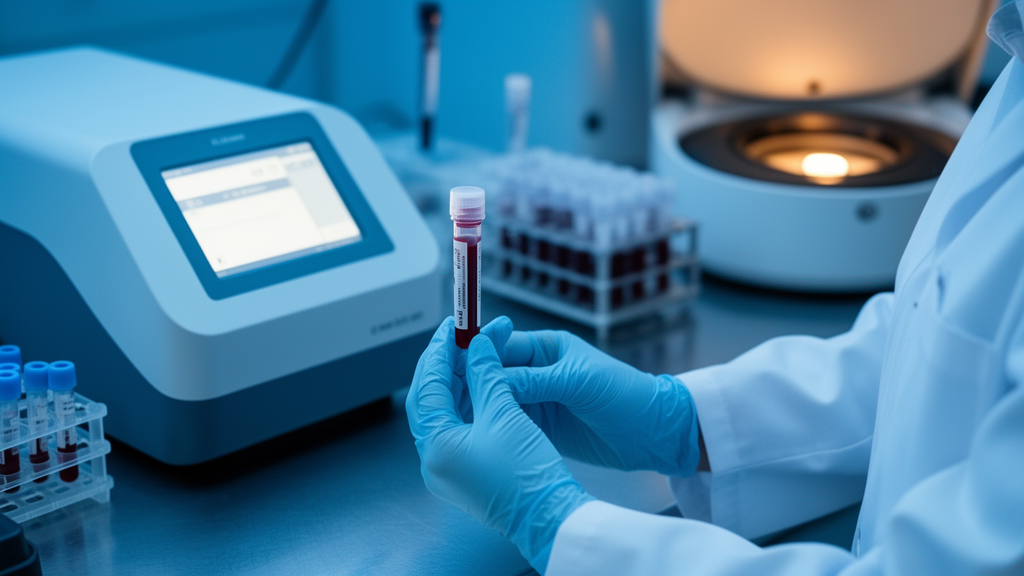
Metastatic castration-resistant prostate cancer, or mCRPC, is one of the most formidable challenges in modern oncology. Once prostate cancer has spread beyond the prostate and stopped responding to hormonal castration, median survival is measured in years rather than decades, and clinicians must choose among an expanding arsenal of life-prolonging therapies without a reliable compass. A newly published narrative review in Frontiers in Molecular Medicine argues that a simple tube of blood may provide that compass, offering a real-time, minimally invasive window into the tumour’s genome that PSA blood tests and imaging scans cannot match.
The review, led by Chimbabantu Kaoma and colleagues at the Nuclear Medicine Research Infrastructure and the University of Pretoria in South Africa, synthesises evidence on circulating tumour DNA, or ctDNA, across the four major treatment classes in mCRPC: androgen receptor pathway inhibitors, taxane chemotherapy, PARP inhibitors, and PSMA-targeted radioligand therapy. The authors’ central message is nuanced. ctDNA is undeniably informative, but most of its proven value today is prognostic rather than predictive, meaning it tells clinicians how aggressive a patient’s disease is rather than which specific drug will work best.
The biological logic behind ctDNA is elegant. When tumour cells die, through apoptosis, necrosis, or therapy-induced destruction, they release fragments of their DNA into the bloodstream. This tumour-derived DNA mixes with cell-free DNA shed by normal cells, predominantly from white blood cells and their precursors. In healthy individuals, cell-free DNA consists mainly of short fragments around 40 to 200 base pairs. In patients with metastatic cancer, a variable proportion of this circulating DNA originates from the tumour itself, and that proportion, known as the tumour fraction, can range from less than 1 percent to more than 50 percent in advanced mCRPC. Because ctDNA has a half-life of roughly one to two hours, cleared rapidly by the liver, kidneys, nucleases, and macrophages, its levels reflect tumour dynamics almost in real time.
What makes ctDNA particularly powerful in mCRPC is that it captures the tumour’s evolutionary story. Prostate cancer under therapeutic pressure is a textbook example of Darwinian selection. Androgen receptor signalling remains the dominant oncogenic driver even after castration, and tumours accumulate gain-of-function mutations in the androgen receptor’s ligand-binding domain, such as T878A, H875Y, L702H, and F877L, that broaden ligand specificity or even convert drugs like enzalutamide from antagonists into agonists. The F877L mutation, for instance, can flip enzalutamide and apalutamide into activators of the very receptor they were designed to block, while L702H allows glucocorticoids given during treatment to activate the receptor. Serial ctDNA sampling can track these resistant subclones as they emerge, something a single archival tissue biopsy taken years earlier simply cannot do.
On the technical side, next-generation sequencing has transformed what is possible. Targeted hybrid-capture panels, amplicon-based deep sequencing, droplet digital PCR for hotspot mutations, and low-pass whole-genome sequencing for tumour fraction estimation can now detect variant allele frequencies below 0.1 percent under optimised conditions, thanks to molecular barcoding and error-suppression strategies. But the review is careful to distinguish analytical sensitivity from biological sensitivity. A technically exquisite assay still fails when the tumour sheds little DNA, as is common in bone-predominant disease, or when the relevant resistant clone sits below the assay’s limit of detection. A negative ctDNA result, the authors stress, never excludes active disease.
One of the most important confounders the review highlights is clonal haematopoiesis of indeterminate potential, or CHIP. As people age, some haematopoietic stem cells acquire somatic mutations in genes like TP53, ASXL1, DNMT3A, and TET2, and these non-malignant clones release mutated DNA into the plasma that can be mistaken for tumour-derived signal. Matched white blood cell sequencing is therefore essential to filter out this noise. Pre-analytical variability, differences in tube type, processing time, and storage conditions, plus a lack of harmonisation across platforms, further complicate interpretation and currently prevent universal thresholds from being applied in the clinic.
Despite these caveats, the prognostic evidence for ctDNA tumour fraction is remarkably consistent across every treatment class examined. In landmark trials of abiraterone and enzalutamide, ctDNA-positive patients had median overall survival reduced from 47.4 to 27.3 months and median radiographic progression-free survival reduced from 33.0 to 17.8 months, independent of PSA and other clinical variables. Each 10 percent increase in ctDNA aneuploidy fraction was associated with a proportional increase in the hazard of progression and death. Similar patterns emerged in the TALAPRO-2 trial of talazoparib plus enzalutamide, in the FIRSTANA and PROSELICA taxane trials, and in the PSMAfore and TheraP radioligand therapy studies, where baseline ctDNA fraction above 0.5 percent independently predicted inferior outcomes regardless of treatment assignment.
The one domain where ctDNA has achieved genuine predictive, treatment-defining status is in homologous recombination repair testing for PARP inhibitors. In the PROfound trial, ctDNA testing showed substantial concordance with tissue sequencing for BRCA1, BRCA2, and ATM alterations, and this evidence contributed directly to regulatory approval of olaparib and to the FDA clearance of FoundationOne Liquid CDx as a companion diagnostic. Beyond selection, ctDNA also monitors response in this setting: in TOPARP-A, a fall of at least 50 percent in cell-free DNA concentration at four to eight weeks was associated with improved survival, while rising ctDNA identified non-responders and revealed resistance mechanisms such as BRCA2 and PALB2 reversion mutations that restore the broken repair pathway.
For PSMA-targeted radioligand therapy with lutetium-177 PSMA-617, the review frames ctDNA as complementary to, not a replacement for, PSMA PET imaging. PSMA PET determines eligibility by confirming sufficient target expression across metastatic sites, while ctDNA refines molecular risk assessment and tracks clonal evolution. Exploratory analyses from TheraP suggest that ATM alterations may predict greater benefit from radioligand therapy over cabazitaxel, plausibly because impaired DNA repair enhances radiosensitivity, while AR amplification and alterations in TP53, RB1, and PTEN are enriched in poor responders, though these signals remain investigational. Early on-treatment ctDNA kinetics, measured at cycle 2 day 1 in PSMAfore, correlated more strongly with progression-free and overall survival than baseline levels and were largely independent of PSA, suggesting ctDNA can detect molecular response to radiation-induced DNA damage before anatomical changes become visible.
The review’s conclusion is measured but forward-looking. ctDNA is best positioned today as a complementary tool for risk stratification and disease monitoring, with tumour fraction serving as a pan-therapy prognostic biomarker and genomic alterations providing therapy-specific predictive information only in validated contexts such as HRR testing. Emerging technologies, including fragmentomics, DNA methylation profiling capable of detecting neuroendocrine transformation, multi-omic liquid biopsy integrating circulating tumour cells and extracellular vesicles, and machine learning approaches to integrate complex datasets, promise to expand ctDNA’s clinical reach. But the authors are clear that routine implementation will require prospective biomarker-driven trials, assay standardisation, population-diverse validation, and a demonstration that acting on ctDNA results genuinely improves patient outcomes. Until then, the blood test that reads a tumour’s evolutionary diary remains a powerful adjunct rather than a standalone decision-maker, one whose full potential in precision oncology is still being written.
Subject of Research: Circulating tumour DNA as a liquid biopsy biomarker for monitoring and prognostication in metastatic castration-resistant prostate cancer.
Article Title: Circulating tumour DNA in mCRPC: bridging tumour biology and real-time treatment monitoring
Article References: Kaoma, C., Sathekge, M., Chalwe, J., Mokoala, K., & Kgatle, M. (2026). Circulating tumour DNA in mCRPC: bridging tumour biology and real-time treatment monitoring. Frontiers in Molecular Medicine, 6, Article 1852641. https://doi.org/10.3389/fmmed.2026.1852641
Image Credits: AI Generated
DOI: 10.3389/fmmed.2026.1852641
Keywords: circulating tumour DNA, liquid biopsy, metastatic castration-resistant prostate cancer, androgen receptor pathway inhibitors, PARP inhibitors, PSMA radioligand therapy, tumour fraction, clonal haematopoiesis, clonal evolution, precision oncology, biomarker validation, next-generation sequencing
News Source: Nathaniel Bowman. (October 16, 2026). Blood Test Tracks Prostate Cancer’s Evolving Genome in Real Time. Scienmag.