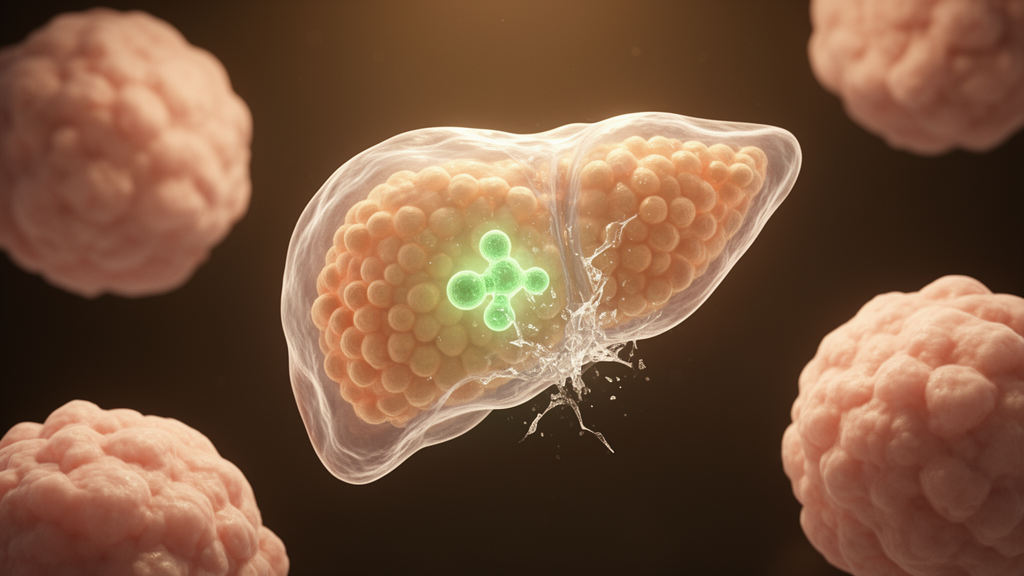
A small protein with an outsized influence on how cells decide to die is stepping into the spotlight of liver cancer research. In a study published in BMC Cancer, a team of Chinese investigators reports that G0/G1 switch gene 2, better known as G0S2, appears to act as a regulator of apoptosis, the programmed self-destruction pathway that cancer cells so often learn to evade. Using an unbiased proteomic survey in mice engineered to overproduce the protein, the researchers found that raising G0S2 levels reshuffled the abundance of a suite of apoptosis-related proteins, including Caspase3, FADD and BAX, and they went on to argue that G0S2 drives cell death through the BAX/Caspase3 axis. For a malignancy as deadly and treatment-resistant as hepatocellular carcinoma, the identification of a compact, druggable-looking node in the cell death machinery is the kind of finding that invites both excitement and careful scrutiny.
G0S2 is, by protein standards, remarkably minimal. It encodes a short peptide first recognized for its role at the boundary between the resting G0 phase and the proliferative G1 phase of the cell cycle, hence its name. Over the years, however, studies have tied the protein to a startling range of processes: lipid metabolism, where it binds and inhibits adipose triglyceride lipase; inflammation, where it has been linked to signaling cascades involving nuclear factor of activated T cells; and, increasingly, cell death. What has remained murky is precisely how G0S2 participates in apoptosis, particularly in the context of cancer, where tumor cells routinely suppress the very pathways that would otherwise eliminate them. The new study set out to close that gap by asking a straightforward question: what happens to the protein landscape of an organism when G0S2 is forced into overexpression?
The methodological heart of the paper is proteomics, the large-scale inventory and comparison of proteins in a biological sample. Rather than inferring what G0S2 does from gene expression alone, which can be misleading because messenger RNA levels often fail to track protein abundance, the team directly measured the protein complement of G0S2-overexpressing mice and compared it against controls. From the resulting data they performed functional annotations using Gene Ontology frameworks, pathway analysis through the Kyoto Encyclopedia of Genes and Genomes, and protein-protein interaction network mapping. These computational lenses converged on a consistent signal: among the molecular programs perturbed by G0S2 overexpression, apoptosis stood out, with multiple components of the death-signaling machinery shifting in abundance in ways consistent with an activated cell death program.
The specific players matter. BAX, or BCL2-associated X protein, is a pro-apoptotic member of the BCL-2 family that, when activated, permeabilizes the outer mitochondrial membrane, releasing factors that tip a cell into irreversible self-destruction. Caspase3 is the executioner enzyme of the pathway, a protease that once cleaved and activated systematically dismantles the cell’s structural and regulatory components. FADD, the Fas-associating protein with a novel death domain, sits at the junction of death receptor signaling, transmitting suicidal commands from the cell surface inward. Finding all three altered in G0S2-overexpressing tissue suggested that the small protein was not merely brushing against the apoptosis machinery but engaging it at multiple points, with the BAX-to-Caspase3 sequence emerging as the apparent conduit through which G0S2 exerts its effect.
Crucially, the researchers did not stop at correlation. To verify that apoptosis was genuinely occurring, they deployed TUNEL staining, a technique that flags the fragmented DNA characteristic of dying cells, alongside immunohistochemistry to visualize protein changes in tissue context, and molecular genetic strategies to interrogate the pathway’s behavior. Together, these validation experiments supported the central claim: G0S2 overexpression is associated with measurable, verifiable cell death, and the BAX/Caspase3 pathway is the mechanism through which the protein promotes it. In the language of the paper’s conclusion, G0S2 is implicated in apoptosis specifically through this axis, a finding the authors suggest could illuminate therapeutic strategies for diseases tied to apoptosis, inflammation and cancer.
The implications for hepatocellular carcinoma, the most common form of primary liver cancer, are what give the work its urgency. Hepatocellular carcinoma is a devastating malignancy, frequently diagnosed late and often arising in livers already damaged by hepatitis infection, alcohol-related injury or metabolic disease. One of the hallmarks of cancer, recognized for decades, is the ability of tumor cells to resist apoptosis, allowing damaged and genetically unstable cells to survive, proliferate and spread. If G0S2 functions as a pro-apoptotic influence, then tumors might benefit from silencing or downregulating it, and restoring its activity could, in principle, re-sensitize malignant cells to self-destruction. The authors frame the protein as a potential therapeutic target for precisely this reason, though the path from a mouse proteomics experiment to a clinical strategy is long and demanding.
It is worth situating the finding within the broader history of G0S2 research, which has been accumulating suggestive evidence for years. The protein has been reported to interact with signaling systems as varied as peroxisome proliferator-activated receptor agonists and retinoids, both of which have metabolic and differentiation-related effects on cells. It has appeared in studies of chronic kidney disease, subarachnoid hemorrhage and stress signaling, and it has been connected to networks involving mTOR, hypoxia-inducible factor 1-alpha and the DNA damage response. What the new study adds is a mechanistic anchor: a defined pathway, BAX/Caspase3, through which the protein’s apoptotic influence can be understood and, eventually, manipulated. That kind of mechanistic clarity is what transforms a protein from a statistical association in high-throughput data into a credible biological hypothesis.
The proteomic approach itself deserves attention, because it reflects a wider shift in how cancer biology is being done. Genome and transcriptome studies have catalogued countless genetic alterations in tumors, but proteins are the molecules that actually execute cellular behavior, and their regulation is layered with modifications, interactions and turnover dynamics that nucleic acid measurements cannot capture. By profiling the entire protein complement of G0S2-overexpressing tissue and then filtering the results through pathway and interaction analyses, the researchers allowed the biology to point toward its own explanation rather than testing a single preconceived candidate. The trade-off is that proteomic datasets are noisy and context-dependent, which is why the team’s follow-up validation with staining and genetic methods is essential to the study’s credibility.
Cautious optimism is the appropriate posture. The work was conducted in mice with G0S2 overexpression, and while animal models are indispensable for establishing mechanism, the translation to human hepatocellular carcinoma requires demonstrating that the protein’s expression patterns in patient tumors correlate with disease behavior, that the BAX/Caspase3 mechanism operates in human liver cancer cells, and that pharmacologically modulating G0S2 can be done safely. The liver is a metabolically central organ, and a protein implicated in lipid handling and inflammation could carry off-target consequences if simply amplified systemically. The study, supported by the National Natural Science Foundation of China and regional science programs in Shandong Province, was approved by the ethics committee of Shandong Provincial Hospital and conducted under established laboratory animal welfare guidelines, underscoring the careful preclinical framework within which such findings must be interpreted.
Even so, the study offers something that the apoptosis and liver cancer fields genuinely need: a new, compact and mechanistically grounded candidate for tipping the balance of life and death in tumor cells. The BAX/Caspase3 pathway is one of the most conserved and well-characterized death circuits in biology, and any protein that can be shown to promote its activation becomes a potential lever for intervention, whether through gene-based therapies, small molecules that stabilize the protein, or strategies that mimic its downstream effects. The authors’ stated hope is that these findings may inform novel therapeutic strategies for treating hepatocellular carcinoma, a disease for which effective options remain painfully limited. As the paper moves through the scientific conversation, the next milestones will be replication in tumor models and human tissue, and the search for ways to translate a small protein’s apoptotic push into a clinical weapon against one of the world’s most lethal cancers.
Subject of Research: The role of the G0S2 protein in regulating apoptosis via the BAX/Caspase3 pathway in hepatocellular carcinoma
Article Title: Proteomic analysis reveals G0S2 as a potential apoptosis regulator in hepatocellular carcinoma
Article References: Wu, D., Zhang, X., Qiu, Y., Sun, W., Wang, Q., Yan, Y., Jing, M., Zhang, Z., Ma, S., & Sun, M. (2026). Proteomic analysis reveals G0S2 as a potential apoptosis regulator in hepatocellular carcinoma. BMC Cancer. https://doi.org/10.1186/s12885-026-16746-0
Image Credits: AI Generated
DOI: 10.1186/s12885-026-16746-0
Keywords: G0S2, apoptosis, hepatocellular carcinoma, proteomics, BAX, Caspase3, FADD, liver cancer, cell death, BCL-2 family, therapeutic target, stress signaling
News Source: Nathaniel Bowman. (October 15, 2026). Tiny Protein G0S2 Emerges as a Master Switch for Cell Death in Liver Cancer. Scienmag.