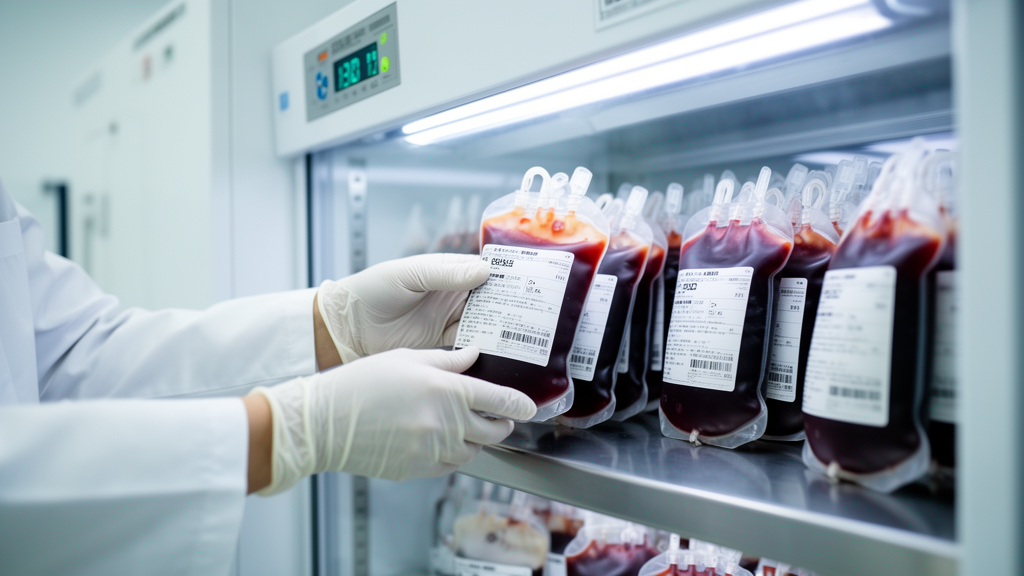
Every blood donation is a finite, perishable and irreplaceable gift. A volunteer gives time, physiological burden and public trust so that a patient somewhere can survive. Yet according to a new proposal published in eJHaem, the value of that gift may quietly evaporate long before it reaches a patient, lost through collection failures, processing losses, inventory wastage, expiry, handling errors, inappropriate clinical utilisation and incidents. The paper, authored by A.A. and A.P., introduces Donor Blood Management, or DBM, a stewardship framework designed to protect donor value across the entire donation-to-transfusion pathway, and proposes a new metric, Donor-to-Recipient Value Yield, to measure how much of the donated blood is ultimately transfused appropriately.
The proposal arrives at a moment when the economics of altruism have never looked more fragile. In the United States, only about 3 percent of eligible individuals donate each year, while in the United Kingdom fewer than 4 percent of adults are active donors. Blood services face ageing donor populations, recruitment challenges and rising demand, a combination that makes every unit collected critically important. Against this backdrop, the authors argue that transfusion medicine has transformed patient care through Patient Blood Management, which promotes evidence-based blood use, but no equivalent donor-centred framework exists to follow the donation itself across the full journey from vein to vein.
The conceptual foundation of DBM rests on a distinction between two established systems. Good Manufacturing Practice governs donor qualification, collection, testing, processing and storage, thereby protecting component safety and quality. Patient Blood Management focuses on patient-centred care, including whether transfusion is clinically indicated. However, neither framework explicitly follows the donor gift across the entire pathway to ask whether avoidable loss has been minimised and whether donor burden has translated into appropriate patient benefit. DBM is designed to complement both, using system-wide data to ask whether blood systems protect donor health, minimise avoidable donor burden, preserve component value and translate donations into patient benefit.
The ethical argument is central to the framework. DBM is founded on the principle that every blood donation is a voluntary, altruistic and non-remunerated gift made for the benefit of others. This creates an ethical obligation for blood services, hospitals, clinicians and regulators to manage donations responsibly and minimise avoidable loss. While transfusion ethics has traditionally focused on patient safety and appropriate use, DBM extends this frame to preservation of donor value throughout the pathway. Donors have a reasonable expectation that their gift will be managed efficiently and reserved for genuine patient benefit, and by promoting stewardship, transparency and shared accountability, DBM helps protect both donor value and the public trust on which voluntary donation depends.
Operationally, DBM is built on four interconnected pillars. The first, collection and processing optimisation, is led by blood services and balances donor-centred outcomes such as iron status, haemoglobin recovery, adverse reactions, deferral management and donation frequency with minimising avoidable loss from collection to component production. This is achieved through reducing collection failures, optimising component separation, minimising discard rates and implementing quality assurance via automated processing, real-time monitoring and standardised quality control. The second pillar, inventory optimisation, is led by blood services and hospitals and focuses on minimising avoidable loss through forecasting, stock rotation, redistribution, expiry prevention and reduced wastage, using first-in-first-out rotation, near-expiry redistribution between hospitals, demand forecasting and real-time inventory tracking. Every expired unit represents a lost opportunity for patient benefit.
The third pillar, appropriate utilisation, is led by hospitals and clinicians and ensures that transfusion is evidence-based and clinically justified, achieved through single-unit transfusion policies, adherence to national guidelines, pre-transfusion anaemia management and clinician education. Patient Blood Management asks whether transfusion is necessary; DBM additionally asks whether the donor gift has been used appropriately. The two frameworks converge at the transfusion decision, and DBM does not redefine transfusion appropriateness, which remains within PBM. The fourth pillar, haemovigilance and improvement, is led by haemovigilance programmes, blood services and hospitals and provides feedback through reporting, audit, benchmarking and learning from incidents. Vein-to-vein datasets can extend this feedback by connecting donor and product characteristics with recipient outcomes and by identifying losses or variation across the pathway.
To measure performance across these pillars, the authors propose Donor-to-Recipient Value Yield, or DRVY, defined as the proportion of donated blood that is ultimately transfused appropriately. The calculation is straightforward in principle: if 100 whole-blood donations are processed into 250 components such as red cells, platelets and plasma, and 210 components are transfused appropriately, the DRVY is 84 percent. The remaining 16 percent represents donor-to-recipient value loss through collection failure, processing loss, expiry, wastage or inappropriate use, and should be analysed across the four DBM pillars. Because each donation can yield multiple components, DRVY should be calculated separately for red cells, platelets and plasma, and for apheresis, a double- or triple-dose platelet collection contributes the corresponding number of therapeutic doses to the denominator, not donor attendances.
The authors are careful to position DRVY as a stewardship metric rather than a simple target to maximise. Some losses are unavoidable, such as testing discards and quality control samples, and reporting should distinguish avoidable from unavoidable losses, include safety and equity safeguards, and describe uncertainty from incomplete linkage or clinical data. DRVY does not determine whether a transfusion was appropriate, a judgement that remains with PBM, nor should it be maximised at the expense of donor safety, quality control, contingency stock or equity. A high ratio may be misleading if appropriateness is poorly recorded or if safety losses are excluded without explanation. DRVY has not yet been measured in practice, and its actual value remains unknown, depending on data quality and linkage rather than data size.
The technical infrastructure for this vision already exists in several vein-to-vein systems, including Canadian and Scandinavian databases, which link donor, component and recipient data across the pathway. These systems have limitations, including variable data quality, incomplete capture of outpatient or home transfusions and differing definitions across systems, so any DRVY calculation must report linkage completeness, uncertainty and data limitations. The next step, the authors argue, is to define consistent stewardship variables and apply them across existing datasets. Haemovigilance programmes such as SHOT demonstrate that avoidable human and system errors remain an important source of preventable loss, while current metrics such as units collected, issued and wastage rates provide only a partial view. DRVY measures what matters: how much of the donor’s gift translates into appropriate patient benefit.
The authors acknowledge that DBM is proposed as a conceptual stewardship framework requiring operational validation in different blood systems, and that implementation may vary according to regulatory environment, digital maturity and the division of responsibility between blood services and hospitals. Future work should validate DRVY across existing linked systems, standardise component-specific denominators, distinguish avoidable from unavoidable losses and use analytics to support improvement, with international collaboration and transparent reporting essential if DRVY is to become a comparable quality-improvement metric. The new European Substances of Human Origin regulatory framework supports this integrated perspective by requiring Member States to pursue adequate supply, promote donor retention, monitor stocks and encourage optimal use. The transfusion community, the authors conclude, should now consider DBM alongside PBM as a core principle of modern practice, reframing blood as a human gift whose value should be protected throughout the donor-to-recipient journey.
Subject of Research: Donor Blood Management: A Complementary Framework to Patient Blood Management
Article Title: Donor Blood Management: A Complementary Framework to Patient Blood Management
Article References: Allameddine, A., & Piccin, A. (2026). Donor Blood Management: A Complementary Framework to Patient Blood Management. eJHaem, 7(5), Article e70401. https://doi.org/10.1002/jha2.70401
Image Credits: AI Generated
DOI: 10.1002/jha2.70401
Keywords: transfusion medicine, blood donation, patient blood management, donor blood management, haemovigilance, health, Donor, Blood, Management, Complementary, Framework, Patient
News Source: Nathaniel Bowman. (October 15, 2026). Every Drop Counts: New Donor Blood Management Framework Aims to Protect the Value of Every Blood Donation. Scienmag.