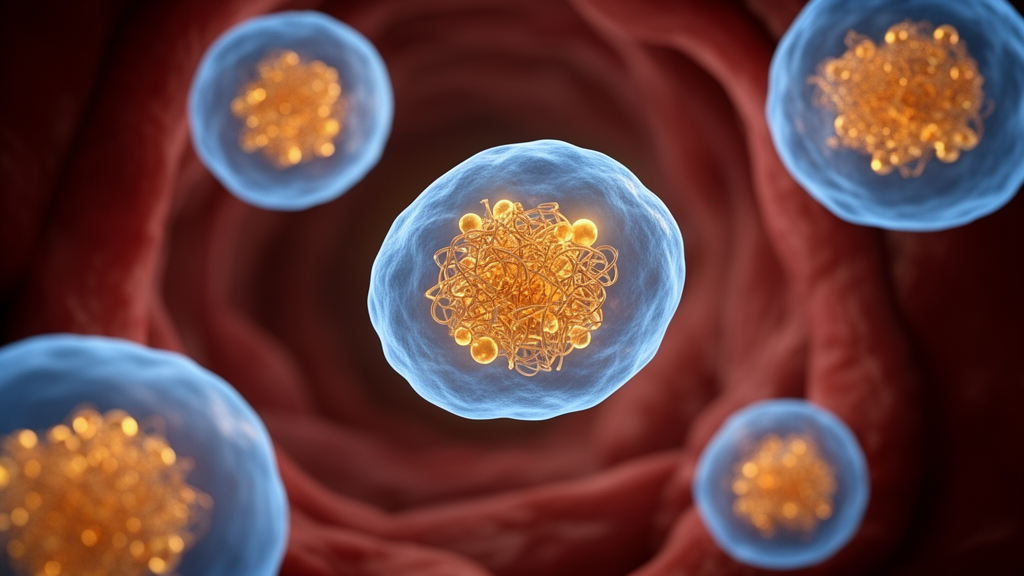
Aggressive forms of leukemia often owe their destructive power to a strange class of proteins known as fusion oncoproteins, which arise when chromosomes break and rejoin in the wrong way, fusing two genes that were never meant to be combined. In the cell nucleus, these hybrid proteins do not simply float around freely. Instead, they gather in biomolecular condensates, dynamic, membrane-less assemblies in which proteins, DNA, and RNA cluster together to influence which genes are switched on and which remain silent. These structures, sometimes described as liquid droplets within the cellular interior, have become one of the most intensively studied frontiers in molecular biology, because they appear to control gene activity in ways that conventional models of gene regulation cannot fully explain. Now, a research team from Vienna has taken a decisive step toward understanding what happens inside these droplets in leukemia cells, and their findings point to an unexpected player: RNA molecules that were long considered little more than background noise.
The study, published in The EMBO Journal by researchers from the CeMM Research Center for Molecular Medicine of the Austrian Academy of Sciences and the University of Veterinary Medicine Vienna, focused on a fusion oncoprotein called NUP98::KDM5A. This protein is found in aggressive forms of acute myeloid leukemia, or AML, and it promotes the formation of condensates in leukemia cells that are required for the activation of leukemia-relevant genes. Until now, however, scientists knew remarkably little about which RNA molecules participate in these so-called oncocondensates. The Vienna team set out to close that gap, and in doing so they developed an entirely new experimental method that could reshape how researchers study the RNA biology of condensates across many diseases.
The new technique, named bicon-seq, allows scientists to systematically identify which RNAs are associated with biomolecular condensates. According to Florian Grebien, senior author of the study and head of the Unit of Medical Biochemistry at the University of Veterinary Medicine Vienna, the method makes a previously difficult-to-access layer of gene regulation measurable. The underlying principle is elegant: bicon-seq provides quantitative information on the cellular solubility of RNA molecules. Changes in this parameter indicate whether an RNA is more strongly or more weakly associated with condensates. RNAs that become less soluble are likely to be recruited into these dense molecular assemblies, while those that remain highly soluble are probably excluded from them. By measuring solubility across thousands of RNA species simultaneously, the method produces a comprehensive map of the RNA composition of condensates within living cells.
One of the most powerful aspects of the approach is that it is not limited to a single static snapshot. As Melanie Allram, first author of the study, explained, the method allows researchers to track how the RNA composition of condensates changes when key components are specifically disrupted or depleted. This dynamic dimension is crucial, because condensates are by nature fluid and responsive structures. Their molecular contents can shift as cellular conditions change, and those shifts may carry profound consequences for gene activity. With bicon-seq, perturbation experiments become possible: researchers can remove or silence a particular protein or RNA and then observe, quantitatively, how the entire RNA landscape of the condensates responds. This turns what was once a descriptive field into an experimental one, in which cause and effect can be disentangled.
Applying the method to leukemia cells carrying the NUP98::KDM5A fusion oncoprotein, the team identified several long non-coding RNAs, or lncRNAs, associated with the oncocondensates. These are RNA molecules that are transcribed from the genome but are not translated into proteins, a category that was once dismissed as transcriptional clutter but is now recognized as a major regulatory force in cells. Among the lncRNAs detected, one stood out: Gas5. This molecule was highly expressed in AML cells, it co-localized with NUP98::KDM5A within the condensates, and it proved to be important for the proliferation of leukemia cells. In other words, a non-coding RNA appeared to be an active participant in the molecular machinery that keeps these cancer cells dividing.
To test whether Gas5 was merely a passive passenger inside the condensates or an active contributor to their function, the researchers used CRISPR interference, or CRISPRi, a method for the targeted suppression of gene expression. When Gas5 was specifically downregulated, the gene activity of the AML cells changed substantially. Among the affected genes were those involved in differentiation, the process by which immature blood cells mature into their specialized forms, and in programmed cell death, the self-destruction program that healthy cells use to prevent uncontrolled growth. Both of these processes are central to leukemia biology. Leukemia cells characteristically fail to differentiate and refuse to die, and the new results suggest that Gas5 contributes to maintaining that malignant state from within the oncocondensates.
As Allram emphasized, this shows that the Gas5 lncRNA is not only a component of these condensates, but can also influence their function. That distinction matters. Biomolecular condensates are thought to act as hubs that concentrate specific molecules and thereby enhance particular biochemical reactions or regulatory interactions. If an RNA inside such a hub helps determine which genes the condensate activates, then the RNA is not decoration; it is part of the control system. The finding adds Gas5 to a growing list of non-coding RNAs with demonstrated roles in disease, and it suggests that the RNA content of oncocondensates could contain further regulatory molecules waiting to be discovered.
The technical achievement behind these biological insights deserves attention in its own right. Studying the contents of biomolecular condensates has long been challenging precisely because these structures lack membranes and exist in a dynamic equilibrium with the surrounding cellular fluid. Traditional purification approaches risk disrupting the very interactions they aim to capture, and imaging methods can only follow a handful of molecules at a time. By quantifying RNA solubility as a proxy for condensate association, bicon-seq sidesteps many of these difficulties and produces data that are both genome-wide and quantitative. Grebien noted that the method enables the team to quantitatively characterize the RNA composition of these structures under both normal and perturbed conditions, opening new opportunities to investigate the role of RNAs in regulating disease-relevant condensates.
The broader implications extend well beyond a single fusion oncoprotein. NUP98::KDM5A belongs to a family of fusion proteins in which a chromatin-regulating enzyme is fused to a nucleoporin, a component of the nuclear pore complex, and similar fusion oncoproteins drive leukemias in both children and adults. If RNA molecules such as Gas5 turn out to be general requirements for the function of oncocondensates, then the RNA-protein interface inside these structures could become a target for future therapeutic strategies. Disrupting the association between a specific lncRNA and a fusion oncoprotein might weaken the condensates and thereby blunt the activation of leukemia-relevant genes, an idea that the Vienna researchers and others can now begin to test systematically thanks to the new method.
The findings underscore the importance of non-coding RNAs for the function of fusion oncoproteins and mark an early step in what is likely to become a rapidly expanding research area. Further studies by the Grebien Lab will examine in greater detail how the interaction between Gas5 and the NUP98::KDM5A fusion protein affects gene activity and leukemia development. For a disease as aggressive as AML, in which fusion oncoproteins rewire the epigenetic landscape of blood-forming cells, understanding the full molecular composition of the condensates that drive malignancy is more than an academic exercise. It is a search for the hidden levers of the disease, and with bicon-seq, some of those levers, made of RNA rather than protein, are finally coming into view.
Subject of Research: The role of long non-coding RNAs in fusion oncoprotein biomolecular condensates in acute myeloid leukemia
Article Title: Vienna research team reveals how RNA molecules influence the development of aggressive leukemia
Article References: Vienna research team reveals how RNA molecules influence the development of aggressive leukemia. (n.d.). Original publication
Image Credits: AI Generated
DOI: Not provided
Keywords: leukemia, acute myeloid leukemia, fusion oncoprotein, NUP98::KDM5A, biomolecular condensates, long non-coding RNA, Gas5, bicon-seq, CRISPRi, gene regulation, RNA biology, CeMM
News Source: Nathaniel Bowman. (October 15, 2026). RNA Molecules Found to Drive Aggressive Leukemia Through Oncocondensates. Scienmag.