Triple-negative breast cancer has long been one of the most stubborn opponents in oncology. Lacking the estrogen, progesterone, and HER2 receptors that give clinicians convenient molecular handles, it resists hormone therapy and many targeted drugs, leaving chemotherapy and immunotherapy as the mainstays of treatment. Even immunotherapy, which has transformed several other cancers, often stumbles here, because triple-negative tumors are unusually adept at hiding from the immune system. A new study published in BMC Complementary Medicine and Therapies by Cletus Anes Ukwubile of the University of Maiduguri and colleagues at Alex Ekwueme Federal University and Delta State University in Nigeria now reports a creative two-pronged answer: taking bitter defensive compounds from an Indian tree of heaven relative, Ailanthus excelsa, and ferrying them into tumor cells inside chitosan nanoparticles small enough to slip past the cell’s defenses.
The team’s central insight concerns a molecular switch called STAT3, a transcription factor that, when chemically activated by phosphorylation, drives the production of programmed death-ligand 1, or PD-L1. PD-L1 sits on the surface of tumor cells and acts like a fake identification badge, binding to PD-1 receptors on patrolling T cells and telling them to stand down. In triple-negative breast cancer, chronic STAT3 signaling keeps PD-L1 production running at high volume, allowing tumors to evade immune surveillance even when cytotoxic T cells are present in the surrounding tissue. Blocking this pathway at its transcriptional source, rather than merely intercepting PD-L1 after it is made, has therefore become a prized goal for drug developers.
Quassinoids, the degraded triterpene lactones that give Ailanthus excelsa its characteristic bitterness, have attracted pharmacological interest for their cytotoxic and anti-inflammatory properties. Yet like many potent plant-derived molecules, they suffer from poor water solubility and low bioavailability, meaning that very little of an administered dose actually reaches the interior of a target cell. The Nigerian team reasoned that encapsulating the quassinoid extract in chitosan, a biocompatible polysaccharide derived from crustacean shells, could solve the delivery problem while the payload attacked the STAT3/PD-L1 axis directly. The resulting formulation, which they call AEQ-CS-NPs, was characterized in detail before any biological testing began.
Dynamic light scattering and related measurements showed nanoparticles with a mean diameter of 168.4 plus or minus 12.6 nanometers, comfortably within the size range that favors uptake by tumor cells through endocytosis. The particles displayed a polydispersity index of 0.23 plus or minus 0.04, indicating a relatively uniform population rather than a ragged mixture of sizes, and a strongly positive zeta potential of +31.7 plus or minus 3.2 millivolts, a hallmark of chitosan that promotes electrostatic binding to negatively charged cell membranes. Encapsulation efficiency reached 82.6 plus or minus 4.8 percent, meaning the vast majority of the precious quassinoid payload was successfully locked inside the carrier rather than lost to the surrounding medium.
When the researchers exposed two aggressive triple-negative breast cancer cell lines, MDA-MB-231 and BT-549, to the nanoparticles, cellular uptake improved markedly compared with the free compound. Inside the cells, the quassinoids suppressed phosphorylation of STAT3, the chemical modification that switches the transcription factor on. With STAT3 quieted, the downstream consequences followed the predicted logic: both the messenger RNA and the protein levels of PD-L1 fell, indicating that the treatment was interfering with the transcription of the PD-L1 gene itself rather than merely shuffling existing protein around. The team also performed chromatin immunoprecipitation experiments to examine whether STAT3’s occupancy at the PD-L1 promoter was reduced, consistent with a direct transcriptional mechanism.
Perhaps the most striking experiments involved co-culturing the treated tumor cells with CD8-positive T cells, the cytotoxic soldiers of the adaptive immune system, obtained from peripheral blood of healthy human donors under ethics approval from the Sancta Maria Research Group in Nigeria. In ordinary circumstances, triple-negative breast cancer cells displaying high PD-L1 levels suppress these T cells and survive the encounter. After nanoparticle treatment, however, the tumor cells lost much of their immunosuppressive grip: T-cell cytotoxicity was functionally restored, with the effector cells resuming their attack at varying effector-to-target ratios. Interferon-gamma and interleukin-2, signaling molecules that mark an activated antitumor immune response, provided supporting evidence that the immune cells had genuinely reawakened rather than simply persisting.
The in vivo results carried the story into living systems. In mouse models bearing triple-negative breast cancer tumors, treatment with the quassinoid-loaded nanoparticles reduced tumor growth by 61 percent. Immunohistochemistry of excised tumors showed increased infiltration by CD8-positive T cells alongside reduced PD-L1 expression, mirroring the cell culture findings and suggesting that the immune-evasion mechanism operates in the tumor microenvironment as well as in the dish. Just as importantly, the animals tolerated the treatment well: body weight remained stable, and serum markers of liver and kidney function, including alanine aminotransferase, aspartate aminotransferase, and related indicators, showed no significant changes, an early but encouraging signal that the chitosan carrier may spare healthy tissue.
The work, which received no external funding and was approved by the Animal Research and Ethical Committee of the University of Maiduguri under protocol FP/03/24/SP.9788, was designed and reported in accordance with the ARRIVE guidelines for animal research. Its significance lies less in any single number than in the integration of two strategies that are usually pursued separately. Natural product pharmacology supplies the bioactive molecule; nanotechnology solves the delivery bottleneck; and cancer immunology supplies the mechanistic target. By aiming the payload at STAT3-driven PD-L1 transcription, the researchers addressed the root cause of immune evasion in this cancer subtype rather than one of its symptoms, a distinction that matters because PD-L1 antibodies such as pembrolizumab and atezolizumab, while approved for some triple-negative breast cancer patients, help only a minority of responders.
Caution is warranted before celebrating a new therapy. The study is a preclinical investigation, conducted in cell lines and animal models, and the long road of formulation optimization, toxicology, pharmacokinetics, and human clinical trials lies ahead. The published version is an early-access article subject to further editorial refinement, and independent replication will be essential, particularly for a plant-derived extract whose exact composition of quassinoid congeners can vary with source and preparation. Nevertheless, the translational logic is compelling. If subsequent studies confirm that chitosan-delivered Ailanthus excelsa quassinoids can reliably strip triple-negative breast tumors of their PD-L1 camouflage while leaving liver and kidney function intact, the approach could open a genuinely new front: a phytochemical nanotherapeutic that does not just kill cancer cells directly, but hands the immune system back its license to finish the job.
Subject of Research: Chitosan nanoparticle delivery of Ailanthus excelsa quassinoids targeting STAT3/PD-L1-mediated immune evasion in triple-negative breast cancer
Article Title: Chitosan NPs delivery of Ailanthus excelsa Roxb. quassinoids suppresses STAT3-driven immune evasion by inhibiting PD-L1 transcription in triple-negative breast cancer
Article References: Ukwubile, C. A., Robert, A. E., & Ikpefan, E. O. (2026). Chitosan NPs delivery of Ailanthus excelsa Roxb. quassinoids suppresses STAT3-driven immune evasion by inhibiting PD-L1 transcription in triple-negative breast cancer. BMC Complementary Medicine and Therapies. https://doi.org/10.1186/s12906-026-05634-6
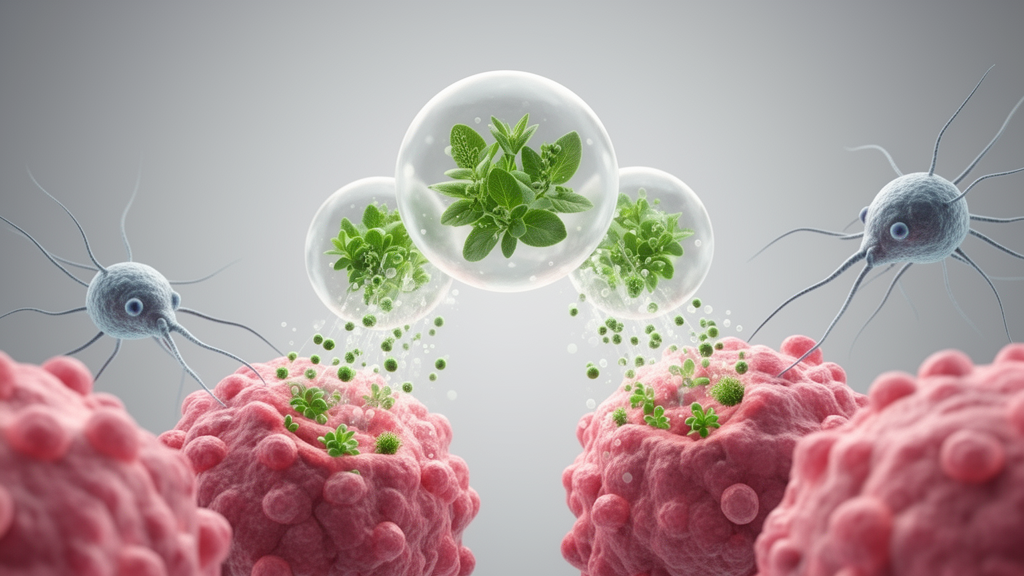
Image Credits: AI Generated
DOI: 10.1186/s12906-026-05634-6
Keywords: triple-negative breast cancer, chitosan nanoparticles, quassinoids, Ailanthus excelsa, STAT3, PD-L1, immune evasion, cancer immunotherapy, phytochemicals, drug delivery, CD8-positive T cells, nanomedicine
News Source: Nathaniel Bowman. (October 8, 2026). Tree-Derived Compounds Packaged in Nanoparticles Strip Breast Cancer of Its Immune Shield. Scienmag.