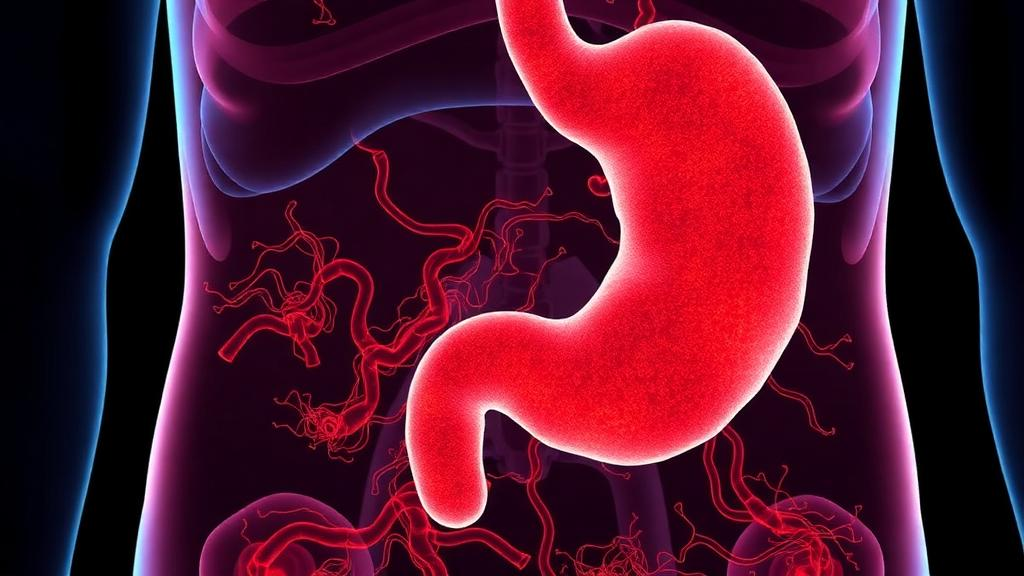
One of the most stubborn mysteries in cancer biology is why tumors begin where they do. In the stomach, the long road from chronic gastritis to atrophic gastritis, intestinal metaplasia, and ultimately carcinoma has been mapped in exquisite histological detail for decades. Yet the sequence of lesions alone cannot explain the most clinically important observation: malignant transformation does not arise uniformly across the inflamed mucosa, but instead emerges in discrete, predictable microanatomical locations. A new study published in Chinese Medical Journal argues that the answer lies not in any single mutated cell, but in the architecture of the tissue itself — a spatially organized, inflammation-associated niche that actively licenses the earliest steps of gastric tumorigenesis.
The research team, led by Professor Wang Chuanxin of Shandong University, tackled the problem with a dual-technology strategy that has become the gold standard for dissecting complex tissues: single-cell RNA sequencing to resolve the identities and states of individual cells, combined with spatial transcriptomics to preserve the crucial information that conventional dissociation destroys — where each cell sits relative to its neighbors. Applying this integrative approach to human tissue samples spanning the disease trajectory from non-atrophic gastritis through atrophic gastritis to early gastric cancer, the investigators constructed a spatially resolved transcriptional atlas of gastric carcinogenesis at its most biologically ambiguous stage.
The central finding is conceptually striking. Early gastric cancer, the team demonstrates, arises from an inflammation-driven, highly coordinated microenvironmental state that they term the inflammation-associated spatial niche. This is not merely inflamed tissue; it is a structured ecological unit in which three features converge in the same physical location. First, epithelial cells within the niche selectively maintain stem-like transcriptional programs, retaining a developmental plasticity that most differentiated gastric epithelium has surrendered. Second, the niche emits enhanced inflammatory chemotactic signaling, continuously recruiting immune cells from the surrounding microvasculature. Third, the recruited immune landscape is skewed, with immunosuppressive cell populations becoming regionally enriched precisely where the pre-malignant epithelium resides.
This spatial colocalization is the key insight. Stemness, chemoattraction, and immune evasion are often studied as separate hallmarks of cancer, each with its own literature and its own molecular candidates. The new data show that in early gastric tumorigenesis these programs are not parallel events happening in the same place by coincidence; they are mutually reinforcing components of a single niche. The epithelial cells secrete inflammatory chemokines that draw in myeloid cells, and the resulting immune milieu in turn supports the epithelium’s undifferentiated state. The niche behaves as a self-sustaining engine, and its physical integrity — the precise adjacency of its cellular components — appears to be a prerequisite for malignant progression.
Mechanistically, the study identifies the SOX9-CXCL axis as the regulatory module that knits the niche together. SOX9, a transcription factor best known for its roles in development and stem cell maintenance, emerges here as a downstream effector of the inflammatory niche within the epithelial compartment. Its activity is linked to the expression of CXCL-family chemokines, which are the ligands for CXCR2-bearing receptors on myeloid cells. In practical terms, the axis converts epithelial stemness into a recruitment signal: the more the pre-malignant epithelium holds onto its stem-like identity, the more strongly it summons macrophages and other myeloid cells, and the more the local immune environment is remodeled toward a tumor-permissive configuration. This provides a concrete molecular bridge between two phenomena — epithelial plasticity and immune microenvironment reshaping — that have historically been investigated in isolation.
The therapeutic implications follow directly from the mechanism. Because the niche depends on chemokine-mediated recruitment and on macrophage survival and polarization signals, the team tested whether dismantling those dependencies could collapse the niche. Their experiments indicate that concurrent targeting of the CXCR2-mediated chemokine signaling pathway and the CSF1R-mediated macrophage pathway effectively disrupts the structural integrity of the inflammatory niche, and that this dual intervention significantly suppresses early gastric cancer progression. The logic is elegant: CXCR2 blockade cuts the recruitment lines that keep the niche stocked with pro-tumor myeloid cells, while CSF1R inhibition undermines the differentiation and maintenance of the macrophages already embedded in the tissue. Neither pathway alone achieves what the combination does, mirroring a principle well established in oncology — that microenvironmental dependencies are most effectively broken in parallel.
For clinicians, the work offers a reframing of risk. Current surveillance of patients with atrophic gastritis and intestinal metaplasia relies largely on histological grading and endoscopic detection of visible lesions, an approach that can miss the spatial cues that precede overt neoplasia. If the inflammation-associated spatial niche can be identified — through spatially resolved biomarkers, molecular imaging, or targeted biopsy strategies — it could serve as an earlier and more precise indicator of which regions of the stomach are genuinely committed to malignant transformation. Risk stratification would shift from asking whether a patient has metaplasia to asking where, within the mucosa, the coordinated niche state has taken hold. The study’s authors position this as a novel framework for early gastric cancer risk stratification and intervention, one that targets the niche rather than isolated tumor cell populations.
Conceptually, the paper contributes to a broader movement in cancer research away from reductionism. The dominant paradigm of the past two decades has been cell-autonomous: identify the driver mutation, the clonal expansion, the checkpoint escape. That framework has produced extraordinary therapies, but it struggles with cancers like gastric carcinoma, which arise on a foundation of chronic inflammation and evolve within a densely social tissue environment. By elevating the spatial niche to the status of a fundamental regulatory unit — a unit with its own composition, signaling logic, and vulnerability — the study aligns gastric carcinogenesis with ecological and evolutionary models of cancer in which the microenvironment is not a passive backdrop but an active participant in initiation. The methodological corollary is equally important: without spatial transcriptomics, the colocalization of stemness, chemotaxis, and immunosuppression would have been invisible, averaged away in bulk sequencing or decontextualized in single-cell suspensions.
The translational horizon extends beyond treatment into prevention. Chronic Helicobacter-associated inflammation affects enormous populations worldwide, yet only a minority progress to cancer, and predicting which patients will do so remains imprecise. A niche-based model suggests that the decisive variable may be the emergence of this coordinated spatial state, potentially detectable years before dysplasia becomes endoscopically visible. Interventions that prevent niche assembly — or that dissolve it once formed — could in principle arrest the process at a stage where the epithelium is still plastic rather than irreversibly transformed. The SOX9-CXCL axis, sitting at the junction of epithelial intrinsic programming and extrinsic immune recruitment, is an obvious candidate for biomarker development and, eventually, pharmacological targeting.
As with any study built on human tissue sampling and multi-omic correlation, the causal chain from niche assembly to malignant transformation will require further experimental validation, and the therapeutic disruption of CXCR2 and CSF1R pathways demonstrated here will need to be tested in appropriate models and, ultimately, clinical settings. But the conceptual contribution is already clear. Early gastric cancer, the most critical and least understood stage of gastric carcinogenesis, now has a spatial address: an inflammation-associated niche in which stemness is maintained, macrophages are recruited, and immune surveillance is locally disarmed. Mapping that address — and learning to demolish it — may prove to be one of the more consequential shifts in how the field approaches inflammation-driven cancers.
Subject of Research: Spatial niche mechanisms driving early gastric cancer initiation
Article Title: How does early gastric cancer arise? The key role of the spatial niche
Article References: How does early gastric cancer arise? The key role of the spatial niche. (n.d.). Original publication
Image Credits: AI Generated
DOI: Not provided
Keywords: early gastric cancer, spatial transcriptomics, single-cell RNA sequencing, inflammation, SOX9-CXCL axis, tumor microenvironment, macrophages, CXCR2, CSF1R, epithelial stemness, gastric carcinogenesis, immunosuppression
News Source: Nathaniel Bowman. (October 6, 2026). Inflammation-Driven Spatial Niche Sets the Stage for Early Gastric Cancer. Scienmag.