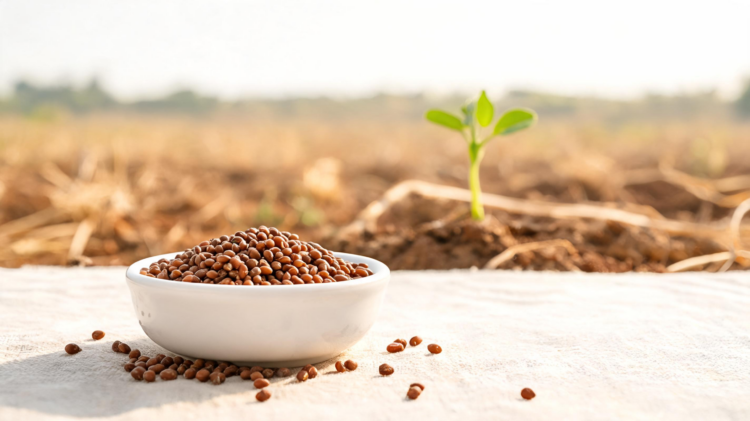
In an era when three staple crops—maize, wheat, and rice—feed more than four billion people, scientists are turning their attention to forgotten plants that could reshape the future of food. A comprehensive new review published in BMC Agriculture makes the case that one of the most promising candidates has been hiding in plain sight for millennia: horse gram (Macrotyloma uniflorum), a hardy, nutrient-dense legume that thrives where other crops fail. The review, led by Aditi Sharma of Graphic Era University in Dehradun, India, together with colleagues including corresponding author Manu Pant, synthesizes decades of research on the crop’s botanical features, nutritional profile, and potential for value-added food products. Their conclusion is striking: this ancient pulse, long dismissed as a poor farmer’s food, packs a nutritional punch that rivals or exceeds more celebrated legumes while tolerating drought, heat, and degraded soils—precisely the conditions climate change is making more common across the developing world.
The urgency behind the analysis is rooted in sobering global statistics. The 2023 Global Hunger Index reports a moderate score of 18.3, with undernourishment climbing to 735 million people worldwide. Paradoxically, much of this suffering stems not from a lack of calories but from diets heavy in energy yet devoid of essential nutrients, producing widespread malnutrition and micronutrient deficiencies. Of the roughly 374,000 plant species known to science, more than 50,000 are edible, yet only 15 crops supply 90 percent of humanity’s food energy. India alone hosts 8 percent of the world’s plant species, including 1,403 wild edible plants, but the overwhelming dominance of a handful of cereals has left agricultural systems dangerously narrow. Reviving underexploited crops, the authors argue, is essential to achieving the United Nations’ Zero Hunger goal by 2030, and horse gram stands out as a particularly strong candidate for that revival.
Horse gram is a botanical survivor. The genus name Macrotyloma derives from Greek words meaning “larger knob” and “margin,” a reference to the knobby appearance of its pods. The plant is a short, bushy annual or perennial reaching just 30 to 40 centimeters in height, with a weak, slender stem that spreads rather than stands. It grows happily in clay loam, deep red loam, and black cotton soils, prefers annual temperatures between 18 and 27 degrees Celsius, tolerates extremes up to 40 degrees, and can be cultivated at elevations above 1,800 meters on marginal soils receiving as little as 380 millimeters of annual rainfall. Cultivated across subtropical, temperate, and semi-arid regions of Africa, Southeast Asia, and Australia for food and fodder, the crop also yields residues and straw that serve as green manure, animal feed, and fuel. Its very name in many rural communities—”poor man’s pulse”—reflects how deeply it is tied to the populations most vulnerable to food insecurity.
Nutritionally, the crop is remarkable. Carbohydrates constitute 51.9 to 60.9 percent of whole seeds and up to 66.4 percent of dehulled seeds, including soluble sugars such as glucose, fructose, sucrose, and maltose. Raw seeds contain 22 to 44 percent starch, of which about 85 percent is digestible. Protein content ranges from 18.5 to 31.2 percent depending on cultivar, with a wild relative, Macrotyloma sargarhwalensis, reaching an exceptional 38.4 percent. Globulins make up 60 to 90 percent of total seed protein, complemented by glutelins and albumins. Critically for cereal-based diets, horse gram is rich in lysine—0.52 grams per gram of nitrogen, exceeding black gram and pigeon pea—and surpasses kidney beans in threonine, leucine, isoleucine, phenylalanine, valine, and histidine. This makes it an excellent biological complement to rice and wheat, whose proteins lack sufficient lysine. For a world increasingly searching for sustainable plant-based protein sources, these amino acid profiles carry genuine weight.
The legume’s lipid and micronutrient content is equally impressive. Crude fat ranges from 0.6 to 2.6 percent, but the fatty acid composition is skewed toward the healthy side: 72.5 percent unsaturated, dominated by linoleic, oleic, and linolenic acids. Total dietary fiber reaches 28.8 percent in seeds, overwhelmingly insoluble, existing as beta-glucan, pectin, hemicellulose, and cellulose—components associated with reduced risks of colon cancer, heart disease, gallstones, and diabetes. Seeds also deliver an exceptional mineral load, including calcium, iron, zinc, magnesium, phosphorus, molybdenum, and potassium, while the leaves contain about 4.5 percent minerals, higher than most common vegetables. Vitamins such as niacin, riboflavin, thiamine, pyridoxine, tocopherol, pantothenic acid, and folic acid round out the profile; deficiencies of these compounds cause diseases ranging from night blindness to beriberi. Beyond macronutrients, horse gram is loaded with phytochemicals: p-coumaric acid and p-hydroxybenzoic acid among the phenolics, quercetin, myricetin, and kaempferol among the flavonoids, and the isoflavonoids daidzein and genistein in the embryonic axes, with tannin concentrations of 763.7 to 895.9 milligrams per 100 grams exceeding those of most other legumes.
Yet the same chemistry that makes horse gram a nutritional treasure also constrains it. The seeds harbor what food scientists call nutrient-limiting compounds—phytic acid at 10.2 milligrams per gram of flour, polyphenols, oligosaccharides, and trypsin inhibitors measured at roughly 9,246 trypsin units inhibited per gram. Phytates, tannins, and oxalic acid chelate iron and calcium into insoluble salts that the gut cannot absorb, undermining the crop’s mineral richness. Trypsin inhibitors, unusually abundant in horse gram, block protein digestion, while α-galactosidic oligosaccharides such as verbascose, stachyose, and raffinose ferment in the colon to cause flatulence and discomfort. Lectins, concentrated in the seeds but also present in roots, stems, and leaves, can interact with immune cells and erythrocytes, potentially triggering intestinal damage and nutritional anemia. Add to this a short shelf life caused by pest infestation and limited consumer awareness, and the reasons for the crop’s commercial neglect become clear. Its consumption today remains largely confined to rural farming communities and low-income populations, a fate the review’s authors are determined to reverse.
The encouraging news is that simple, traditional processing techniques can disarm most of these antinutritional factors. Soaking seeds for 12 to 24 hours lowers trypsin inhibitors, phytic acid, and tannins while increasing the availability of manganese, zinc, copper, and iron. Germination—a rapid, low-cost method—activates enzymes that hydrolyze starches, fats, and proteins, breaking down trypsin inhibitors and boosting protein content. Dehulling removes hull-bound oxalic acid, phytates, and tannins while raising protein, lipid, and sugar concentrations, and when combined with germination acts synergistically. Fermentation is even more dramatic: a 48-hour treatment with lactic acid bacteria cuts phytate by 69.5 percent, oxalate by 66.8 percent, and tannins by 69.4 percent, as microbial phytase degrades the antinutrient at low pH. Roasting dried seeds at 160 degrees Celsius for ten minutes reduces tannins by 28 percent, flavonoids by 48.7 percent, and phytates by more than 22 percent through thermal denaturation. These are kitchen-scale interventions, requiring no exotic technology, meaning the path to better horse gram nutrition runs directly through traditional culinary practice.
Beyond the kitchen, the review highlights the economic dimension of reviving the crop. Value addition—the transformation of raw commodities into branded, shelf-stable, marketable products—can extend availability year-round, reduce postharvest losses, strengthen off-farm employment, and promote technology transfer in rural economies. Companies have already developed a range of horse gram-based foods, including instant dosa mixes, high-fiber biscuits fortified with germinated horse gram flour, ready-to-cook idly mixes, bread, cookies, ready-to-eat snacks, milk beverages, and flatbreads. Biofortification strategies could further enhance the crop’s protein and phytochemical content, positioning it within the rapidly growing plant-based food market. The authors argue that quantifying the difference between raw material costs and processed product returns will be key to attracting investment and building the market infrastructure the crop currently lacks.
Significant scientific gaps remain before horse gram can achieve its potential. Existing studies often suffer from limited germplasm representation, small sample sizes, and inconsistent analytical methodologies that make cross-study comparisons difficult. The influence of environmental and agronomic factors on nutrient composition is poorly understood, and many claimed health benefits lack mechanistic or clinical validation. The review calls for genome-wide association studies to identify cultivars with lower antinutrient loads and higher protein digestibility, alongside breeding programs aimed at climate resilience under rising temperatures and declining precipitation. Standardized nutritional profiling, shelf-life and storage research, industrial-scale processing feasibility, and sensory-based consumer acceptance studies are all on the priority list. If those research investments materialize, the authors contend, horse gram’s inherent resilience, exceptional nutritional chemistry, and compatibility with low-input agriculture could make it a cornerstone of nutrition-sensitive food systems—proof that the crops we abandoned on the road to modern agriculture may be exactly the ones we need to reclaim.
Subject of Research: The nutritional profile, processing methods, and sustainable agriculture potential of the underutilized legume crop horse gram (Macrotyloma uniflorum).
Article Title: Horse gram: an under-utilized nutrient-rich legume crop as a potential candidate for sustainable agriculture
Article References: Sharma, A., Pant, M., Rawat, A., Rawat, R., Bisht, P., & Kumar, S. (2026). Horse gram: an under-utilized nutrient-rich legume crop as a potential candidate for sustainable agriculture. BMC Agriculture, 2(1), Article 26. https://doi.org/10.1186/s44399-026-00050-0
Image Credits: AI Generated
DOI: 10.1186/s44399-026-00050-0
Keywords: horse gram, Macrotyloma uniflorum, sustainable agriculture, food security, malnutrition, plant protein, antinutritional factors, food processing, biofortification, drought tolerance, value addition, zero hunger
Cite Scienmag News
APA
MLA
Chicago
Alan Morgan. (September 10, 2026). Horse Gram, the Neglected Legume That Could Help Feed a Warming World. Scienmag. https://scienmag.com/horse-gram-the-neglected-legume-that-could-help-feed-a-warming-world/
Alan Morgan. “Horse Gram, the Neglected Legume That Could Help Feed a Warming World.” Scienmag, 10 September 2026, https://scienmag.com/horse-gram-the-neglected-legume-that-could-help-feed-a-warming-world/. Accessed 10 September 2026.
Alan Morgan. “Horse Gram, the Neglected Legume That Could Help Feed a Warming World.” Scienmag. September 10, 2026. https://scienmag.com/horse-gram-the-neglected-legume-that-could-help-feed-a-warming-world/
Copy citation
Download RIS
Tags: addressing malnutrition with traditional cropsancient pulses for modern agricultureantinutritional factorsbiofortificationclimate change impact on crop cultivationdrought tolerancedrought-tolerant crops for food securityfood processingFood securityfuture food security through neglected plantshorse gramHorse gram nutritional benefitslegume diversity and global hungerMacrotyloma uniflorummalnutritionneglected legumes for climate resiliencenutritional potential of Macrotyloma uniflorumplant proteinresilient legume crops for degraded soilssustainable agriculturesustainable food sources in warming climatesvalue additionvalue-added horse gram productszero hunger