Cancer remains one of the most formidable threats to human health, and the gap between clinical need and available therapy has never closed completely. A sweeping new guideline published in Holistic Integrative Oncology now offers the most systematic consolidation to date of how antineoplastic drugs travel from laboratory bench to bedside, laying out in technical detail the rules, designs, statistical methods and ethical guardrails that govern every stage of anti-cancer drug clinical research. Drawing on the collective expertise of more than two dozen leading oncology centers across China, the document addresses study format, trial staging, mechanism of action, ethical review, trial processes, patient needs and the evaluation of both efficacy and adverse events, with a single guiding aim: to address clinical needs and maximize patient benefit.
The historical arc traced by the guideline is striking. Clinical trials of anti-cancer drugs began in the 1940s and 1950s, when researchers such as Gilman and Philips used nitrogen mustard to treat lymphoma, an event regarded as the birth of modern chemotherapy. Over the following eight decades, the field evolved from nonrandomized, single-center, retrospective studies into randomized, international, multicenter, prospective trials. The regulatory scaffolding matured alongside: in 1991 the International Conference on Harmonization produced its E6 regulation on good clinical practice, and in 1993 the World Health Organization issued its own guidelines, both of which remain reference standards for multinational trials today. China’s role in this ecosystem has expanded dramatically. Between 2018 and 2022 the country recorded 5,773 investigational new drug applications and 266 new drug applications for innovative oncology therapies, while the number of lead clinical research institutions grew at an average annual rate of 34 percent. Since 2015, reform of the drug review and approval system by the National Medical Products Administration has accelerated approvals, and antineoplastic drugs have become the most heavily invested research area among all therapeutic fields.
Before any new compound can touch a patient, the guideline insists, preclinical evidence must establish biological plausibility of antineoplastic activity, reasonable expected safety, expected patient benefit and a defensible starting dose. Pharmacology studies must outline in vivo and ex vivo effects and mechanisms of action, using accepted test systems and, wherever possible, updated in vivo models. Toxicology programs must characterize the extent, severity and duration of toxic reactions, their dose correlation, reversibility and any species or sex differences, with particular attention to repeated-dose toxicity, animal mortality, pathological findings and local tolerance. Animal pharmacokinetic studies must describe absorption, tissue distribution, metabolism and excretion, and ideally correlate drug exposure with changes in target tissues through PK-PD analyses. Such translational work directly informs dose selection in humans. Biomarker-driven development has already proven its value: several approved anticancer drugs, including EGFR inhibitors developed for resistant non-small-cell lung cancer, were identified through biomarker screening of patient populations, improving trial success rates while sparing unlikely responders from unnecessary risk.
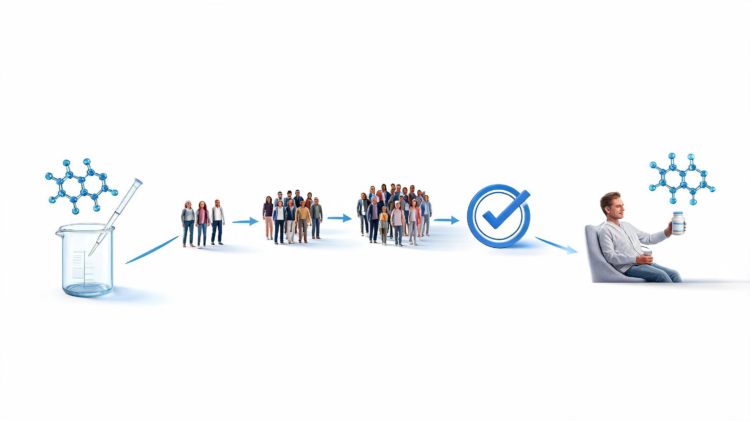
Once human testing begins, the guideline maps the familiar yet intricate staging system. Phase 0 trials, positioned between preclinical work and Phase I, administer subtherapeutic microdoses to first-in-human participants, extending beyond simple pharmacokinetic profiling to front-load information on mechanism of action and target engagement, and requiring ultra-sensitive tools such as positron emission tomography and accelerator mass spectrometry. Phase I trials are the first true human studies, focusing on single and multiple dose escalation, safety, tolerability and pharmacokinetics, with the principal goals of determining the maximum tolerated dose and the recommended Phase II dose. Participants are typically patients with advanced malignancies who have exhausted standard options, an ethical choice that prioritizes those with unmet needs. Escalation designs range from rule-based approaches such as the classic 3+3 scheme to model-based methods like the continuous reassessment method and model-assisted frameworks including mTPI and BOIN, with dose-limiting toxicity serving as the key stopping criterion. Extended cohorts then explore safety and antitumor activity further, supported by rigorous risk management.
Phase II trials divide into exploratory efficacy studies (IIa) and dose-finding studies (IIb), enrolling the target indication population and often employing single-arm designs such as the Simon two-stage method, which limits patient exposure to ineffective drugs, or randomized controlled designs when time-to-event endpoints such as progression-free survival are involved. Objective response rate frequently serves as the primary endpoint, ideally with independent imaging review. Phase III confirmatory trials then establish clinical benefit in large, randomized, often double-blind studies designed to support marketing approval. Overall survival remains the gold-standard primary endpoint, although well-validated surrogates such as progression-free survival, disease-free survival and objective response rate may be accepted by regulators, and multiple-endpoint designs combining survival and progression measures are increasingly common. Phase IV postmarketing studies round out the sequence, monitoring long-term safety, rare adverse reactions, special populations, drug interactions and pharmacoeconomic outcomes under conditions of widespread use.
The guideline also categorizes drugs by mechanism, reflecting the therapeutic revolution of recent decades. Cytotoxic chemotherapy remains a cornerstone but has been joined by novel structures including ruthenium-based agents and antibody-drug conjugates. Endocrine therapy for tumors of endocrine target organs such as breast, prostate and thyroid cancers has entered the targeted-therapy era. Targeted agents exploit molecules specifically and highly expressed on or within tumor cells, blocking growth and metastasis or inducing apoptosis while sparing normal tissue. Immunotherapy, which recruits the patient’s own immune system, demands a distinct evaluation framework because of pseudoprogression, where tumors appear to enlarge before responding; the immune-modified RECIST criteria, iRECIST, allow re-evaluation of apparent progression after at least four weeks, and immune-related adverse events must be systematically captured. Gene therapy, spanning oncolytic viruses and tumor vaccines, presents unique design challenges: maximum tolerated dose is often hard to define, pharmacokinetics are difficult to characterize, and because genetic modifications may persist indefinitely, long-term follow-up of participants is mandatory to detect delayed adverse events. Generic drugs and biosimilars, meanwhile, follow their own evidentiary pathways, with biosimilars requiring multi-level structural characterization, comparative clinical pharmacology and especially vigilant postmarketing surveillance for immunogenicity.
Ethics permeates the entire framework, anchored in good clinical practice and its thirteen ICH E6 principles. Every study must be reviewed and approved by an independent ethics committee before implementation and supervised throughout, guided by instruments such as the Declaration of Helsinki and China’s national quality and ethical review standards. The do-no-harm/benefit principle requires minimizing risk and maximizing benefit; the principle of respect safeguards informed consent, which must convey voluntariness, confidentiality, purpose, procedures, risks and the right to withdraw without prejudice; and the principle of justice demands fair participant selection, with special protection for vulnerable oncology patients against coercion or undue inducement. Placebo controls in cancer trials are confined to settings where no effective therapy exists, with standard treatment otherwise serving as the comparator. Recruitment must respect privacy and voluntariness, and informed consent documents must be written in language participants truly understand, with re-consent required whenever new safety information emerges.
Statistical rigor receives equally detailed treatment. Phase 0 studies typically involve a single cohort of 4 to 12 participants and can conclude within six to eight months; Phase I trials enroll roughly 20 to 40 patients using 3+3, CRM or newer Bayesian interval designs; Phase II studies range from 60 to 300 cases with endpoints analyzed using confidence intervals and Kaplan-Meier methods; and Phase III trials demand hundreds to thousands of participants, with sample sizes calculated from Type I error thresholds of at most 5 percent, Type II error caps of 20 percent, anticipated effect sizes, crossover and dropout rates. Analysis populations follow intention-to-treat, per-protocol and safety conventions, and innovative designs—basket trials testing one targeted therapy across multiple tumor types, umbrella trials testing multiple therapies within a single tumor type, and platform trials permitting treatments to enter or exit via adaptive algorithms—are reshaping the efficiency of development, though they demand sophisticated planning of interim analyses, error allocation and sample size re-estimation.
The guideline closes with warnings that resonate far beyond China. Older adults, who carry the highest cancer risk, appear in only about a quarter of oncology trials, hampered by protocol exclusions, comorbidities and financial barriers, prompting calls to remove age limits and adopt geriatric assessments. Pediatric oncology trials remain scarce despite cancer being a leading cause of death in children, constrained by limited commercial incentives and difficult guardian-consent processes. Efficacy assessment itself continues to evolve: RECIST 1.1 remains the standard for solid tumors, iRECIST addresses immunotherapy’s atypical patterns, the Lugano and LYRIC criteria govern lymphoma, and RANO and iRANO frameworks guide neuro-oncology, allowing continued treatment when imaging progression occurs alongside clinical stability. Adverse event causality, judged through expert, algorithmic or probabilistic methods, is complicated by polypharmacy and overlapping toxicities, and the authors urge standardized baseline collection and patient-reported outcome tools such as PRO-CTCAE to sharpen accuracy. In an era when China’s industry is shifting from generics to innovation and high-throughput sequencing makes human genetic resources central to drug development, the authors argue that rigorous, ethical and adaptive clinical research is not bureaucratic overhead but the very mechanism by which new anticancer medicines earn—and keep—their promise to patients.
Subject of Research: Clinical research methodology and guideline development for antineoplastic drugs
Article Title: Anti-cancer drug clinical research
Article References: Ma, F., Pan, H., Li, J., Zhang, Y., Zhao, H., Xiong, J., Liu, T., Chen, J., Ba, Y., Su, C., Deng, Y., Li, W., Gu, K., Chang, J., Hu, X., Liu, Y., Wang, J., Wang, Z., Wu, J., … Zhou, C. (2026). Anti-cancer drug clinical research. Holistic Integrative Oncology, 5(1), Article 72. https://doi.org/10.1007/s44178-026-00289-2
Image Credits: AI Generated
DOI: 10.1007/s44178-026-00289-2
Keywords: antineoplastic drugs, clinical trials, oncology drug development, phase I trials, dose escalation, GCP, informed consent, RECIST, immunotherapy, biomarkers, basket trials, pharmacovigilance
Cite Scienmag News
APA
MLA
Chicago
Nathaniel Bowman. (September 10, 2026). Landmark Guideline Maps the Entire Journey of Anti-Cancer Drugs Through Clinical Research. Scienmag. https://scienmag.com/landmark-guideline-maps-the-entire-journey-of-anti-cancer-drugs-through-clinical-research/
Nathaniel Bowman. “Landmark Guideline Maps the Entire Journey of Anti-Cancer Drugs Through Clinical Research.” Scienmag, 10 September 2026, https://scienmag.com/landmark-guideline-maps-the-entire-journey-of-anti-cancer-drugs-through-clinical-research/. Accessed 10 September 2026.
Nathaniel Bowman. “Landmark Guideline Maps the Entire Journey of Anti-Cancer Drugs Through Clinical Research.” Scienmag. September 10, 2026. https://scienmag.com/landmark-guideline-maps-the-entire-journey-of-anti-cancer-drugs-through-clinical-research/
Copy citation
Download RIS
Tags: anti-cancer drug development guidelinesantineoplastic drugsbasket trialsBiomarkersCancer drug clinical researchchemotherapy history and evolutionclinical trial design and phasesClinical Trialsdose escalationethical considerations in oncology trialsGCPglobal oncology research standardshistory of chemotherapy from nitrogen mustardImmunotherapyinformed consentintegration of traditional and holistic oncology approachesmulticenter international clinical trialsoncology drug developmentpatient safety and adverse event monitoringpharmacovigilancephase I trialsRECISTregulation of anti-cancer therapiesstatistical methods in cancer research