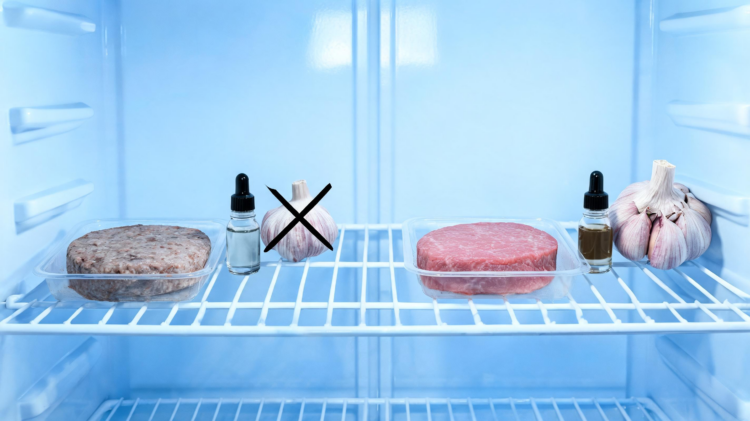
What if the key to keeping meat fresher for longer has been hiding in a giant, mild-mannered cousin of ordinary garlic? A research team at Chonnam National University in South Korea has shown that extracts of elephant garlic, a lesser-known member of the Allium family, can substantially slow both fat oxidation and microbial growth in pork patties stored in the refrigerator. The findings, published in Food Science of Animal Resources, suggest that this oversized allium could become a natural alternative to the synthetic antioxidants that the meat industry has relied on for decades.
Elephant garlic, known scientifically as Allium ampeloprasum, is morphologically similar to common garlic but taxonomically distinct. Crucially, it contains lower levels of reactive sulfur compounds and higher levels of phenolic compounds than ordinary garlic. That chemical profile matters, because certain reactive organosulfur compounds in conventional garlic can interact with protein thiol groups in meat, sometimes promoting rather than preventing oxidation. Earlier work by the same group demonstrated that oven-dried elephant garlic powder partially suppressed lipid oxidation in pork patties, but the crude powder form limited the release of bioactive compounds within the food matrix, motivating the researchers to explore extraction strategies that could unlock more of the plant’s functional potential.
The team turned to ultrasound-assisted extraction, a green technique that enhances mass transfer through cavitation-induced cell disruption. When ultrasonic waves pass through a solvent, microscopic bubbles form, grow, and violently collapse, shattering plant cell walls and creating microcracks that release intracellular compounds. The researchers tested various combinations of solvent type, ultrasonic power, and extraction time, using a probe-type homogenizer operating at 20 kilohertz with the temperature held at 4 degrees Celsius. Total phenolic content, iron-chelating capacity, and radical-scavenging activity all increased with extraction time up to 15 minutes, after which no further gains occurred, likely because cavitation had saturated the cell-wall disruption process. Notably, increasing the power from 250 to 500 watts offered no significant improvement, so the team selected the lower power for energy efficiency.
Solvent polarity proved to be the decisive variable. Elephant garlic powder was extracted with distilled water, 50 percent ethanol, and 100 percent ethanol, yielding extract powders labeled APW, APE50, and APE respectively. The extraction yields ranged from 32.8 percent for water to just 11.6 percent for pure ethanol, but the pure ethanol extract was by far the most potent. Its total phenolic content reached 2.22 grams per 100 grams, roughly 3.5 times higher than the water extract and far exceeding the untreated powder. The pure ethanol extract also showed the strongest DPPH radical-scavenging activity and the highest reducing power, matching the performance of ascorbic acid, the reference antioxidant, at concentrations above 0.25 percent. Interestingly, this extract showed the weakest iron-chelating ability, a reminder that different antioxidant mechanisms do not always travel together and depend on the specific chemical structures that each solvent solubilizes.
With the extraction chemistry established, the researchers incorporated each extract powder at 0.5 percent into fresh pork patties, alongside an untreated powder treatment, a control patty with no additive, and a reference patty containing 0.1 percent ascorbic acid. The patties were stored at 4 degrees Celsius for 14 days, with analyses on days 0, 3, 7, 10, and 14. Proximate composition, covering moisture, protein, fat, and ash, was unaffected by any treatment, and pH values were statistically indistinguishable across the board. Lightness values also remained uniform, though color told a more complicated story: the pure ethanol extract, which has an inherently dark-brown hue, reduced redness and increased yellowness, while the 50 percent ethanol extract preserved the redness of the patties as well as the untreated powder did.
The oxidation results were striking. Thiobarbituric acid reactive substances, which track secondary lipid oxidation products associated with rancid odors, began climbing in the control patties almost immediately, crossing the sensory threshold of 0.5 to 1.0 milligrams of malondialdehyde per kilogram at approximately day 7. Patties containing the pure ethanol extract did not reach that range until approximately day 11, an effective four-day delay in lipid deterioration that matched the performance of the ascorbic acid reference through day 10. Peroxide values, which capture the primary hydroperoxides formed at the start of the oxidation cascade, told a parallel story, remaining flat through the first week of storage in all extract-treated patties. Together, the two measurements indicate that the phenolic compounds concentrated by ethanol extraction act as hydrogen and electron donors, stabilizing free radicals and interrupting the peroxidation chain reactions that turn fresh meat rancid.
The extracts also showed antimicrobial muscle. Volatile basic nitrogen, a marker of protein breakdown by spoilage bacteria, accumulated more slowly in patties containing the water, 50 percent ethanol, and pure ethanol extracts than in controls. By day 14, patties treated with the 50 percent ethanol and pure ethanol extracts registered Enterobacteriaceae counts of roughly 5 log colony-forming units per gram, significantly lower than the control. Total plate counts followed the same pattern, with all three extracts suppressing bacterial growth by the end of storage while the untreated powder alone failed to inhibit microbes. The researchers attribute this effect to relatively hydrophobic organosulfur compounds that ethanol preferentially extracts; such compounds are known to react with sulfhydryl groups in bacterial proteins, forming disulfide bonds that cripple microbial proliferation, particularly against the gram-negative spoilers like Pseudomonas species that drive protein degradation and the rise in pH during chilled storage.
The practical implications are considerable. Synthetic antioxidants such as butylated hydroxyanisole and butylated hydroxytoluene have long been workhorses of meat preservation, but their safety remains debated, fueling industry-wide searches for clean-label plant-based alternatives. This study demonstrates that the antioxidant activity measured in a test tube can translate into real performance inside a complex meat matrix, where proteins, lipids, and moisture all compete with the added bioactives. It also shows that extraction strategy, not just the plant material itself, determines how well that performance carries over: the same elephant garlic powder that only partially protected patties in its crude form became markedly more effective once its phenolics and hydrophobic sulfur compounds were concentrated by ultrasound and ethanol.
Challenges remain before elephant garlic extract reaches the supermarket chiller. The dark-brown color of the pure ethanol extract, while chemically potent, visibly altered the appearance of the patties, which could deter consumers despite the clear shelf-life benefits. The researchers note that future work should focus on strategies to improve color stability, characterize the specific bioactive compounds responsible for the functional effects, and evaluate sensory properties and consumer acceptability in meat products. Still, the headline result is difficult to ignore: a modest 0.5 percent addition of an ethanol-based elephant garlic extract delayed oxidation and curbed microbial growth long enough to extend the usable life of refrigerated pork patties by roughly four days. In a food industry under pressure to reduce synthetic additives and cut food waste, a giant garlic that keeps burgers fresher may be exactly the kind of quietly powerful ingredient science has been looking for.
The choice of solvents in the study reflects a long-standing principle in phytochemistry: compounds dissolve best in solvents whose polarity resembles their own. Water readily extracts sugars, organic acids, and highly polar phenolic glycosides, while absolute ethanol favors moderately polar aglycones and hydrophobic sulfur compounds. The 50 percent ethanol mixture often serves as a compromise, which helps explain why it balanced antioxidant potency with acceptable color in the finished patties. The Folin–Ciocalteu assay used to quantify total phenolics measures the overall reducing capacity of a sample rather than identifying individual molecules, so the reported values represent a composite of many contributing compounds.
Similarly, the DPPH assay relies on a stable synthetic radical whose deep purple color fades as antioxidants donate hydrogen atoms. Because the reagent is dissolved in organic solvent, it preferentially detects hydrophobic antioxidants, which may partly account for the strong performance of the ethanol extracts in that particular test. Reducing power assays, which track the conversion of ferric to ferrous iron, provide a complementary readout of electron-donating capacity. The fact that iron chelation did not track with these other measures underscores that antioxidant activity is not a single property but a family of distinct chemical mechanisms, including radical scavenging, metal binding, and chain-breaking.
Volatile basic nitrogen deserves particular attention as a freshness indicator. As spoilage bacteria deaminate amino acids and nucleotides in meat, they release ammonia and trimethylamine, compounds directly responsible for the off-odors consumers associate with aging meat. Regulatory agencies in several countries use VBN limits to define the boundary between fresh and spoiled seafood and meat, making its suppression commercially meaningful rather than merely academic.
Elephant garlic itself occupies an interesting agricultural niche. Botanically closer to leeks than to true garlic, it produces large, mild-flavored cloves and is cultivated in temperate regions including Korea, where the bulbs used in this study were sourced from Haenam County, a major allium-growing area. Its milder flavor profile compared with common garlic is a practical advantage in meat applications, where strong sulfur notes can overwhelm seasoning.
The broader context is one of mounting pressure on the meat industry. Refrigerated storage is energy-intensive, and every additional day of shelf life translates into reduced retail losses and less household food waste. With consumers increasingly scrutinizing ingredient labels, plant-derived preservatives that perform comparably to synthetic standards offer a credible path forward, provided that issues of color, cost, and sensory impact can be resolved through further formulation work.
Subject of Research: Ultrasound-assisted extraction of elephant garlic for antioxidant and antimicrobial preservation of pork patties
Article Title: Antioxidant activity of ultrasound-assisted extracts of elephant garlic and their effects on the quality of pork patties during refrigerated storage
Article References: Park, J. H., & Chin, K. B. (2026). Antioxidant activity of ultrasound-assisted extracts of elephant garlic and their effects on the quality of pork patties during refrigerated storage. Food Science of Animal Resources, 46(1), Article 102. https://doi.org/10.1007/s44463-026-00102-8
Image Credits: AI Generated
DOI: 10.1007/s44463-026-00102-8
Keywords: elephant garlic, ultrasound-assisted extraction, antioxidant activity, pork patties, lipid oxidation, TBARS, Enterobacteriaceae, natural preservatives, refrigerated storage, phenolic compounds, meat quality, shelf life
Cite Scienmag News
APA MLA Chicago
Alan Morgan. (September 10, 2026). Elephant Garlic Extracts Slow Spoilage in Refrigerated Pork Patties. Scienmag. https://scienmag.com/elephant-garlic-extracts-slow-spoilage-in-refrigerated-pork-patties/
Alan Morgan. “Elephant Garlic Extracts Slow Spoilage in Refrigerated Pork Patties.” Scienmag, 10 September 2026, https://scienmag.com/elephant-garlic-extracts-slow-spoilage-in-refrigerated-pork-patties/. Accessed 10 September 2026.
Alan Morgan. “Elephant Garlic Extracts Slow Spoilage in Refrigerated Pork Patties.” Scienmag. September 10, 2026. https://scienmag.com/elephant-garlic-extracts-slow-spoilage-in-refrigerated-pork-patties/
Copy citation Download RIS
Tags: Allium family vegetables for meat freshnessantioxidant activityantioxidant properties of Allium ampeloprasumbioactive compounds in elephant garliceffects of plant extracts on meat oxidationelephant garlicelephant garlic extractEnterobacteriaceaefood preservation using herbal extractslipid oxidationlipid oxidation prevention in pork pattiesMeat Qualitymicrobial growth inhibition in refrigerated meatnatural alternatives to synthetic antioxidantsnatural meat preservativenatural preservativesPhenolic compoundspork pattiesrefrigerated storagerole of phenolic compounds in food preservationshelf lifeslow pork spoilageTBARSultrasound-assisted extraction