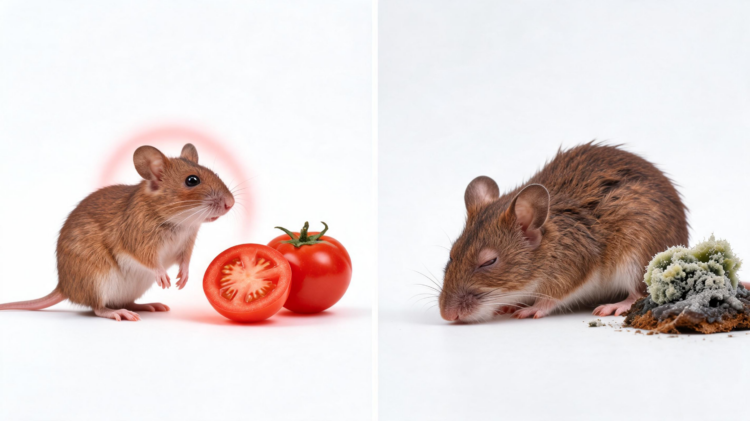
A natural pigment that gives tomatoes their deep red color may offer a surprisingly powerful defense against one of the world’s most pervasive food contaminants. In a new study published in the journal Stress Biology, researchers report that lycopene, a carotenoid found in tomatoes, papayas, watermelons, red carrots and grapefruits, substantially blunted the damaging effects of T-2 toxin in mice, and that this protection appears to work through an unexpected route: the trillions of microbes dwelling in the gut and the short-chain fatty acids they produce. The findings add a new dimension to the search for dietary strategies against mycotoxins, the fungal poisons that contaminate cereals and other agricultural staples across the globe.
T-2 toxin is a trichothecene mycotoxin produced by Fusarium species, and it is far from a niche problem. According to the 2018 Biomin Global Report cited by the researchers, among 8,721 agricultural product samples from 75 countries, the average concentration of T-2 toxin was 25 micrograms per kilogram, with detection rates reaching up to 23 percent. International guidelines cap permissible daily intake at 100 nanograms per kilogram of body weight. Once ingested through contaminated food or feed, the toxin can persist in animal tissues, meat, eggs and milk, posing risks along the entire food chain and raising the possibility of serious conditions such as alimentary toxic aleukia and Kaschin-Beck disease. Previous work has linked T-2 exposure to immunotoxicity, neurotoxicity, cardiotoxicity, reproductive toxicity and nephrotoxicity, largely through its capacity to trigger oxidative stress, disrupt mitochondrial protein synthesis and provoke runaway inflammation.
To test whether lycopene could counter these effects, the team, led by Saber Y. Adam and corresponding author Demin Cai of Yangzhou University along with collaborators from several institutions in China, Sudan, Egypt and South Korea, worked with 20 male BALB/c mice, six weeks old and weighing on average 23.5 grams. The animals were randomly assigned to four groups of five: an untreated control group, a lycopene-only group receiving 100 micrograms per kilogram of body weight, a T-2 group receiving the toxin at 200 micrograms per kilogram, and a combined group given lycopene four hours after T-2 exposure. Doses were delivered in sunflower oil by oral gavage every two days for 35 days. Over the five-week course, the researchers tracked body weight, feed and water intake, collected blood and fecal samples, and analyzed gut microbial communities through 16S rRNA sequencing alongside a battery of inflammatory, oxidative and metabolic assays.
The simplest measures told a stark story. Mice exposed to T-2 toxin lost weight and ate and drank less than controls, classic hallmarks of poisoning. Lycopene supplementation largely reversed these losses, restoring body weight gains and normalizing consumption patterns. Microscopic examination of the ileum, the final stretch of the small intestine and the first major barrier the toxin encounters, revealed the structural damage behind the decline: villi, the finger-like projections that multiply the gut’s absorptive surface, were shortened and widened, and crypts were deepened in T-2-exposed animals. Mice that also received lycopene showed significantly taller villi, healthier villus-to-crypt ratios and reduced crypt depth and villus width, indicating that the carotenoid helped preserve the architecture of the intestinal lining that mycotoxins typically erode.
Deeper inside the gut, the toxin also wreaked havoc on the microbial ecosystem, and lycopene partly repaired it. Alpha-diversity indices, including Shannon, Chao1, Pielou’s evenness and Simpson measures, dropped significantly in T-2-exposed mice but rebounded after lycopene treatment. Beta-diversity analyses using principal coordinates analysis, non-metric multidimensional scaling and UPGMA clustering confirmed that the four groups harbored distinctly different microbial communities, with inter-group differences significantly exceeding intra-group variation across ANOSIM, MRPP and ADONIS tests. At the phylum level, Firmicutes rose and Bacteroidota fell with toxin exposure, while the combined treatment produced a striking enrichment of Clostridiaceae, which surged to 36.37 percent in the T-2 plus lycopene group compared with just over 4 percent of Clostridiales in controls. Linear discriminant analysis effect size profiling showed that T-2 exposure favored potentially problematic taxa such as Bacilli and Staphylococcus, whereas lycopene shifted the landscape toward groups associated with gut health, including Bifidobacterium and Ligilactobacillus in the lycopene-only animals.
The downstream products of these microbes may be the key to the protection. Gut bacteria ferment indigestible fiber into short-chain fatty acids, metabolites that fuel the intestinal lining, maintain barrier integrity, modulate immune responses and influence oxidative stress in organs from brain to kidney. In this study, fecal concentrations of hexanoic, butyric, isobutyric, isovaleric, acetic, propionic, pentanoic and heptanoic acids all fell significantly in T-2-exposed mice, consistent with the idea that toxin-driven dysbiosis cripples microbial fermentation. Lycopene treatment restored these fatty acids to levels significantly higher than those in toxin-only animals, suggesting that the carotenoid helped rehabilitate the metabolic function of the gut community, not merely its taxonomic composition.
The systemic consequences were equally striking. T-2 exposure drove significant increases in the pro-inflammatory cytokines interleukin-1 beta, interleukin-2, interleukin-4, interferon gamma, interleukin-17 and tumor necrosis factor alpha, all of which were significantly reduced by lycopene, with the notable exception of interleukin-6, which remained unchanged across all groups. The toxin also spiked plasma levels of reactive oxygen species and malondialdehyde, a marker of lipid peroxidation, while depleting the antioxidant arsenal: catalase, glutathione, adenosine triphosphate and superoxide dismutase 1 all dropped significantly in poisoned mice. Lycopene supplementation reversed each of these outcomes, lowering oxidative damage markers while restoring antioxidant defenses, a pattern consistent with the compound’s established reputation as a potent quencher of reactive species and guardian of DNA, lipids and lipoproteins.
Correlation analysis wove these threads together into a coherent mechanistic picture, though the researchers caution that the associations are exploratory and do not prove causation. After false discovery rate correction, reactive oxygen species showed a strong positive correlation with the pathobiont Helicobacter and a negative correlation with hexanoic acid, while the antioxidant enzyme SOD1 correlated positively with butyric and acetic acids and negatively with Helicobacter. Bifidobacterium tracked positively with catalase, SOD1 and butyric acid, whereas Staphylococcus was negatively associated with acetic and propionic acids, and butyric acid itself was negatively correlated with malondialdehyde. Taken together, the data suggest that lycopene’s antioxidant benefit is not a standalone biochemical effect but is mechanistically entwined with its ability to foster a healthier microbial community whose fatty acid output bolsters the host’s endogenous defenses. Butyrate in particular is known to activate the Nrf2 pathway, a master regulator of antioxidant gene expression that T-2 toxin actively suppresses.
The authors are candid about the study’s limitations. With only five animals per group, statistical power is constrained, and because T-2 toxin depressed feed and water intake, it remains unclear whether lycopene’s protective effects are direct or partly secondary to improved nutrition and overall recovery. The team notes that future work should employ larger sample sizes and pair-feeding designs to disentangle these possibilities and to validate the findings as more than hypothesis-generating observations. Even so, the convergence of evidence across gut structure, microbial ecology, fatty acid metabolism, inflammatory signaling and redox balance makes a compelling case. As mycotoxin contamination persists as an intractable problem in global agriculture, the prospect that an everyday dietary pigment, abundant in the humble tomato, could shore up the gut microbiome and its protective metabolites against one of the most dangerous trichothecenes offers an appealingly simple line of defense, one that the researchers hope can be translated into practical strategies for preventing T-2-related health problems in both animals and people.
The choice of lycopene as a protective agent builds on a growing body of literature about carotenoids and health. Unlike beta-carotene, lycopene is not converted to vitamin A in the body, yet it is one of the most efficient singlet oxygen quenchers among dietary carotenoids. Its conjugated double-bond structure allows it to neutralize reactive species and protect DNA, lipids and lipoproteins from oxidation, and it is a prominent component of the Mediterranean diet, where tomato consumption has been associated with reduced risks of cardiovascular disease and certain cancers in observational studies.
The gut-centered mechanism proposed in this study fits a broader scientific framework. Approximately 100 trillion bacteria reside in the mammalian gastrointestinal tract, with Firmicutes and Bacteroidota together accounting for more than 90 percent of the community. These microbes synthesize vitamins and amino acids, biotransform bile, and ferment indigestible fiber into short-chain fatty acids that fuel the intestinal mucosa and exert systemic effects on organs including the brain, kidneys and liver. Because SCFAs help regulate immune responses and maintain homeostasis, a toxin-induced collapse of microbial fermentation capacity would be expected to reverberate far beyond the gut wall, which is precisely the pattern the researchers observed.
The study also highlights the self-reinforcing nature of oxidative stress and inflammation. Reactive oxygen species can activate inflammatory signaling pathways such as NF-kappaB and the NLRP3 inflammasome, driving production of cytokines like TNF-alpha and interleukin-1 beta, while immune cells themselves release ROS during inflammatory responses. Breaking this cycle is a recognized therapeutic goal, and the finding that lycopene simultaneously lowered cytokine levels and restored antioxidant enzymes such as catalase, glutathione and superoxide dismutase 1 suggests it acted at multiple points in the loop.
Practically, the work points toward natural compounds as accessible candidates for mitigating mycotoxin-related diseases, complementing conventional approaches like grain screening and detoxification, though translation from mice to livestock and humans will require further validation.
Subject of Research: Protective effects of lycopene against T-2 toxin-induced systemic inflammation and oxidative stress in mice through modulation of gut microbiota and short-chain fatty acids
Article Title: Lycopene mitigates T-2 toxin-induced systemic inflammation and oxidative stress in association with gut microbiota and SCFAs regulation in mice
Article References: Adam, S. Y., Ennab, W., Zhu, C., Yuan, L., Ahmed, A. A., Essa, M. O. A., Husien, H. M., Saleh, A. A., Kim, I. H., Liu, H.-Y., & Cai, D. (2026). Lycopene mitigates T-2 toxin-induced systemic inflammation and oxidative stress in association with gut microbiota and SCFAs regulation in mice. Stress Biology, 6(1), Article 63. https://doi.org/10.1007/s44154-026-00331-3
Image Credits: AI Generated
DOI: 10.1007/s44154-026-00331-3
Keywords: lycopene, T-2 toxin, mycotoxin, oxidative stress, systemic inflammation, gut microbiota, short-chain fatty acids, BALB/c mice, intestinal morphology, cytokines, antioxidant enzymes, Fusarium
Cite Scienmag News
APA
MLA
Chicago
Daisy Hatcher. (September 10, 2026). Tomato Pigment Lycopene Shields Mice From Toxic Fungal Contaminant Damage. Scienmag. https://scienmag.com/tomato-pigment-lycopene-shields-mice-from-toxic-fungal-contaminant-damage/
Daisy Hatcher. “Tomato Pigment Lycopene Shields Mice From Toxic Fungal Contaminant Damage.” Scienmag, 10 September 2026, https://scienmag.com/tomato-pigment-lycopene-shields-mice-from-toxic-fungal-contaminant-damage/. Accessed 10 September 2026.
Daisy Hatcher. “Tomato Pigment Lycopene Shields Mice From Toxic Fungal Contaminant Damage.” Scienmag. September 10, 2026. https://scienmag.com/tomato-pigment-lycopene-shields-mice-from-toxic-fungal-contaminant-damage/
Copy citation
Download RIS
Tags: antioxidant enzymesBALB/c micecarotenoids and immune responsecytokinesdietary antioxidants for food safetydietary strategies for fungal contaminant defenseFusariumFusarium species and T-2 toxinglobal prevalence of mycotoxin contaminationgut microbiotaimpact of short-chain fatty acids on toxin damageintestinal morphologylycopeneLycopene’s protective effects against mycotoxin T-2 toxin in micemycotoxinnatural tomato pigment health benefitsnutritional interventions for mycotoxin exposureOxidative stressrole of gut microbiota in toxin mitigationshort-chain fatty acidssignificance of lycopene in preventing foodborne toxin effectssystemic inflammationT-2 toxin