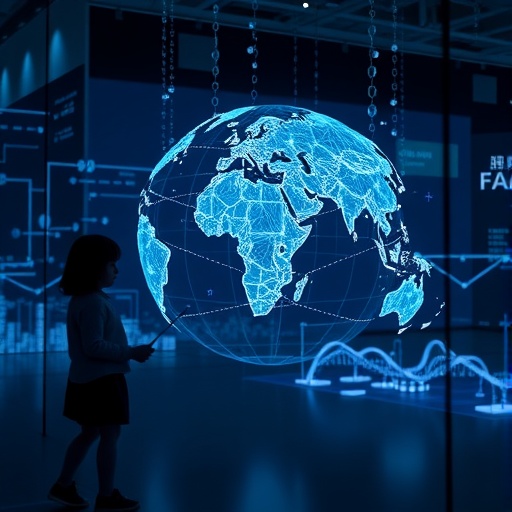
A KAIST research team has unveiled a next-generation “world model” designed to learn executable explanations rather than just anticipate what happens next. Announced July 15, the study proposes a learning paradigm called Learning-to-Theorize (L2T), alongside a neural architecture named Neural Theorizer (NEO) that turns observation into usable “rules of the world.”
Rather than treating environments as patterns to forecast, the approach targets the hidden causes behind transformations. Most world models optimize prediction accuracy for the next moment, but can struggle to answer a deeper question: why did the change occur? L2T reframes training around that causal understanding, using only “before” and “after” observations as supervision.
The inspiration comes from developmental learning: long before children learn language, they build internal theories about how objects move and change. Following this idea, L2T trains AI to infer the underlying principles that generate observed changes, producing mechanisms that can be executed, recombined, and applied to new situations.
NEO implements the framework by discovering reusable primitives—building blocks embedded in transformations—and composing them into programs. These inferred primitives correspond to elementary operations such as rotation, movement in specific directions, and coloring. Importantly, the system can assemble known components into novel sequences without having seen that exact combination during training.
For example, if trained on tasks involving individual operations, NEO can still explain and solve a composite instruction it never encountered—such as “move down, then color, then rotate”—by recombining learned primitives in the correct order. This supports compositional generalization: the ability to combine basic rules to handle new problems.
In comparative experiments, NEO shows stronger performance than approaches that memorize entangled patterns as single units. When unfamiliar combinations appear, entangled-pattern systems often fail because they do not separate “what happened” from “what rule produced it.”
The team describes the work as a step beyond prediction-centric models toward a “World Theory Model,” positioning it as a foundational technology for intelligent robots, autonomous agents, and even AI-assisted scientific discovery. Professor Sungjin Ahn highlighted this direction, emphasizing the promise of theory-like internal representations.
The research was selected for an oral presentation at the 43rd International Conference on Machine Learning (ICML 2026) in Seoul and was presented on July 9. It also received selection for the Best Paper Award at the Compositional Learning Workshop.
Co-first authors are Doojin Baek and Gyubin Lee. The work was supported by the National Research Foundation of Korea (NRF).
Subject of Research: Learning-to-Theorize (L2T) and Neural Theorizer (NEO) for executable world theories from observation
Article Title: Learning to Theorize the World from Observation
News Publication Date: 15-Jul-2026
Web References: http://dx.doi.org/10.48550/arXiv.2605.03413
References: 10.48550/arXiv.2605.03413
Image Credits: KAIST
Keywords
World models, Learning-to-Theorize (L2T), Neural Theorizer (NEO), compositional generalization, causal explanation, executable programs, developmental learning, reinforcement learning for theory inference, ICML 2026, AI theory of the world
Tags: AI capable of recombining learned primitivesAI learning from before-and-after observationsAI world modelingbuilding internal theories in AIcausal reasoning in AIdevelopmental learning in artificial intelligenceexplainable AI through causal understandingLearning-to-Theorize (L2T) paradigmneural architecture for observation-based learningNeural Theorizer (NEO) systemnext-generation AI for understanding transformationsreusable primitives in AI