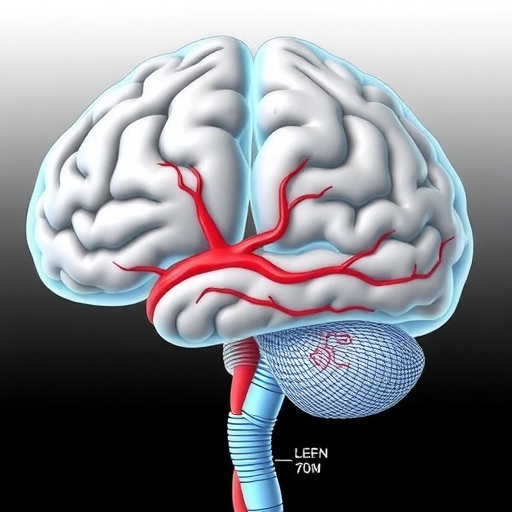
A new viral science update links how well a Parkinson’s drug reaches the brain with how effectively patients respond to levodopa. The study, led by Lu, Wu, Huang and colleagues, focuses on benserazide—an “enzyme shield” compound commonly paired with levodopa to reduce breakdown outside the central nervous system. By examining benserazide brain penetration, the researchers report an inverse relationship with levodopa response, suggesting that more drug delivery into the brain does not automatically translate into better therapeutic outcomes.
Using quantitative neuropharmacology approaches, the team assessed markers related to benserazide’s presence and distribution within the brain. Their analysis connects these pharmacokinetic measures to clinical measures of levodopa responsiveness, including how strongly patients improved after treatment. Rather than treating drug exposure as a simple positive variable, the work proposes that the brain’s local drug environment may matter as much as systemic dosing.
Technically, the study emphasizes the complexity of transport barriers, metabolism, and target engagement in Parkinson’s disease. Benserazide’s primary role is peripheral—blocking enzymes that would otherwise degrade levodopa before it reaches the brain. If benserazide crosses into neural tissue more than expected, it could alter metabolic pathways that normally support levodopa’s conversion and downstream dopamine availability.
The “inverse” finding is therefore biologically plausible: brain exposure to benserazide may compete with or dampen processes needed for efficient levodopa activation. In other words, optimizing peripheral protection might be more important than maximizing total brain penetration. The results highlight that drug pairing strategies can have trade-offs at the level of brain biochemistry, not just patient adherence or dosing schedules.
Beyond benserazide, the findings raise broader questions about how clinicians should evaluate combination therapies. Many investigations focus on levodopa pharmacodynamics in isolation, yet this work suggests that co-administered compounds can meaningfully reshape the brain’s drug landscape. Future trials may need to incorporate brain penetration estimates as predictive biomarkers rather than relying solely on blood concentrations.
From a viral-science-news perspective, the takeaway is both counterintuitive and actionable for the field: “more” delivery to the brain may not mean “better” outcomes. The study reframes brain penetration as a parameter that can run against clinical response, urging a more systems-level view of drug delivery and metabolic control in Parkinson’s disease.
If confirmed in larger cohorts, the reported relationship could influence how pharmacokinetic models are used to personalize levodopa regimens. Researchers may also explore whether alternative dosing strategies, formulation changes, or different peripheral inhibitors could improve therapeutic response by preserving peripheral enzyme blockade while limiting unnecessary central effects.
Overall, the work provides a mechanistic lens for interpreting variable patient responses to one of Parkinson’s most important treatments. It also sets the stage for precision pharmacology efforts that treat brain penetration as a determinant—not merely a measurement—of clinical success.
Subject of Research: Parkinson’s disease; levodopa response; benserazide brain penetration
Article Title: Brain penetration of benserazide inversely associates with levodopa response in Parkinson’s disease.
Article References: Lu, S., Wu, L., Huang, Q. et al. npj Parkinsons Dis. (2026). https://doi.org/10.1038/s41531-026-01491-9
DOI: 10.1038/s41531-026-01491-9
Tags: benserazide brain penetrationblood-brain barrier drug transportcentral nervous system drug deliverydopamine replacement therapyenzyme shielding in Parkinson’s treatmentimpact of peripheral enzyme inhibitors on brain drug levelslevodopa efficacy predictorslevodopa pharmacokineticsneuropharmacology of Parkinson’sParkinson’s disease drug responseParkinson’s treatment optimizationpharmacokinetic and clinical response correlation