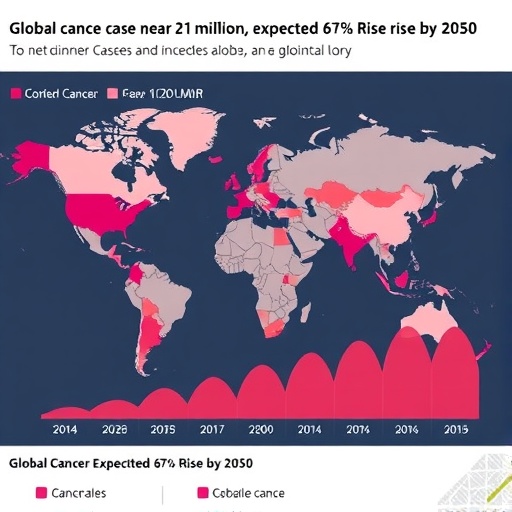
Global cancer cases are nearing 21 million worldwide in 2024, with deaths approaching 9.8 million, according to a comprehensive report led by the American Cancer Society (ACS) in collaboration with the International Agency for Research on Cancer (IARC). This urgent new data project a staggering 67% rise in cancer incidence by 2050, driven primarily by population aging and growth, setting the stage for an unprecedented global health challenge.
The study, published in CA: A Cancer Journal for Clinicians, utilizes the extensive GLOBOCAN database that monitors 34 cancer types across 186 countries. It reveals substantial variations in cancer rates geographically: incidence rates are four to five times higher in regions like Australia/New Zealand compared to parts of Africa and South-Central Asia. Mortality disparities are also pronounced, notably with Eastern Europe exhibiting the highest death rates among men and Melanesia among women.
Lung cancer remains the deadliest and most diagnosed cancer worldwide, constituting approximately 13% of all new cases and 19% of cancer deaths in 2024, largely fueled by tobacco use. Female breast cancer follows closely, with significant mortality, especially in regions such as Western Africa where death rates double those seen in developed regions despite lower incidence, highlighting the critical role of healthcare access inequality.
Colorectal and liver cancers also emerge as major contributors to the global cancer toll, with colorectal cancer ranking third in diagnosis frequency and second in mortality. Liver cancer’s high fatality rate underlines the challenges in early detection and treatment. Prostate cancer disproportionately affects men in the Caribbean and Sub-Saharan Africa, where it is a leading cause of male cancer death.
Notably, cervical cancer remains a leading cause of death in women in many low-resource settings, despite its preventability via HPV vaccination and screening programs. This underscores the urgent need for global health initiatives to expand preventive measures and improve early diagnostic infrastructure.
Experts emphasize cancer prevention as the cornerstone of global cancer control. Dr. Ahmedin Jemal of ACS stresses urgent interventions targeting modifiable risks—tobacco cessation, infection control, alcohol moderation, healthy weight maintenance, and physical activity promotion—are essential to stem this rising tide.
The report’s granular analysis underscores the complex interplay between demographic trends, socioeconomic factors, and healthcare disparities influencing cancer’s impact worldwide. It calls for tailored, region-specific strategies that integrate prevention, early detection, and equitable treatment access to reduce this mounting burden.
As cancer becomes a dominant public health obstacle in the 21st century, this pivotal research offers critical insights into guiding policies and investments that could save millions of lives globally over the next decades.
Subject of Research: Global cancer incidence and mortality trends, cancer burden projections by 2050
Article Title: Global Cancer Statistics 2026: Rising Burden and Geographic Inequities
News Publication Date: July 8, 2026
Web References: https://www.cancer.org/research/cancer-facts-statistics/global-cancer-facts-and-figures.html
References: CA: A Cancer Journal for Clinicians, DOI: 10.3322/caac.70090
Image Credits: American Cancer Society
Keywords: cancer statistics, global health, cancer incidence, cancer mortality, cancer prevention, GLOBOCAN, lung cancer, breast cancer, colorectal cancer
Tags: breast cancer regional differencescancer data from GLOBOCANcancer mortality disparitiescancer prevention and tobacco usecancer statisticsgeographic variation in cancer ratesglobal cancer incidenceglobal health challenges of cancerimpact of aging population on cancerinternational cancer research collaborationslung cancer prevalence and causesrising cancer cases by 2050