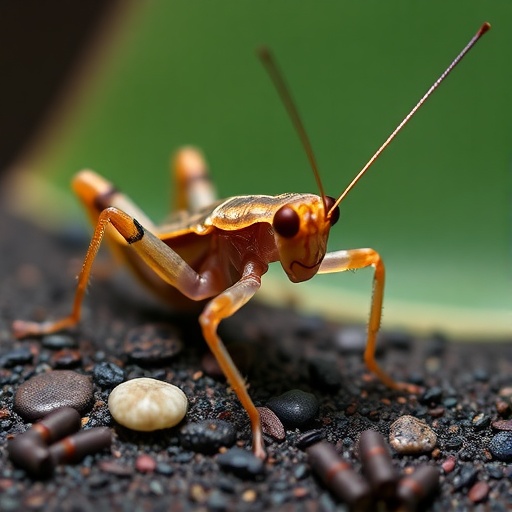
The silent nights of Hawaii are telling a startling evolutionary story. Over two decades ago, on the island of Kauaʻi, male field crickets began to lose their iconic chirp—a mutation that should have been a reproductive death sentence. Instead, new research reveals that these muted males have not only survived but have thrived across the archipelago, rewriting a core principle of sexual selection in the process. The work, presented at the Society for Experimental Biology conference in Florence, Italy, uncovers a cascade of independent wing-silencing mutations and a surprising developmental trade-off that flips the disadvantage of silence into a temporal advantage.
The Hawaiian field cricket, Teleogryllus oceanicus, normally relies on a loud, rhythmic courtship song produced by scraping specialized wing veins together. That song, however, is also a homing beacon for Ormia ochracea, a parasitoid fly that deposits its larvae onto the cricket, with fatal consequences. The first “flatwing” males, missing the sound-producing structures, were spotted in 2003 and rapidly spread as the flies eliminated singing rivals. What researchers led by PhD student Jae Walker at the University of St Andrews have now shown is that flatwing was just the opening act. A suite of additional sound-reducing morphs has since emerged, each with a distinct anatomical tweak that silences the male’s wings.
Walker and colleagues have categorized these morphs with descriptive names: “curlywing” curls the wing edges upward, “smallwing” shrinks the wings to roughly half their normal size, and the most recently discovered “defiled” morph disrupts the stridulatory file, a critical vein necessary for sound production. All of these independently evolved solutions provide acoustic invisibility from the deadly flies, but they also posed a puzzle: how do males that cannot call mates manage to reproduce? The team’s answer upends the expected trade-off. By measuring developmental timing, they found that wild-type singing males take about a week longer to reach adulthood than their silent counterparts—whether flatwing, curlywing, or any other sound-reducing morph, and regardless of sex. That extra week gives the non-singing males a longer window of adult life to actively seek out females using alternative strategies, effectively compensating for the loss of their long-range advertisement signal.
The genetic underpinnings of this rapid morphological diversification are equally striking. Using wing-tissue-specific RNA sequencing and high-resolution microscopy, the team traced differences in gene expression patterns across the morphs. A central player appears to be doublesex, a deeply conserved gene in the sex-determination pathway that controls sexual dimorphism in insects. Transcriptional profiling indicates that alterations in doublesex interact with a broader network of venation specification genes during wing development. Walker’s hypothesis is that multiple, subtle adjustments to this gene regulatory network can produce convergent song-loss wing morphologies through different molecular routes. This explains how such a variety of “silent wings” can arise from distinct mutations yet yield the same ecological outcome: protection from the parasitoid.
The phenomenon is a vivid example of parallel evolution in real time. The independent emergence of multiple wing-silencing morphs across the Hawaiian islands—from Kauaʻi to the younger southeastern islands—suggests that the underlying genetic architecture is tuned to produce rapid, adaptive variation when under intense selective pressure. Each morph likely represents a different tweak to the choreography of wing vein formation, all funneling into the same adaptive peak. The team is now probing how many distinct genetic solutions can be generated by this developmental system, asking whether there is an upper limit to the number of ways a cricket can lose its song.
The discovery also illuminates a broader evolutionary principle: when a trait is lost, the organism’s life history can shift in unexpected ways to mitigate the cost. The accelerated maturation of silent males hints at a reallocation of resources away from the energetically expensive song apparatus and the slower developmental trajectory associated with it. This kind of life-history compensation may be an underappreciated mechanism that allows rapid adaptation to novel selection pressures, such as introduced parasites. In Hawaii, the crickets are essentially evolving a new reproductive strategy—from acoustic broadcasters to silent, early-maturing seekers—across a geological timescale compressed into mere decades.
Walker’s ongoing work will dissect the precise regulatory changes in the doublesex network and explore how these mutations affect wing vein patterning at the cellular level. The ultimate goal is to understand whether the different morphs represent completely independent mutational pathways or whether they share a hidden, predisposing genetic architecture. The answers could shed light on the predictability of evolution, a question at the heart of modern biology. For now, the Hawaiian crickets stand as a natural experiment in how a single selective force—a deadly eavesdropping fly—can orchestrate a symphony of silent solutions, each with its own genetic signature, all singing the same tune of survival.
Subject of Research: Evolutionary genetics and developmental biology of sound-reducing wing morphs in Hawaiian field crickets (Teleogryllus oceanicus), including the role of the doublesex gene, convergent mutations, and the life-history trade-off of accelerated maturation.
Article Title: Silent Wings, Swift Maturity: Hawaii’s Crickets Rewrite the Rules of Evolution
News Publication Date: July 2025
Web References: Not available
References: Research presented at the Society for Experimental Biology Conference 2026, Florence, Italy. Not yet published.
Image Credits: Jae Walker
Keywords: Insect wings, loss of function mutations, convergent evolution, doublesex, parasitoid, Teleogryllus oceanicus, gene regulatory networks, developmental trade-off, sexual selection, silent crickets