In the microscopic world within our cells, lipids form the very fabric of life’s barriers—cellular membranes. These membranes not only define cell boundaries but also orchestrate myriad crucial biological functions, acting as dynamic platforms for signaling, material transport, and cellular communication. Despite their essential roles, lipids remain notoriously elusive to study due to the persistent lack of sufficiently sensitive and selective tools for their detection. This barrier has stifled progress in cell biology and the exploration of lipid-related diseases. Today, a groundbreaking breakthrough from the University of Osaka promises to change this landscape fundamentally.
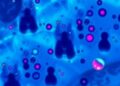
A team of multidisciplinary researchers at Osaka University has engineered a revolutionary technological platform known as the Cell surface Liposome Binding (CLiB) assay. This assay enables scientists to conduct high-throughput screening of thousands of protein variants to identify those capable of binding lipids with remarkable specificity and sensitivity directly in living cells. The core innovation integrates yeast cells, liposomes—tiny spherical capsules composed of lipids—and fluorescence detection methods to illuminate the interactions between proteins and lipid molecules. Their findings, now published in the prestigious journal Nature Cell Biology, herald a new era in lipidomics.
Lipid biosensors have long been a critical but elusive tool in cell biology. Traditional lipid-binding probes often suffer from limited affinity, poor selectivity, and inability to detect low-abundance lipid species. The CLiB assay addresses these limitations by iteratively “evolving” protein sensors in a method akin to natural selection but accelerated within the laboratory setting. Yeast cells express vast libraries of protein variants on their surface, where their lipid-binding capacities are interrogated using fluorescently labeled liposomes. This strategy efficiently narrows down to proteins with optimal lipid-binding characteristics across an unprecedented scale.
Among the most intriguing biological lipids is phosphatidylinositol 3,5-bisphosphate, abbreviated as PI(3,5)P₂. This rare signaling lipid plays pivotal roles in intracellular trafficking, membrane dynamics, and cellular stress responses, yet its fleeting and sparse nature has rendered it virtually invisible to researchers. Employing the CLiB technology, the Osaka team successfully engineered a new probe dubbed PX-SnxA^GV with high specificity and sensitivity to PI(3,5)P₂, finally surmounting the barrier of detecting this sparse, yet biologically vital molecule.
In living cells, the application of the PX-SnxA^GV probe revealed fascinating new spatial patterns of PI(3,5)P₂ distribution, particularly under cellular stress conditions such as osmotic shock from high salt concentrations. Contrary to prior assumptions of uniform distribution, PI(3,5)P₂ accumulates in distinct nanoscale foci within the membrane. This compartmentalization suggests lipid signaling is far more spatially regulated than previously believed, opening new avenues for understanding how cells orchestrate rapid adaption through lipid domains in membrane architecture.
Furthermore, the research shed light on the lipid’s role in microautophagy, a cellular recycling process where lysosomes engulf and degrade damaged materials directly through membrane invagination. The newly developed lipid probe illuminated concentrated PI(3,5)P₂ presence at membrane sites undergoing folding to sequester cargo. This insight places PI(3,5)P₂ as a key mediator in membrane remodeling events fundamental to cellular homeostasis, highlighting potential molecular targets for diseases linked with autophagy dysfunction.
The implications of the CLiB assay extend well beyond fundamental cell biology. Lipid dysregulation is increasingly implicated in a plethora of human diseases, including cancer, diabetes, and neurodegenerative disorders. By enabling precise visualization and quantification of lipid dynamics in live cells, this platform provides researchers with unprecedented capability to decipher the lipid code underpinning these complex pathologies. This enhanced understanding paves the way for novel diagnostic and therapeutic strategies tailored to target dysfunctional lipid environments.
Technically, the CLiB assay represents a fusion of genetic engineering, synthetic biology, and fluorescence microscopy. The use of yeast surface display libraries allows for real-time functional screening of millions of protein variants, drastically accelerating probe development. The innovative coupling of liposome-based fluorescence signaling further increases assay sensitivity by mimicking native membrane conditions, ensuring that detected protein-lipid interactions reflect physiologically relevant binding rather than artifacts.
The PX-SnxA^GV probe is a testament to the power of directed evolution combined with high-throughput screening to generate biomolecules with tailored specificities. Its design was honed through successive CLiB screening rounds, selecting proteins with progressively enhanced affinity for PI(3,5)P₂. Such synthetic evolution techniques could revolutionize the development of biosensors for other challenging biomolecules, setting new standards for selectivity, sensitivity, and applicability in live-cell contexts.
Beyond its scientific merit, the CLiB assay also promises substantial impact in pharmaceutical research and drug discovery. Lipid-binding proteins and the membrane lipid environment are increasingly recognized as critical drug targets, yet progress has been hampered by the difficulty of measuring lipid interactions in complex cellular milieus. This assay provides a robust platform for screening chemical libraries or therapeutic candidates, with potential integration into AI-driven drug design workflows to expedite the identification of compounds modulating lipid-related pathways.
Equipped with these versatile probes, scientists can now delve deeper into the lipid landscapes of cells to observe, for the first time in living systems, precise temporal and spatial lipid signaling dynamics under physiological and pathological states. This knowledge is poised to unravel fundamental cellular mechanisms and inspire innovative interventions impacting human health worldwide.
In a broader perspective, the University of Osaka’s CLiB technology exemplifies how modern biological inquiry increasingly depends on convergence technologies—combining molecular biology, biophysics, and computational tools to transform our understanding of life’s intricate molecular choreography. As this assay and its derivative probes become widely adopted, the veil obscuring cellular lipid interactions will lift, sparking a new wave of discovery and therapeutic innovation.
The extraordinary sensitivity and throughput of the CLiB assay mark a paradigm shift in lipid research, transforming previously “invisible” molecules into accessible signals. Through this innovation, an entire frontier of cell biology is opening, where lipid dynamics can be directly monitored and manipulated to elucidate their roles in health, disease, and aging. This pioneering work thus redefines our capacity to study the lipid underpinnings of life and diseases at an unprecedented resolution.
Subject of Research: Cells
Article Title: Cell surface Liposome Binding (CLiB) allows lipid-binding probe engineering via high-throughput screening
News Publication Date: 2-Jul-2026
Web References: http://dx.doi.org/10.1038/s41556-026-01996-8
References: Nishimura et al., Nature Cell Biology, DOI: 10.1038/s41556-026-01996-8
Image Credits: Taki Nishimura
Keywords: Lipids, Membrane lipids, Phosphoinositides, Autophagy, Stress responses, High throughput screening, Drug discovery, Life sciences, Cell biology, Biomolecules
Tags: Cell surface Liposome Binding assayCLiB assay technologyevolution-inspired biosensorsfluorescence-based lipid detectionhigh-throughput protein screeninglipid biosensors in cell biologylipid-protein interaction detectionlipid-related disease researchlipidomics advancementsliposome-based biosensorsreal-time lipid trackingyeast cell lipid studies