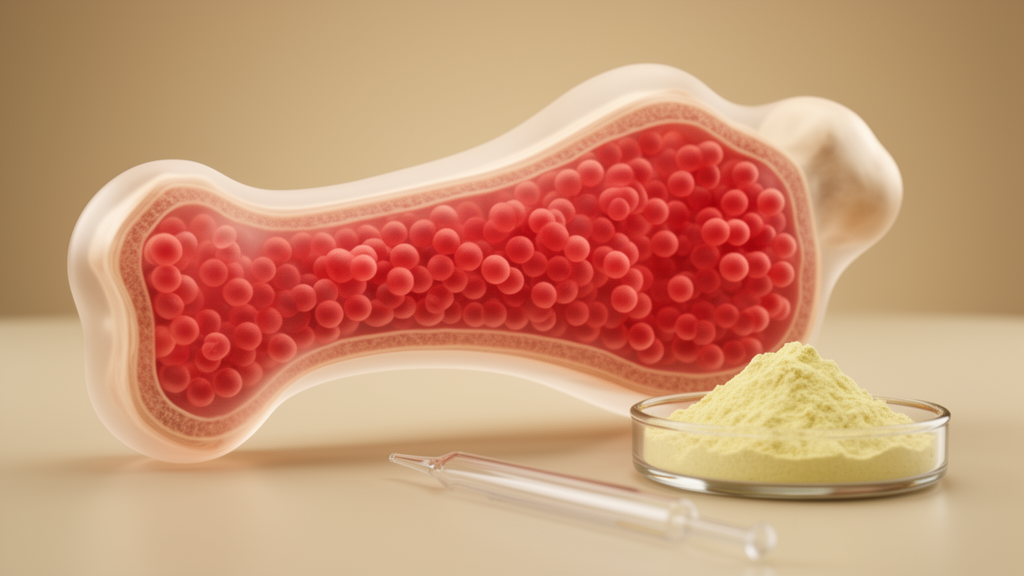
A protein-rich powder made from bacteria and pitched as a food of the future has cleared another safety hurdle. In a study published on 5 March 2026 in the open-access journal Genes and Environment, researchers report that a heat-inactivated biomass of the hydrogen-oxidizing bacterium Xanthobacter sp. SoF1, marketed as Solein by the Finnish company Solar Foods, showed no signs of genotoxic activity in the bone marrow of mice. The work, a GLP-compliant brief report conducted according to OECD test guideline 474, was designed to close the last major gap in the ingredient’s genotoxicity file: an in vivo test in a living animal.
The new experiment was carried out because earlier testing, while reassuring, had been confined to the laboratory dish. According to the study’s background section, SoF1 biomass had already been put through a bacterial reverse mutation test, an in vitro chromosomal aberration assay in human lymphocytes, and an in vitro micronucleus test in human lymphocytes, none of which produced evidence of mutagenicity or clastogenicity. What was missing was a mammalian micronucleus test performed in a whole animal; the authors note that regulatory bodies may request such an in vivo genotoxicity study for completeness, to assess potential to damage chromosomes or the mitotic apparatus in a living system. The authors state that the present study was performed to provide these additional in vivo insights and to address any data gaps needed for regulatory assessments.
The test material itself is unusual among food ingredients. Solein is a yellow powder consisting of heat-inactivated biomass of Xanthobacter sp. SoF1, a gram-negative hydrogen-oxidizing bacterium that grows chemoautotrophically. The strain was isolated by Solar Foods from seashore sediment in Naantali, Southern Finland, and was found to be most similar to X. tagetidis based on an average nucleotide identity measurement; because its ANI value falls below the 95 percent species boundary threshold, it was classified as a novel species. Analytically, the powder consists of 73.1 percent protein when calculated with the regular Kjeldahl nitrogen-to-protein factor of 6.25, and 68 percent protein when a factor based on Solein’s own composition, 5.83, is applied. It also contains 17.5 percent fiber, 7.8 percent fat, 58.1 mg/kg of manganese and 1240 mg/kg of iron.
For the micronucleus test, the team at Toxi-Coop used specific pathogen-free, 9-week-old male NMRI mice obtained from Charles River Laboratories, five animals per group, acclimatized for 12 days before the study began. The animals were housed in groups of five in polypropylene and polycarbonate cages with controlled lighting from 6 am to 6 pm and humidity between 40 and 70 percent, and they received a standard pellet diet and water ad libitum. The study was approved by the Institutional Animal Care and Use Committee of Toxi-Coop Zrt. Daily formulations of the test item were prepared with filtered water and used within two hours of mixing, and the concentrations of the administered suspensions were verified on both treatment days using a validated ICP-OES method based on the measured iron content of the samples.
Dosing followed the standard two-treatment design of the OECD 474 guideline. The mice received Solein by oral gavage at 0, 500, 1000 or 2000 mg/kg body weight, administered twice at 24-hour intervals in a treatment volume of 10 mL/kg body weight. Bone marrow was sampled once, 24 hours after the second treatment, in all animals of the vehicle control, low-dose, mid-dose and high-dose groups. A separate positive control group received cyclophosphamide intraperitoneally at 60 mg/kg body weight, sampled 24 hours after the first treatment. Dose levels were selected on the basis of a preliminary toxicity test that the authors describe as unpublished. The mice were examined regularly for visible signs of reaction to treatment immediately after dosing and periodically until sacrifice.
After sacrifice by cervical dislocation, bone marrow was flushed from the two exposed femurs with fetal bovine serum, and cell smears were prepared on microscope slides, fixed in methanol, stained with 10 percent Giemsa solution and mounted for microscopy. The slides were coded so that the analysts scoring them did not know which treatment each animal had received. Four thousand polychromatic erythrocytes were scored per animal to assess micronucleated cells, with the frequency of micronucleated polychromatic erythrocytes expressed as a percentage of the first 4000 polychromatic erythrocytes counted. The proportion of immature erythrocytes among total erythrocytes was determined for each animal by counting at least 500 erythrocytes, a measure that indicates whether the bone marrow was exposed to the test substance. Statistical analyses used the Kruskal-Wallis non-parametric ANOVA, the Mann-Whitney U-test and Duncan’s multiple range test, with linear trend analysis performed separately, and significance set at a p value below 0.05.
The results were unambiguous on the primary endpoint. No mortalities occurred during the study, and no adverse reactions to treatment were observed in either control group or in any of the treatment groups. Oral administration of Solein at 0, 500, 1000 and 2000 mg/kg body weight did not induce increases in the frequencies of micronucleated polychromatic erythrocytes in the male mice compared with the negative control group, and the frequencies remained within historical negative control ranges. The linear trend analysis did not show significance compared with the vehicle control. The assay’s sensitivity was confirmed by the positive control: cyclophosphamide produced a statistically significant increase in micronucleated polychromatic erythrocytes compared with both the negative and historical controls, validating the study. The authors conclude that the test item did not exhibit any clastogenic or aneugenic activity in the bone marrow of mice under the applied experimental conditions.
One secondary finding deserves careful reading. The ratio of polychromatic erythrocytes to total erythrocytes after the second treatment was statistically lower, by 9.3 percent, in the high-dose group compared with the concurrent and historical negative control groups. Under the OECD 474 guideline, such a decrease can be interpreted as evidence that the test item reached the bone marrow when the genotoxicity results are negative, which strengthens the interpretation of the study. However, the authors note that because Solein is a complex biomass rather than a single molecule, it is unknown which molecular components were responsible for the decreased ratio. They also point out that the decrease occurred only at the highest dose level, 2000 mg/kg body weight per day, which exceeds the no-observed-adverse-effect level of 1500 mg/kg body weight per day established in a previously published 90-day repeated-dose oral toxicity study of the same test material.
The authors are candid about the limits of the interpretation. Because the test item is a complex biomass ingredient, they write that the absence of a positive genotoxicity finding suggests no additional genotoxic concern at this time, although the result cannot be considered definitively negative due to uncertainty regarding which molecules reached the bone marrow. They add that the OECD guidance itself asks whether a study of a mixture may provide adequate results, while noting that such considerations are not required when there is a regulatory mandate to test the mixture. In this case, the study was conducted in addition to a previously published battery of safety studies on SoF1, and it was later considered that regulatory bodies might request an in vivo genotoxicity study for completeness. The new data, the authors state, do not suggest any additional concerns with regard to the previous genotoxicity studies using the same test material.
The broader context is a food system under pressure. The paper’s background section cites projections that food production must increase by more than 60 percent by 2050 to satisfy growing population protein requirements, and that a 50 percent increase in food production under current agricultural methods would generate an 80 percent increase in greenhouse gas emissions. Single-cell protein, a term introduced at a 1968 Massachusetts Institute of Technology conference, encompasses edible biomasses from fungi, algae and bacteria, which can contain 60 to 82 percent protein, more than other alternative protein sources, and are also rich in carbohydrates, nucleic acids, fats, minerals and vitamins. The authors note that other toxicological evaluations of similar products, including a single-cell protein powder from Cupriavidus necator and biomass of the green alga Chlamydomonas reinhardtii, demonstrated no signs of mutagenicity or genotoxicity, with no-observed-adverse-effect levels of 3000 and 4000 mg/kg body weight per day, respectively, the highest doses tested. As the authors put it, feed and food regulations are pivotal in influencing the direction of development of these alternative proteins, and high-quality scientific evidence is needed to support their safety. With this mouse study, Solein’s genotoxicity dossier now includes in vivo evidence alongside its earlier in vitro results, contributing what the authors describe as important additional evidence to its published toxicological safety profile as an alternative source of protein for consumption.
Subject of Research: An in vivo mammalian micronucleus test in mice evaluating the genotoxicity of a protein-rich bacterial biomass powder, Solein, derived from Xanthobacter sp. SoF1.
Article Title: In vivo mammalian micronucleus test in mice confirms lack of genotoxic potential of a protein-rich powder derived from Xanthobacter sp. SoF1
Article References: Choi, B., Endres, J. R., Clewell, A., Hirka, G., & Béres, E. (2026). In vivo mammalian micronucleus test in mice confirms lack of genotoxic potential of a protein-rich powder derived from Xanthobacter sp. SoF1. Genes and Environment, 48(1), Article 9. https://doi.org/10.1186/s41021-026-00356-0
Image Credits: AI Generated
DOI: 10.1186/s41021-026-00356-0
Keywords: Solein, Xanthobacter sp. SoF1, Solar Foods, single-cell protein, genotoxicity, micronucleus test, bone marrow, NMRI mice, OECD 474, food safety, alternative protein, toxicology
News Source: Drew Townsend. (October 29, 2026). Mouse Bone Marrow Test Finds No Genotoxic Signs for Solar Foods’ Solein Protein Powder. Scienmag.