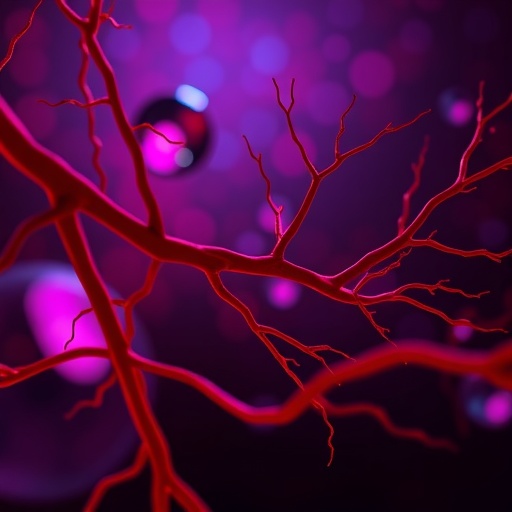
Recent research has illuminated the pivotal role of UHRF1, a key regulatory protein, in the dynamics of endothelial cells, particularly during the critical process of angiogenesis. Angiogenesis, the formation of new blood vessels from pre-existing ones, is a fundamental physiological process crucial for development, wound healing, and the progression of several diseases, including cancer. The modulation of this process is complex, driven by a myriad of molecular signals and cellular interactions. In this context, the function of UHRF1 emerges as a significant focal point, suggesting new avenues for understanding endothelial biology.
In the study led by Liu, Mo, and Guo, the researchers examined how UHRF1 influences the behavior and functions of endothelial cells. They demonstrated that UHRF1 is essential for angiogenesis through its involvement in the activation of pro-angiogenic signaling pathways. This discovery sheds light on the intricate balance of gene expression regulated by UHRF1 during vascular formation and suggests that this protein could be a critical target for therapeutic interventions in diseases characterized by abnormal angiogenesis.
The activation of pro-angiogenic signaling pathways is a fundamental component of endothelial cell function. UHRF1 appears to play a central role in this process by modulating gene expression in response to various stimuli. When endothelial cells are exposed to angiogenic factors, UHRF1 is upregulated, enhancing the cells’ responsiveness to these signals. This reinforces the notion that UHRF1 does not merely act as a passive regulator but as an active participant in the initiation and maintenance of angiogenic processes.
Moreover, the study highlights that UHRF1’s influence extends beyond initial angiogenic signaling. It significantly impacts the expression of genes that are critical for endothelial cell function and survival. As endothelial cells undergo changes during vascular remodeling, the precise control of gene expression facilitated by UHRF1 becomes increasingly vital. This regulation ensures that endothelial cells can adapt to new microenvironmental conditions, promoting survival and functionality in the face of challenges.
The implications of this research reach far beyond basic scientific curiosity. Given the central role of angiogenesis in pathophysiology, the insights gained from understanding UHRF1’s function could inform the development of novel therapeutic strategies. For instance, manipulating UHRF1 activity could provide a means to enhance or inhibit angiogenesis in various clinical scenarios, such as in the treatment of cancer, where tumor growth is often supported by rich blood supply networks, or in ischemic diseases, where promoting blood vessel formation could restore vital blood flow.
Furthermore, the study provides a detailed molecular framework that elucidates how endothelial cells use UHRF1 to integrate multiple signaling inputs. These insights reveal that UHRF1 is a nexus point where various pro-angiogenic pathways converge, suggesting that targeting UHRF1 could allow for a more coordinated modulation of angiogenesis. By fine-tuning UHRF1 activity, researchers could potentially influence multiple aspects of endothelial cell behavior simultaneously, paving the way for more effective therapies.
Interestingly, the researchers also examined the cellular context-dependent effects of UHRF1. While its role is vital in endothelial cells, the significance of UHRF1 may vary among different cell types and contexts. This highlights the importance of understanding the broader biological networks in which UHRF1 operates, suggesting that findings in endothelial cells may not be universally applicable without further investigation in other tissues.
In this arena, the exploration of UHRF1’s interactions with other key proteins involved in angiogenesis opened new pathways for inquiry. The study suggests a potential interplay between UHRF1 and various growth factors, transcription factors, and chromatin remodeling complexes. Future investigations could map these interactions more comprehensively, revealing an intricate web of regulatory mechanisms that control angiogenic processes.
Moreover, the timing and dynamics of UHRF1 expression during the various phases of angiogenesis also warrant further exploration. The researchers proposed that a temporal expression pattern of UHRF1 might reflect the different demands placed on endothelial cells during the initiation, proliferation, and maturation phases of blood vessel formation. A better understanding of these dynamics could inform the development of timeline-targeted interventions.
Ultimately, this research on UHRF1 not only enhances our understanding of the fundamental biology of endothelial cells but also provides essential insights that may revolutionize therapeutic strategies in regenerative medicine and cancer therapy. As the scientific community continues to unravel the complexities of angiogenesis, UHRF1 stands out as a key player ripe for further exploration.
The quest for novel anti-angiogenic therapies could benefit significantly from these findings. Since aberrant angiogenesis contributes to the progression of numerous diseases, especially cancer, targeting UHRF1 could provide a novel approach to suppress pathological angiogenesis. Conversely, in conditions where enhancing blood flow and new vessel formation is desired, such as in ischemic disorders, therapies aimed at augmenting UHRF1 activity could hold promise.
In conclusion, the comprehensive exploration of UHRF1’s role in endothelial cells during angiogenesis opens a transformative window into both basic and applied biomedical research. By navigating the complexities of this protein and its regulatory mechanics, scientists stand on the verge of forging revolutionary pathways for understanding and manipulating vascular biology, with profound implications for medical science and patient treatment strategies.
This pivotal research is indeed a stepping stone toward not only advancing our fundamental understanding of endothelial biology but also translating these insights into effective treatments to combat a wide array of diseases associated with vascular abnormalities. The ongoing investigations in this domain will undoubtedly keep the scientific community engaged, as the full potential of UHRF1 remains to be explored.
Subject of Research: The essential role of UHRF1 in endothelial cell angiogenesis and its impact on pro-angiogenic signaling pathways.
Article Title: UHRF1 in endothelial cells is essential for angiogenesis and associated with the activation of pro-angiogenic signaling pathways and expression of endothelial genes.
Article References: Liu, Y., Mo, J., Guo, Z. et al. UHRF1 in endothelial cells is essential for angiogenesis and associated with the activation of pro-angiogenic signaling pathways and expression of endothelial genes. Angiogenesis 28, 42 (2025). https://doi.org/10.1007/s10456-025-09998-0
Image Credits: AI Generated
DOI: https://doi.org/10.1007/s10456-025-09998-0
Keywords: UHRF1, endothelial cells, angiogenesis, signaling pathways, gene expression, therapeutic strategies.
Tags: cancer progression and angiogenesiscellular interactions in angiogenesisendothelial biology researchendothelial cell functionsgene expression modulationmolecular signals in angiogenesispro-angiogenic signaling pathwaystherapeutic targets for angiogenesisUHRF1 as a regulatory proteinUHRF1 role in angiogenesisvascular formation mechanismswound healing processes