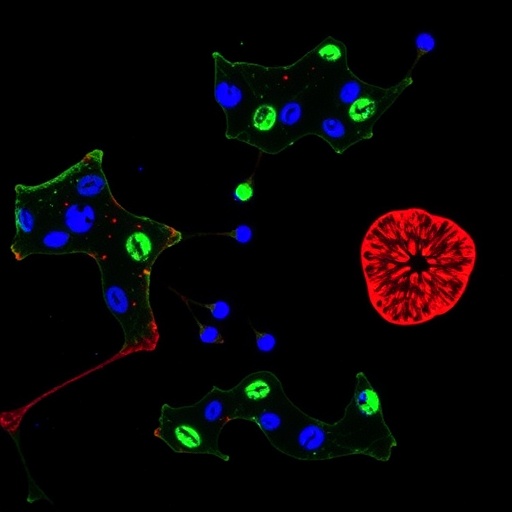
Recent research has unveiled a crucial pathway in melanoma progression, identifying the tumor cell-intrinsic ITGB2 axis as a promising target for therapeutic intervention. This groundbreaking study, led by Rasbach et al., emphasizes the importance of exploring intrinsic cellular mechanisms to combat one of the most aggressive forms of skin cancer. The team discovered that melanoma cells exploit the ITGB2 axis not only for survival but also for enhanced metastatic potential, presenting new avenues for targeted therapies that could revolutionize treatment paradigms.
Melanoma, a malignancy originating from melanocytes, has witnessed a troubling rise in incidence worldwide. Despite the development of several targeted therapies and immunotherapeutic strategies, the mortality rate remains significant, particularly due to resistance and recurrence. The ITGB2 axis, a component of integrin signaling, has emerged as a central player in this landscape. This study meticulously investigates the functional implications of ITGB2 expression within melanoma cells, providing a comprehensive overview of its role in tumor biology.
In the context of melanoma progression, ITGB2 serves as a crucial mediator of cell adhesion, migration, and signaling. Rasbach and colleagues demonstrated that the inhibition of ITGB2 leads to a notable reduction in tumor growth and metastatic spread in preclinical models. By employing CRISPR-Cas9 technology to knock out ITGB2 in melanoma cell lines, the researchers observed a significant decrease in invasive capabilities. This highlights the potential of targeting integrin pathways as a strategy to hinder tumor dissemination.
Furthermore, the findings emphasized the intricate interplay between ITGB2 and the tumor microenvironment. Melanoma cells exhibiting high ITGB2 levels were found to interact more effectively with surrounding stromal cells, enhancing their ability to thrive in hostile environments. This cellular communication and the resultant secretion of pro-tumorigenic factors underscored the need for disrupting this signaling axis as a means to thwart melanoma progression.
The therapeutic implications of these findings are profound, suggesting that integrating ITGB2 inhibition into existing treatment regimens could enhance patient outcomes. Current approaches, including immune checkpoint inhibitors, may benefit from complementary strategies that simultaneously target intrinsic signaling pathways like ITGB2. The potential for combinatorial therapies opens up exciting prospects for clinical applications, paving the way for clinical trials that could validate these preclinical observations.
Moreover, the study addresses the challenge of drug resistance, a significant hurdle in melanoma treatment. By elucidating the role of ITGB2 in promoting a more aggressive phenotype, the researchers provide a critical insight into how such pathways may contribute to therapeutic escape mechanisms. The inhibition of ITGB2 could potentially re-sensitize resistant melanoma cells, offering hope for patients who have exhausted conventional treatment options.
As the field of onco-immunology continues to evolve, the significance of tumor microenvironment interactions has become increasingly prominent. This research adds a new layer to our understanding, linking the intrinsic properties of melanoma cells with their extrinsic influences. By targeting the ITGB2 axis, there is a potential not only to diminish tumor growth but also to modulate the immune landscape surrounding the tumor, potentially enhancing the efficacy of immunotherapies.
The overall findings presented in this study advocate for a paradigm shift in melanoma research, emphasizing the need for continued exploration of intrinsic signaling pathways. The ITGB2 axis stands out as a compelling target that could provide a dual benefit of directly inhibiting tumor proliferation while simultaneously reshaping the tumor microenvironment to favor anti-tumor immunity.
Ultimately, the insights gleaned from this research hold significant promise for the development of more effective, personalized treatment strategies for melanoma patients. As researchers delve deeper into the complexities of melanoma biology, the integration of findings such as these will be crucial for advancing our understanding and improving therapeutic outcomes.
To fully translate these findings into clinical practice, collaborative efforts between researchers, oncologists, and pharmaceutical companies will be essential. As investigations into the ITGB2 axis progress, the potential for innovative therapies that leverage our growing understanding of tumor biology could change the landscape of melanoma treatment.
In conclusion, the investigation of the tumor cell-intrinsic ITGB2 axis represents a significant advancement in our understanding of melanoma progression. By targeting this pathway, researchers have opened the door to new therapeutic strategies that could significantly impact patient survival and quality of life. As the battle against melanoma continues, studies like this are vital for shaping future research agendas and ultimately, for improving the outcomes for patients battling this formidable disease.
Subject of Research: Targeting the tumor cell-intrinsic ITGB2 axis to inhibit melanoma progression.
Article Title: Targeting the tumor cell-intrinsic ITGB2 axis inhibits melanoma progression.
Article References: Rasbach, E., Migayron, L., Brandenburg, A. et al. Targeting the tumor cell-intrinsic ITGB2 axis inhibits melanoma progression. Mol Cancer 24, 310 (2025). https://doi.org/10.1186/s12943-025-02527-z
Image Credits: AI Generated
DOI: https://doi.org/10.1186/s12943-025-02527-z
Keywords: Melanoma, ITGB2, tumor progression, targeted therapy, integrin signaling, microenvironment, drug resistance, immunotherapy.
Tags: CRISPR/Cas9 in cancer researchintegrin signaling in melanomaintrinsic mechanisms of melanomaITGB2 axis therapeutic targetmelanoma cell adhesion and migrationmelanoma progression researchmetastatic potential of melanomaovercoming melanoma resistancepreclinical models in cancer studiesskin cancer treatment advancementssuppressing melanoma growth strategiestargeted therapies for melanoma