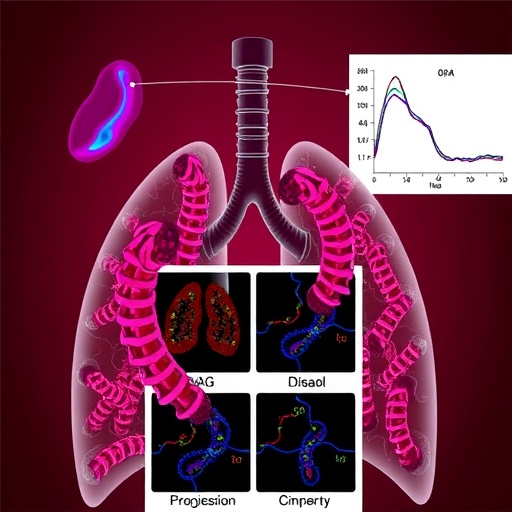
In the realm of oncological research, the intricate mechanisms behind cancer metastasis and immune evasion are crucial questions that scientists endeavor to unravel. A recent groundbreaking study conducted by Jiang, Yu, Wang, and their collaborators sheds light on the role of HDAC6, a prominent histone deacetylase, in small cell lung cancer (SCLC). This study opens new avenues for targeted therapies, by elucidating the molecular pathways that not only facilitate tumor progression but also contribute to the immunosuppressive tumor microenvironment.
Small cell lung cancer, although less common than non-small cell lung cancer, represents a significant percentage of lung cancer cases and is notorious for its aggressive nature and poor prognosis. The study highlights the multifaceted roles of HDAC6, emphasizing its dual functionality in orchestrating both metastatic behavior and the immune landscape within SCLC. By regulating the expression of crucial proteins such as S100A2, TGF-β, and the SMAD family of transcription factors, HDAC6 emerges as a vital player in the metastatic and immunosuppressive programs of SCLC.
The researchers utilized a range of molecular biology techniques to dissect the signaling pathways influenced by HDAC6. Notably, they identified the activation of S100A2, a calcium-binding protein, which is intricately linked to cellular processes including proliferation, migration, and immune modulation. The findings indicate that upregulation of S100A2 activates the TGF-β signaling pathway, which is known for its roles in promoting epithelial-mesenchymal transition (EMT) and enhancing metastatic potential in various cancers.
One of the fascinating aspects of this study is its focus on the TGF-β/SMAD signaling axis. When S100A2 interacts with TGF-β, it activates the SMAD family of proteins, which function as transducers of TGF-β signaling. This pathway, often hijacked by tumors to promote invasion and metastasis, plays a pivotal role in SCLC’s aggressive behavior. The researchers demonstrate that disruption of this signaling cascade can lead to decreased invasiveness and increased sensitivity to immunotherapies.
Moreover, the study reveals the interconnectedness of HDAC6 with CSF1R signaling, another crucial pathway in the tumor microenvironment. CSF1R, a receptor for the colony-stimulating factor 1, is instrumental in the recruitment and activation of tumor-associated macrophages (TAMs), which further contribute to immune suppression. Through HDAC6, SCLC can manipulate CSF1R signaling, thereby enhancing the immunosuppressive milieu that supports tumor growth and metastasis.
The implications of these findings are profound, suggesting that therapies targeting HDAC6 could disrupt these oncogenic pathways, potentially reversing immune evasion and curtailing metastasis. In the therapeutic landscape, the study opens discussions on the development of HDAC6 inhibitors as a viable treatment option for SCLC patients looking for targeted interventions. Such inhibitors could not only diminish tumor aggressiveness but also restore anti-tumor immunity by altering the tumor microenvironment.
As the research community continues to explore the various roles of epigenetic modifiers like HDAC6, the findings from Jiang and colleagues underscore the importance of understanding the biochemical interactions that govern cancer biology. The integration of HDAC6 inhibition with immunotherapies may form the cornerstone of future clinical trials aimed at improving outcomes for those afflicted with small cell lung cancer.
In this study, the authors employed in vitro assays alongside in vivo models to validate their hypotheses, ensuring robust and reproducible results. The combination of these experimental approaches provides a compelling argument for the proposed mechanistic pathways, further reinforcing the study’s credibility. Furthermore, the multi-modal strategy employed enhances the potential for translational research, converging laboratory findings with preclinical and clinical applications.
The research also resonates with the growing body of literature emphasizing the significance of the tumor microenvironment in cancer progression. By illuminating the dual role of HDAC6 as both an orchestrator of metastatic signaling and a modulator of immune responses, this study underscores a paradigm shift in our understanding of cancer biology. It invites researchers to consider the complex interplay of oncogenic pathways and the immune system in the context of developing innovative therapeutic strategies.
Additionally, the findings may also hold implications beyond SCLC, as HDAC6 is implicated in various cancer types. This further emphasizes the need for broader investigations into the therapeutic targeting of HDAC6 across different malignancies. By expanding the scope of research to include diverse tumor environments, researchers could unveil common vulnerabilities that could be exploited for effective cancer treatments.
In conclusion, the intricate nexus of HDAC6, S100A2, TGF-β/SMAD signaling, and CSF1R illustrates a compelling narrative of how epigenetic regulators influence cancer pathology. The groundbreaking revelations from this study pave the way for novel therapeutic modalities and encourage further exploration of HDAC6 as a target for pharmacological intervention in small cell lung cancer. The findings are not only a significant contribution to the current body of knowledge but also act as a springboard for future investigations aimed at combating this formidable disease.
The intersection of cancer research and therapeutic development continues to evolve, and as we gain deeper insights into the molecular underpinnings of diseases like small cell lung cancer, the potential for effective treatments becomes more tangible. The ongoing dialogue within the scientific community regarding the implications of HDAC6 offers promising avenues for research that could ultimately lead to better outcomes for patients battling this aggressive form of cancer.
With ongoing advancements in the understanding of epigenetic regulation and its impact on cancer progression and treatment, the future holds the potential for innovative strategies that not only target the malignancy directly but also enhance the body’s immune capabilities. Continued exploration and validation of findings related to HDAC6 will be paramount in shaping a new generation of therapeutics, moving toward a more personalized approach in oncology.
The hope now lies in harnessing these insights to develop more effective clinical interventions, ensuring that small cell lung cancer patients benefit from the latest research breakthroughs. As the field advances, the collaboration between academia and industry will be essential to translate these foundational discoveries into tangible treatments that ultimately save lives.
The relentless pursuit of knowledge combined with innovative research methodologies is what fuels progress in cancer treatment, and the study by Jiang et al. exemplifies the power that comes from a comprehensive understanding of the molecular mechanisms at play in cancer biology.
The path forward is clear: continue to investigate, explore, and innovate. The potential to alter the course of small cell lung cancer through targeted interventions is not just a distant hope; it is becoming an achievable reality, thanks to the pioneering work being done in laboratories around the world.
Subject of Research: Small Cell Lung Cancer and HDAC6 Signaling Pathways
Article Title: HDAC6 orchestrates metastatic and immunosuppressive programs in small cell lung cancer through S100A2-TGF-β/SMAD and CSF1R signaling.
Article References:
Jiang, Y., Yu, J., Wang, T. et al. HDAC6 orchestrates metastatic and immunosuppressive programs in small cell lung cancer through S100A2-TGF-β/SMAD and CSF1R signaling.
Mol Cancer (2026). https://doi.org/10.1186/s12943-025-02552-y
Image Credits: AI Generated
DOI: 10.1186/s12943-025-02552-y
Keywords: Small Cell Lung Cancer, HDAC6, S100A2, TGF-β, CSF1R, metastasis, tumor microenvironment, immunotherapy.
Tags: aggressive nature of small cell lung cancercancer metastasis and immune regulationHDAC6 role in lung cancer metastasishistone deacetylase in tumor biologyimmunosuppression mechanisms in SCLCmolecular biology techniques in cancer researchmolecular pathways in cancer progressionS100A2 and cancer cell behaviorSMAD transcription factors in metastasistargeted therapies for small cell lung cancerTGF-β signaling in lung cancertumor microenvironment and immune evasion