SARS-CoV-2 infection induces antibodies capable of killing infected cells regardless of disease severity
Credit: © Virus & Immunity Unit, Institut Pasteur
Drawing on epidemiological field studies and the FrenchCOVID hospital cohort coordinated by Inserm, teams from the Institut Pasteur, the CNRS and the Vaccine Research Institute (VRI, Inserm/University Paris-Est Créteil) studied the antibodies induced in individuals with asymptomatic or symptomatic SARS-CoV-2 infection. The scientists demonstrated that infection induces polyfunctional antibodies. Beyond neutralization, these antibodies can activate NK (natural killer) cells or the complement system, leading to the destruction of infected cells. Antibody levels are slightly lower in asymptomatic as opposed to symptomatic individuals, but polyfunctional antibodies were found in all individuals. These findings show that infection induces antibodies capable of killing infected cells regardless of the severity of the disease. The research was published in the journal Cell Reports Medicine on April 21, 2021.
Nearly half of those infected with SARS-CoV-2 do not develop symptoms. Yet, the immune response induced by asymptomatic forms of COVID-19 remains poorly characterized. The extent of the antiviral functions of SARS-CoV-2 antibodies is also poorly characterized. Antibodies are capable of both neutralizing the virus and activating “non-neutralizing” functions. The latter include antibody-dependent cellular cytotoxicity (ADCC) and complement activation, which are major components of the immune response and play a key role in the efficacy of some vaccines. ADCC is a two-stage process in which infected cells are first recognized by antibodies, then destroyed by NK cells. The complement system consists of a series of plasma proteins that also enable the elimination of cells targeted by antibodies. The ability of antibodies to activate these non-neutralizing functions has been little described for SARS-CoV-2 infection so far.
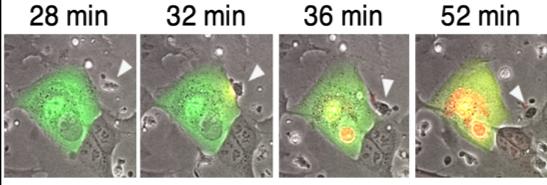
The teams from the Institut Pasteur, the CNRS and the VRI (Inserm/University Paris-Est Créteil) initially developed new assays to measure the various antibody functions. They produced assays to study cell death induced by NK cells or by complement in the presence of antibodies. By analyzing cultures in real time using video microscopy, the scientists showed that NK cells kill infected cells in the presence of antibodies, demonstrating new antiviral activity employed by SARS-CoV-2 antibodies.
The scientists then examined the serum of patients with symptomatic or asymptomatic forms of COVID-19 with their new assays. They also used methods previously developed at the Institut Pasteur, such as the S-Flow assay, to detect SARS-CoV-2 anti-spike antibodies, and the S-Fuse assay, to measure the neutralization capacity of these antibodies.
“This study demonstrated that individuals infected with SARS-CoV-2 have antibodies that are capable of attacking the virus in different ways, by preventing it from entering cells (neutralization) or by activating NK cells to kill infected cells (via ADCC). We therefore use the term polyfunctional antibodies,” explains Timothée Bruel, co-last author of the study and a scientist in the Institut Pasteur’s Virus & Immunity Unit and at the VRI.
By comparing different groups of patients, the scientists then showed that asymptomatic individuals also have polyfunctional antibodies and that their response is slightly weaker than those of patients with moderate forms of COVID-19.
“The study reveals new mechanisms of action of SARS-CoV-2 antibodies and suggests that the protection induced by an asymptomatic infection is very close to that observed after a symptomatic infection,” concludes Olivier Schwartz, co-last author of the study, head of the Virus & Immunity Unit and at the VRI.
###
[1] Department of Virology (CNRS/Institut Pasteur)
Watch the video microscopy of antibodies killing infected cells by activating NK cells. Infected cell is shown in green. The NK cell comes into contact with the infected cell, then destroys it. The dying cell turns red.
Link: https:/
Media Contact
Aurelie Perthuison
[email protected]
Original Source
https:/
Related Journal Article
http://dx.