• HOME
  • NEWS
  • EXPLORE
    • CAREER
      • Companies
      • Jobs
    • EVENTS
    • iGEM
      • News
      • Team
    • PHOTOS
    • VIDEO
    • WIKI
  • BLOG
  • COMMUNITY
    • FACEBOOK
    • INSTAGRAM
    • TWITTER
Thursday, March 26, 2026
BIOENGINEER.ORG
No Result
View All Result
  • Login
  • HOME
  • NEWS
  • EXPLORE
    • CAREER
      • Companies
      • Jobs
        • Lecturer
        • PhD Studentship
        • Postdoc
        • Research Assistant
    • EVENTS
    • iGEM
      • News
      • Team
    • PHOTOS
    • VIDEO
    • WIKI
  • BLOG
  • COMMUNITY
    • FACEBOOK
    • INSTAGRAM
    • TWITTER
  • HOME
  • NEWS
  • EXPLORE
    • CAREER
      • Companies
      • Jobs
        • Lecturer
        • PhD Studentship
        • Postdoc
        • Research Assistant
    • EVENTS
    • iGEM
      • News
      • Team
    • PHOTOS
    • VIDEO
    • WIKI
  • BLOG
  • COMMUNITY
    • FACEBOOK
    • INSTAGRAM
    • TWITTER
No Result
View All Result
Bioengineer.org
No Result
View All Result
Home NEWS Science News Health

A new treatment for rare muscular disease

Bioengineer by Bioengineer
April 16, 2021
in Health
Reading Time: 2 mins read
0
IMAGE
Share on FacebookShare on TwitterShare on LinkedinShare on RedditShare on Telegram

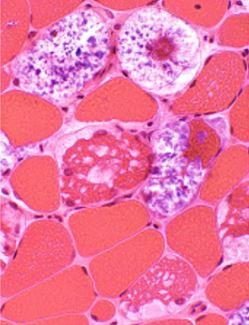
UC researchers present findings that could give patients with Pompe disease a better quality of life
IMAGE

Credit: University of Cincinnati

Rare diseases are sometimes the most difficult to treat because of a lack of research and fewer participants to study.

An example would be those who have Pompe disease, a genetic condition when a body can’t make a protein that breaks down a complex sugar, called glycogen, for energy. Too much glycogen builds up and damages muscles and organs. The disease causes muscle weakness and trouble breathing and can affect the heart and muscles.

In the case of Pompe disease, however, University of Cincinnati researchers have found a newer, more effective treatment for the rare condition that could become the new standard of care.

Hani Kushlaf, MD, an associate professor in both the Department of Neurology and Rehabilitation Medicine and the Department of Pathology and Laboratory Medicine at UC and principal investigator of a study led at UC, will present findings on this new treatment virtually at the American Academy of Neurology on April 20.

Kushlaf, a UC Health physician, says Pompe disease affects about 1 in 40,000 people in the United States. It can impact children, but it can also present later in life as well. Left untreated, it can result in progressive loss of function of muscles in limbs and respiration leading to the need for wheelchair use and respiratory support.

“In this clinical trial, we tested a new drug, or enzyme replacement therapy (avalglucosidase alfa), to see if it was more effective and safer than the currently approved therapy, also an enzyme replacement therapy, in patients with late-onset Pompe disease,” he says. “It turns out that it is safer and more effective than the current FDA-approved therapy. This new enzyme will likely become the standard of care for patients with the disease and has already been submitted for Food and Drug Administration approval. This is a big deal for patients with this rare disease, as t-PA was for stroke.”

This study was double-blinded, meaning neither the participants nor the researchers knew which treatment was being administered via an infusion. In 51 patients who received the new treatment, researchers saw an improvement in respiratory muscle function, endurance and muscle strength, in addition to an overall better quality of life, when compared to patients on the current standard of care therapy.

“These results are extremely promising for finding a new and effective treatment for this disease,” adds Kushlaf, who is also a member of the UC Gardner Neuroscience Institute. “With these results, we can take the next steps in having it used widely in this patient population, improving their outcomes and giving them a better life.”

###

The trial is sponsored by the pharmaceutical company Sanofi. Kushlaf belongs to an author group appointed by Sanofi and is responsible for disseminating the findings of this trial.

Media Contact
Katie Pence
[email protected]

Tags: BiologyCell BiologyHealth CareMedicine/HealthneurobiologyPhysiology
Share13Tweet8Share2ShareShareShare2

Related Posts

Aversive Learning Hijacks Brain Sugar Sensor

March 25, 2026

Can Psychosocial Factors Influence Cancer Risk?

March 23, 2026

Depression Factors in Elderly: Pre vs. Post-COVID Analysis

March 23, 2026

Hidden Health Crises Among US and UK Volunteers in Ukraine Uncovered in New Study

March 23, 2026
Please login to join discussion

POPULAR NEWS

  • blank

    Revolutionary AI Model Enhances Precision in Detecting Food Contamination

    96 shares
    Share 38 Tweet 24
  • Imagine a Social Media Feed That Challenges Your Views Instead of Reinforcing Them

    1003 shares
    Share 397 Tweet 248
  • Uncovering Functions of Cavernous Malformation Proteins in Organoids

    54 shares
    Share 22 Tweet 14
  • Promising Outcomes from First Clinical Trials of Gene Regulation in Epilepsy

    51 shares
    Share 20 Tweet 13

About

We bring you the latest biotechnology news from best research centers and universities around the world. Check our website.

Follow us

Recent News

In-Sensor Cryptography Links Physical Process to Digital Identity

Can Psychosocial Factors Influence Cancer Risk?

Depression Factors in Elderly: Pre vs. Post-COVID Analysis

Subscribe to Blog via Email

Success! An email was just sent to confirm your subscription. Please find the email now and click 'Confirm' to start subscribing.

Join 78 other subscribers
  • Contact Us

Bioengineer.org © Copyright 2023 All Rights Reserved.

Welcome Back!

Login to your account below

Forgotten Password?

Retrieve your password

Please enter your username or email address to reset your password.

Log In
No Result
View All Result
  • Homepages
    • Home Page 1
    • Home Page 2
  • News
  • National
  • Business
  • Health
  • Lifestyle
  • Science

Bioengineer.org © Copyright 2023 All Rights Reserved.