


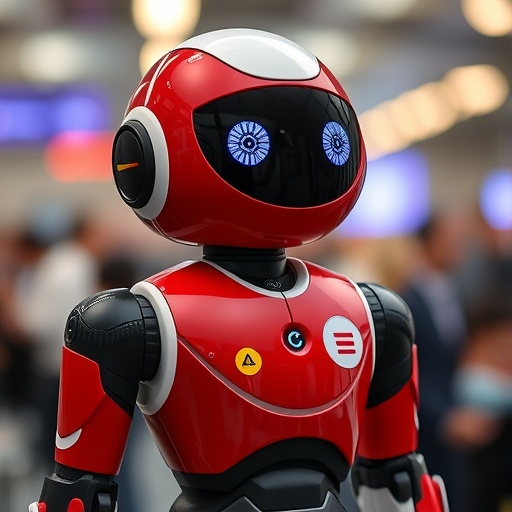
As robotics continue to weave more intricately into the fabric of our daily lives, the deployment of social robots within eldercare environments has gained unprecedented attention. In an insightful and groundbreaking study recently published in BMC Geriatrics, researchers Wangmo, Sieber, Tian, and their colleagues dissect the complex ethical and practical landscape surrounding the use of the humanoid social robot Pepper. This futuristic interface, designed to interact with and assist the aging population, presents a compelling case study that could redefine human-technology relationships in healthcare.
Pepper, developed by SoftBank Robotics, is not just a machine but a social companion engineered to engage cognitively and emotionally with humans. Its capabilities encompass recognizing faces, interpreting speech, and even responding to human emotions—traits that position Pepper at the intriguing crossroads of robotics and social science. The research delves deeply into how these features could be harnessed to address the multifaceted challenges faced by elderly individuals, particularly those experiencing loneliness, cognitive decline, or physical limitations.
One of the pivotal revelations of this research lies in the ethical discourse surrounding autonomy versus surveillance. The team highlights a subtle yet critical tension: social robots like Pepper can empower elderly users by supporting independent living; however, the design must carefully avoid becoming intrusive or undermining personal privacy. As these robots gather sensitive data to tailor interactions, concerns emerge about data security, consent, and unintended psychological impacts, prompting a call for transparent, ethical frameworks governing their deployment.
Beyond ethical quandaries, the study rigorously evaluates practical implications tied to the robot’s use across diverse eldercare contexts. Pepper’s interactive modules include memory games, reminders for medication, and social engagement features—aimed at enhancing cognitive function and emotional well-being. Researchers emphasize how customizable interfaces enable adaptation to individual user needs, thereby promoting inclusivity for users with varying degrees of tech literacy and cognitive ability. Still, the effectiveness depends heavily on contextual understanding and ongoing assessment.
Moreover, interoperability issues and system reliability form equally critical aspects of the analysis. The research team’s systematic exploration reveals challenges related to Pepper’s integration within existing healthcare infrastructures. This includes ensuring seamless communication between the robot and healthcare providers, as well as maintaining network stability to prevent malfunctions that could jeopardize user safety or care continuity. These technical demands present significant hurdles but also opportunities for refinement and innovation in system design.
Social acceptance constitutes another cornerstone of the investigation. Initial skepticism, rooted in fears of dehumanization and robot-driven displacement of caregivers, tends to diminish as users interact more with Pepper, observing its empathetic gestures and responsive behaviors. Nevertheless, acceptance varies based on cultural contexts, individual predispositions, and prior tech experiences. Wangmo and colleagues argue that fostering trust requires transparency about robot capabilities, limitations, and the role they are intended to play as supplements—not substitutes—to human caregivers.
Training for healthcare professionals emerges as a crucial factor for maximizing Pepper’s impact. The study underscores that nurses, therapists, and family members must be proficient not only in operating the robot but also in interpreting its outputs and troubleshooting potential issues. Such training facilitates smoother adoption, enabling caregivers to integrate Pepper effectively into care routines while providing a safety net for users. This dimension underscores the intertwined nature of technology deployment with human expertise.
Delving into the psychological ramifications, the research presents compelling evidence regarding Pepper’s role in mitigating loneliness, a prevalent issue among the elderly. Interaction with the robot can stimulate conversation, reduce feelings of isolation, and provide a persistent presence that adapts to emotional states. This techno-empathic relationship challenges traditional models of social interaction by blending human warmth with robotic consistency, potentially reshaping emotional support paradigms for vulnerable populations.
Furthermore, the study addresses the socio-economic implications of introducing robots like Pepper into eldercare frameworks. While upfront costs and maintenance expenses may seem prohibitive, the authors elaborate on the long-term economic benefits realized through reduced hospitalizations, improved medication adherence, and decreased caregiver burnout. These benefits advocate for policy-level investments and incentivization to cultivate an ecosystem that supports social robot integration within public health systems.
Technological innovation is another highlight within the paper’s discourse. By trialing Pepper’s latest software updates that enhance natural language processing and contextual awareness, researchers demonstrate ongoing strides in refining robot-human dialogue. Machine learning algorithms enable Pepper to progressively tailor interactions, learning preferences and habits to optimize support. These advancements position Pepper not merely as a tool but as an evolving participant in the care continuum.
Addressing limitations candidly, the authors acknowledge gaps in empirical data related to long-term impacts. Most current studies, including their own, involve short-term pilots or controlled environments, leaving questions about sustainability, adaptation over time, and longitudinal psychological effects. They advocate for extended clinical trials and cross-disciplinary collaborations to fully comprehend Pepper’s role within complex social and medical ecosystems.
The research team also sheds light on the legislative and regulatory landscape that must evolve concomitantly with technological progress. They call attention to the lack of standardized guidelines overseeing social robot deployment, data governance, and accountability mechanisms. Given the sensitive nature of eldercare, robust frameworks are imperative to safeguard users’ rights and well-being, ensuring robots enrich rather than complicate ethical care delivery.
Intriguingly, the study explores Pepper’s potential in cognitive rehabilitation therapies. By engaging users in interactive memory and problem-solving tasks, Pepper can contribute to cognitive stimulation, potentially slowing cognitive decline, especially in individuals with mild cognitive impairment or early-stage dementia. This proactive therapeutic dimension exemplifies how robotics can transcend assistance, venturing into preventative and restorative healthcare realms.
Community and social dynamics also feature prominently in the discussion. Pepper can act as a social catalyst, fostering connectivity by enabling video calls with family members or hosting group activities within care facilities. Such features promote social inclusion, empowering elderly individuals to participate actively in their communities, counteracting stereotypes of passivity and helplessness. This multifaceted engagement enhances quality of life on psychological and social fronts.
In conclusion, the study navigates the intricate discourse enveloping Pepper’s place in eldercare, intertwining ethical considerations with practical realities and technological innovation. Wangmo and colleagues present a nuanced, balanced narrative recognizing both transformative potentials and inherent challenges. As society strides towards a future intertwined with intelligent machines, this research crucially informs how we can harness robotics to honor and uplift the dignity of aging populations, redefining care through empathy-infused automation.
Article References:
Wangmo, T., Sieber, S., Tian, Y.J.A. et al. Navigating the discourse on the use of social robot Pepper: ethical and practical implications. BMC Geriatr (2026). https://doi.org/10.1186/s12877-026-07640-2
Image Credits: AI Generated
Tags: addressing loneliness with social robotsautonomy and surveillance in eldercare technologycognitive assistance for aging populationemotional interaction with social robotsethical discourse on eldercare roboticsethical issues of social robots in healthcarehuman-robot relationships in healthcarePepper robot capabilities and featurespractical challenges of humanoid robotsrobotics in geriatric caresocial robot Pepper in eldercaresocial robotics for elderly support

