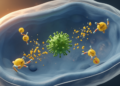
Mechanical instability of adherens junctions overrides intrinsic quiescence of hair follicle stem cells

Credit: Avinanda Banerjee
The skin is the largest organ in the human body, and its outermost part, called the epidermis, is replenished every three weeks. The cells fueling this renewal of the epidermal stem cells, found in specialized areas or niche, within a region of the hair follicle (or root) is known as the ‘bulge compartment’. The bulge compartment resident stem cells are multipotent meaning that they can contribute to the repair of skin when it’s injured, and also regenerate the hair follicles during normal development. While several groups have focused attention on the stem cells themselves, less is known about niche or extrinsic factors that influence the state of these stem cells.
In the recent paper published in the Developmental Cell, Dr. Srikala Raghavan and her research group at the Centre for Inflammation and Tissue Homeostasis (CITH) theme, DBT-inStem identified the role for robust cell adhesion between stem cells in maintaining their quiescent properties. They focused on a protein called vinculin, a ‘mechanotransducer’ expressed in the skin. Mechanotransducers are proteins that signal by generating force within the cell via engaging with the cell’s cytoskeleton. Vinculin is found at the junctions between cells, also known as the ‘adherens junction’, and between the cell and the substratum, known as the ‘focal adhesion’. When the research team deleted the vinculin gene from the epidermal compartment (known as a conditional knockout, cKO), they found to their surprise that the animals were perfectly normal other than displaying a sparse coat of hair.
Ritusree Biswas, a graduate student in the Raghavan lab focused her analysis on exploring the behavior of hair follicles’ stem cells. Her studies revealed that the stem cells in the vinculin cKO failed to maintain quiescence. Because the stem cells were constantly dividing, she was able to show that these cells no longer functioned like classical stem cells, which in turn contributed to the sparse hair phenotype. Avinanda Banerjee, another author on the publication, focused on the mechanism underpinning the loss of quiescence in these stem cells. She examined mechanotransduction or forces generated by cells that lacked vinculin in collaboration with Prof. Yan Jie and his post doc, Zhihai Zhao, at the Mechanobiology Institute (MBI), Singapore. When Avinanda measured the forces at cell junctions generated by the vinculin KO (knockout) cells, she discovered that these cells generated only about half the force than a normal cell that expresses vinculin. This data suggested that the loss of vinculin was making the junctions weak. This was very surprising since they had shown that all of the proteins which were normally present at the junctions were present, in fact at higher levels.
The research team then focused on understanding the relationship between the weak junctions and loss of stem cell quiescence. They performed global gene expression profiling of vinculin KO cells to identify pathways that may have changed due to the loss of vinculin. One of pathways that was significantly changed was the YAP1 pathway. YAP1 is a transcription factor and controls the expression of genes that regulate the cell cycle. The increased expression of YAP1 in the KO provided an explanation for increased cell proliferation and loss of quiescence. So why is YAP1 expression dysregulated? It turns out that since YAP1 is such a potent regulator of cell proliferation, it is normally sequestered at the strong cell-cell junctions found in quiescent stem cells, otherwise known as a ‘contact inhibited state’. However, since the junctions in the vinculin KO cells were weak, YAP1 was no longer sequestered at these junctions and could translocate into the nucleus and regulate cell proliferation.
This recent work by the Raghavan lab has implications beyond skin stem cells. When cancer cells metastasize out of their niche, there is a reduction in the expression of cell junction proteins and a concomitant increase in the expression of YAP1. In ongoing work, Srikala’s lab is exploring how the loss of vinculin affects signals received by the nucleus.
###
This work is a collaboration with an international team of scientists that includes Colin Jamora (inStem, IFOM JRL), Dasaradhi Palakodeti (inStem), Robert Ross (UCSD), Yan Jie (MBI, Singapore) and Valera Vasioukhin (Fred Hutch, Seattle). This work was supported by the Science & Engineering Research Board (SERB), Department of Science and Technology (DST), India, and the Institute for Stem Cell Science and Regenerative Medicine (InStem) at Bangalore.
Media Contact
Srikala Raghavan
[email protected]
Original Source
https:/
Related Journal Article
http://dx.