• HOME
  • NEWS
  • EXPLORE
    • CAREER
      • Companies
      • Jobs
    • EVENTS
    • iGEM
      • News
      • Team
    • PHOTOS
    • VIDEO
    • WIKI
  • BLOG
  • COMMUNITY
    • FACEBOOK
    • INSTAGRAM
    • TWITTER
Wednesday, May 13, 2026
BIOENGINEER.ORG
No Result
View All Result
  • Login
  • HOME
  • NEWS
  • EXPLORE
    • CAREER
      • Companies
      • Jobs
        • Lecturer
        • PhD Studentship
        • Postdoc
        • Research Assistant
    • EVENTS
    • iGEM
      • News
      • Team
    • PHOTOS
    • VIDEO
    • WIKI
  • BLOG
  • COMMUNITY
    • FACEBOOK
    • INSTAGRAM
    • TWITTER
  • HOME
  • NEWS
  • EXPLORE
    • CAREER
      • Companies
      • Jobs
        • Lecturer
        • PhD Studentship
        • Postdoc
        • Research Assistant
    • EVENTS
    • iGEM
      • News
      • Team
    • PHOTOS
    • VIDEO
    • WIKI
  • BLOG
  • COMMUNITY
    • FACEBOOK
    • INSTAGRAM
    • TWITTER
No Result
View All Result
Bioengineer.org
No Result
View All Result
Home NEWS Science News Biology

Biodistribution of AAV gene transfer vectors in nonhuman primate

Bioengineer by Bioengineer
January 15, 2021
in Biology
Reading Time: 3 mins read
0
IMAGE
Share on FacebookShare on TwitterShare on LinkedinShare on RedditShare on Telegram

IMAGE

Credit: Mary Ann Liebert, Inc., publishers

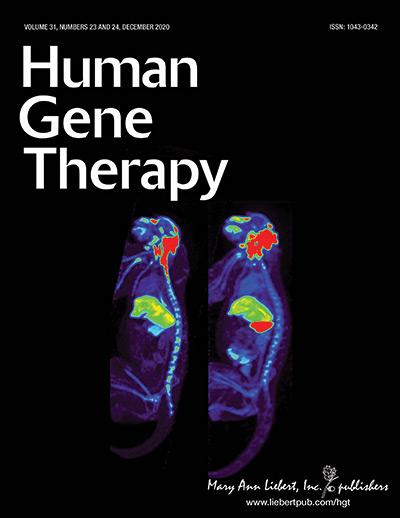
New Rochelle, NY, January 15, 2021–The biodistribution of adeno-associated virus (AAV) gene transfer vectors can be measured in nonhuman primates using a new method. The method quantifies whole-body and organ-specific AAV capsids from 1 to 72 hours after administration. Study design and results are presented in the peer-reviewed journal Human Gene Therapy. Click here to read the full-text article free on the Human Gene Therapy website through February 15, 2021.

AAV capsids were labeled with I-124 and delivered using two routes of administration: intravenous and directly into the cerebrospinal fluid (CSF). Biodistribution was measured by quantitative positron emission tomography (PET) at 1, 24, 48, and 72 hours after AAV administration. Two AAV vectors – AAVrsh.10 and AAV9 – were compared.

“Following intravenous administration, both vectors behaved in a similar fashion, distributed primarily to the liver and to a lesser extent heart. Neither were detected at significant levels in the brain. Both vectors administered intravenously also distribute to the vertebrae,” state Ronald Crystal, Weill Cornell Medical College, and coauthors. About 50% dispersed throughout the body, in part in skeletal muscle.

Following administration into the CSF, the labeled capsid had a half-life of approximately 10 hours, suggesting the possibility of slow diffusion into the brain.

In animals with pre-existing immunity, compared to naïve animals, there was a 10-fold increase in biodistribution to the spleen.

“PET imaging is a powerful tool to track biodistribution, which is a critical property affecting the safety and efficacy of gene therapy,” according to Editor-in-Chief of Human Gene Therapy Terence R. Flotte, MD, Celia and Isaac Haidak Professor of Medical Education and Dean, Provost, and Executive Deputy Chancellor, University of Massachusetts Medical School.

###

Research reported in this publication was supported by the National Institutes of Health under Award Number EB027918. The content is solely the responsibility of the authors and does not necessarily represent the official views of the National Institutes of Health.

About the Journal

Human Gene Therapy, the Official Journal of the European Society of Gene and Cell Therapy and eight other international gene therapy societies, was the first peer-reviewed journal in the field and provides all-inclusive access to the critical pillars of Human Gene Therapy: research, methods, and clinical applications. The Journal is led by Editor-in-Chief Terence R. Flotte, MD, Celia and Isaac Haidak Professor of Medical Education and Dean, Provost, and Executive Deputy Chancellor, University of Massachusetts Medical School, and an esteemed international editorial board. Human Gene Therapy is available in print and online. Complete tables of contents and a sample issue are available on the Human Gene Therapy website.

About the Publisher

Mary Ann Liebert, Inc., publishers is known for establishing authoritative peer-reviewed journals in many promising areas of science and biomedical research. Its biotechnology trade magazine, GEN (Genetic Engineering & Biotechnology News), was the first in its field and is today the industry’s most widely read publication worldwide. A complete list of the firm’s 90 journals, books, and newsmagazines is available on the Mary Ann Liebert, Inc., publishers website.

Media Contact
Kathryn Ryan
[email protected]

Original Source

https://home.liebertpub.com/news/biodistribution-of-aav-gene-transfer-vectors-in-nonhuman-primate/3806

Related Journal Article

http://dx.doi.org/10.1089/hum.2020.116

Tags: Cell BiologyClinical TrialsGene TherapyMedicine/Health
Share13Tweet8Share2ShareShareShare2

Related Posts

Cutting-Edge Genomic Techniques Reveal Unexpected Cellular Changes in the Aging Brain — Biology

Cutting-Edge Genomic Techniques Reveal Unexpected Cellular Changes in the Aging Brain

May 12, 2026
USC Researchers Initiate Study on the Most Advanced Lab-Grown Kidney Structures — Biology

USC Researchers Initiate Study on the Most Advanced Lab-Grown Kidney Structures

May 12, 2026

Childbirth in Humans Is Not Uniquely Challenging Among Mammals, New Research Shows

May 12, 2026

From Complexity to Clarity: Unraveling the “Topological Laws” Governing Cell Death

May 11, 2026
Please login to join discussion

POPULAR NEWS

  • Research Indicates Potential Connection Between Prenatal Medication Exposure and Elevated Autism Risk

    842 shares
    Share 337 Tweet 211
  • New Study Reveals Plants Can Detect the Sound of Rain

    728 shares
    Share 290 Tweet 182
  • Salmonella Haem Blocks Macrophages, Boosts Infection

    62 shares
    Share 25 Tweet 16
  • Breastmilk Balances E. coli and Beneficial Bacteria in Infant Gut Microbiomes

    57 shares
    Share 23 Tweet 14

About

We bring you the latest biotechnology news from best research centers and universities around the world. Check our website.

Follow us

Recent News

Robust Magnetoelectric Backscatter System Boosts Bioelectronic Implants

Anti-Nogo-A Treatment Alters Spinal Cord Structure Post-Injury

Older Adults’ Views on Medication After Hospital Discharge

Subscribe to Blog via Email

Enter your email address to subscribe to this blog and receive notifications of new posts by email.

Join 82 other subscribers
  • Contact Us

Bioengineer.org © Copyright 2023 All Rights Reserved.

Welcome Back!

Login to your account below

Forgotten Password?

Retrieve your password

Please enter your username or email address to reset your password.

Log In
No Result
View All Result
  • Homepages
    • Home Page 1
    • Home Page 2
  • News
  • National
  • Business
  • Health
  • Lifestyle
  • Science

Bioengineer.org © Copyright 2023 All Rights Reserved.