• HOME
  • NEWS
  • EXPLORE
    • CAREER
      • Companies
      • Jobs
    • EVENTS
    • iGEM
      • News
      • Team
    • PHOTOS
    • VIDEO
    • WIKI
  • BLOG
  • COMMUNITY
    • FACEBOOK
    • INSTAGRAM
    • TWITTER
Saturday, March 28, 2026
BIOENGINEER.ORG
No Result
View All Result
  • Login
  • HOME
  • NEWS
  • EXPLORE
    • CAREER
      • Companies
      • Jobs
        • Lecturer
        • PhD Studentship
        • Postdoc
        • Research Assistant
    • EVENTS
    • iGEM
      • News
      • Team
    • PHOTOS
    • VIDEO
    • WIKI
  • BLOG
  • COMMUNITY
    • FACEBOOK
    • INSTAGRAM
    • TWITTER
  • HOME
  • NEWS
  • EXPLORE
    • CAREER
      • Companies
      • Jobs
        • Lecturer
        • PhD Studentship
        • Postdoc
        • Research Assistant
    • EVENTS
    • iGEM
      • News
      • Team
    • PHOTOS
    • VIDEO
    • WIKI
  • BLOG
  • COMMUNITY
    • FACEBOOK
    • INSTAGRAM
    • TWITTER
No Result
View All Result
Bioengineer.org
No Result
View All Result
Home NEWS Science News Health

Psychedelic compound from magic mushrooms produced in yeast

Bioengineer by Bioengineer
April 16, 2020
in Health
Reading Time: 2 mins read
0
IMAGE
Share on FacebookShare on TwitterShare on LinkedinShare on RedditShare on Telegram

Scientists from DTU Biosustain prove that psilocybin, a potential drug for treating depression and other psychological conditions can be produced in yeast.
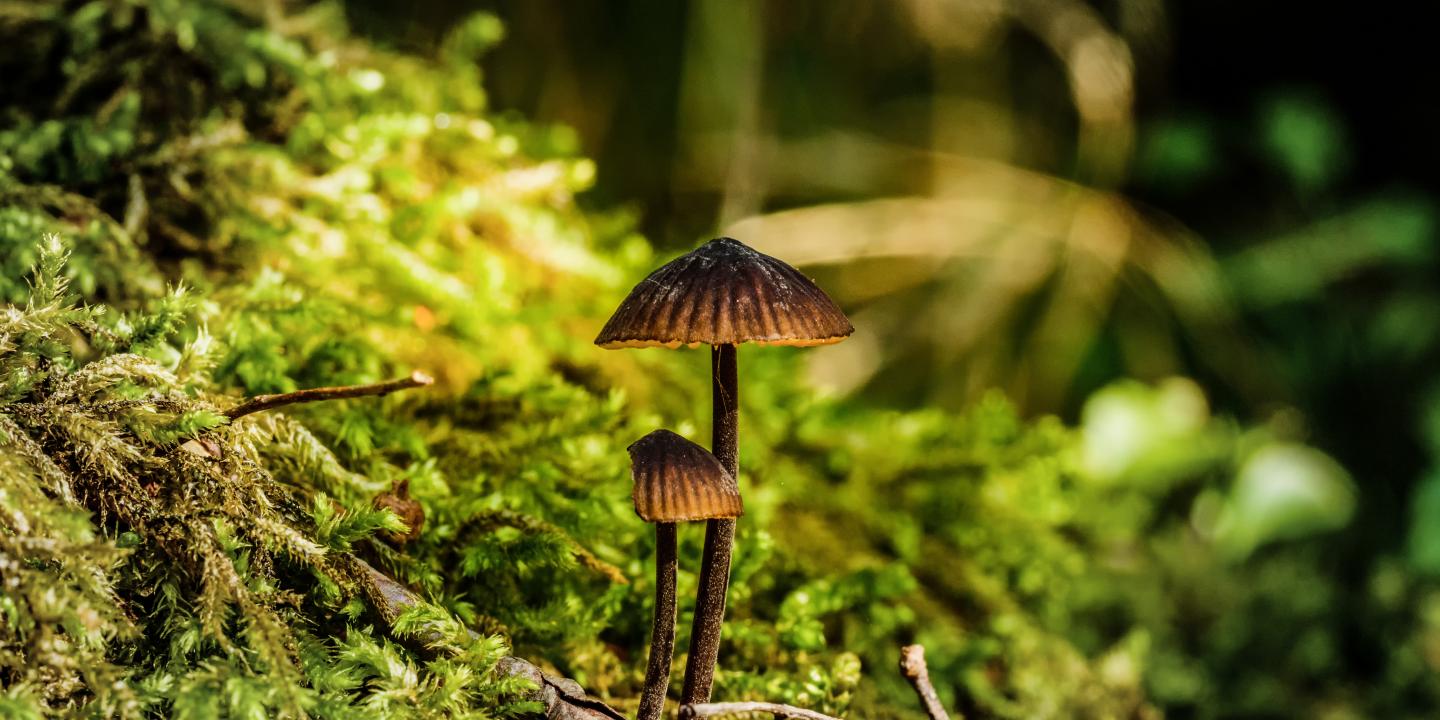
IMAGE

Credit: The Novo Nordisk Foundation Center for Biosustainability

Psilocybin mushrooms have been found to have minimal harmful effects and could potentially benefit those with depression. But they remain illegal even though they offer a groundbreaking alternative to several under-treated psychological conditions.

Nevertheless, psychedelics are currently riding a wave of positive momentum brought on by cannabis, and if psilocybin gets approved as a pharmaceutical drug, production in yeast appears to be the most commercially viable option.

“It’s infeasible and way too expensive to extract psilocybin from magic mushrooms and the best chemical synthesis methods require expensive and difficult to source starting substrates. Thus, there is a need to bring down the cost of production and to provide a more consistent supply chain,” says Nick Milne, former Postdoc at DTU Biosustain and CSO and Co-founder of Octarine Bio.

Bio-based production of psilocybin has gained big interest and researchers have already proved small-scale production in E. coli. However, production in bacteria comes with a wide range of concerns which can be addressed by using yeast instead.

In yeast, the scientists prove that psilocybin can be produced de novo, which means that you can produce the molecule by simply growing the yeast with sugar and other nutrients, without the need to add any other starting substrates.

Producing psilocybin de novo in E. coli is difficult since a key enzyme in the biosynthetic pathway doesn’t work in bacteria, and so to get around this problem you need to add an expensive starting substrate, making the whole production process too costly.

“Since yeast and Psilocybe mushrooms are quite closely related species, this enzyme works very well in yeast, providing a much more cost-efficient alternative,” says group leader at DTU Biosustain Irina Borodina.

Additionally, yeast also performs better in large-scale fermentation due to its long history in the beer brewing process, and also in the purification process since E. coli produces additional potentially harmful compounds that you would not like to have in your final product.

###

Media Contact
Anders Østerby Mønsted
[email protected]

Original Source

https://www.biosustain.dtu.dk/nyhedsbase/Nyhed?id={9693FEFB-6FB7-4113-9FF0-4AC3C475D11C}

Related Journal Article

http://dx.doi.org/10.1016/j.ymben.2019.12.007

Tags: Alternative MedicineBiochemistryBiologyBiomedical/Environmental/Chemical EngineeringBiotechnologyCell BiologyMedicine/HealthMolecular BiologyPharmaceutical ChemistryPharmaceutical Science
Share12Tweet8Share2ShareShareShare2

Related Posts

Aversive Learning Hijacks Brain Sugar Sensor

March 25, 2026

Can Psychosocial Factors Influence Cancer Risk?

March 23, 2026

Depression Factors in Elderly: Pre vs. Post-COVID Analysis

March 23, 2026

Hidden Health Crises Among US and UK Volunteers in Ukraine Uncovered in New Study

March 23, 2026
Please login to join discussion

POPULAR NEWS

  • blank

    Revolutionary AI Model Enhances Precision in Detecting Food Contamination

    96 shares
    Share 38 Tweet 24
  • Imagine a Social Media Feed That Challenges Your Views Instead of Reinforcing Them

    1004 shares
    Share 397 Tweet 248
  • Uncovering Functions of Cavernous Malformation Proteins in Organoids

    54 shares
    Share 22 Tweet 14
  • Promising Outcomes from First Clinical Trials of Gene Regulation in Epilepsy

    51 shares
    Share 20 Tweet 13

About

We bring you the latest biotechnology news from best research centers and universities around the world. Check our website.

Follow us

Recent News

In-Sensor Cryptography Links Physical Process to Digital Identity

Can Psychosocial Factors Influence Cancer Risk?

Depression Factors in Elderly: Pre vs. Post-COVID Analysis

Subscribe to Blog via Email

Enter your email address to subscribe to this blog and receive notifications of new posts by email.

Join 78 other subscribers
  • Contact Us

Bioengineer.org © Copyright 2023 All Rights Reserved.

Welcome Back!

Login to your account below

Forgotten Password?

Retrieve your password

Please enter your username or email address to reset your password.

Log In
No Result
View All Result
  • Homepages
    • Home Page 1
    • Home Page 2
  • News
  • National
  • Business
  • Health
  • Lifestyle
  • Science

Bioengineer.org © Copyright 2023 All Rights Reserved.