

• HOME
  • NEWS
  • EXPLORE
    • CAREER
      • Companies
      • Jobs
    • EVENTS
    • iGEM
      • News
      • Team
    • PHOTOS
    • VIDEO
    • WIKI
  • BLOG
  • COMMUNITY
    • FACEBOOK
    • INSTAGRAM
    • TWITTER
Saturday, February 7, 2026
BIOENGINEER.ORG
No Result
View All Result
  • Login
  • HOME
  • NEWS
  • EXPLORE
    • CAREER
      • Companies
      • Jobs
        • Lecturer
        • PhD Studentship
        • Postdoc
        • Research Assistant
    • EVENTS
    • iGEM
      • News
      • Team
    • PHOTOS
    • VIDEO
    • WIKI
  • BLOG
  • COMMUNITY
    • FACEBOOK
    • INSTAGRAM
    • TWITTER
  • HOME
  • NEWS
  • EXPLORE
    • CAREER
      • Companies
      • Jobs
        • Lecturer
        • PhD Studentship
        • Postdoc
        • Research Assistant
    • EVENTS
    • iGEM
      • News
      • Team
    • PHOTOS
    • VIDEO
    • WIKI
  • BLOG
  • COMMUNITY
    • FACEBOOK
    • INSTAGRAM
    • TWITTER
No Result
View All Result
Bioengineer.org
No Result
View All Result
Home NEWS Bioengineering

Stem Cell Transplants to Treat Schizophrenia

Bioengineer by Bioengineer
September 19, 2013
in Bioengineering
Reading Time: 2 mins read
0
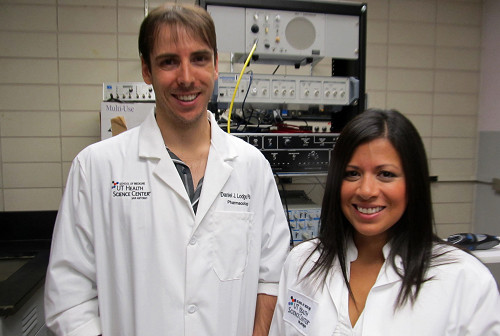
Daniel Lodge, Ph.D., and Stephanie Perez, doctoral student, both from the School of Medicine at The University of Texas Health Science Center at San Antonio, discovered that transplanting stem cells into the rat brain — into a center called the hippocampus — restored functions that are abnormal in schizophrenia.

Daniel Lodge, Ph.D., and Stephanie Perez, doctoral student, both from the School of Medicine at The University of Texas Health Science Center at San Antonio, discovered that transplanting stem cells into the rat brain — into a center called the hippocampus — restored functions that are abnormal in schizophrenia.

Share on FacebookShare on TwitterShare on LinkedinShare on RedditShare on Telegram

Research from the School of Medicine at The University of Texas Health Science Center at San Antonio suggests the exciting possibility of using cell transplants to treat schizophrenia.

Cells called “interneurons” inhibit activity within brain regions, but this braking or governing function is impaired in schizophrenia. Consequently, a group of nerve cells called the dopamine system go into overdrive. Different branches of the dopamine system are involved in cognition, movement and emotions.
“Since these cells are not functioning properly, our idea is to replace them,” said study senior author Daniel Lodge, Ph.D., assistant professor of pharmacology in the School of Medicine.

Transplant restored normal function

Dr. Lodge and lead author Stephanie Perez, graduate student in his laboratory, biopsied tissue from rat fetuses, isolated cells from the tissue and injected the cells into a brain center called the hippocampus. This center regulates the dopamine system and plays a role in learning, memory and executive functions such as decision making. Rats treated with the transplanted cells have restored hippocampal and dopamine function.

Stem cells are able to become different types of cells, and in this case interneurons were selected. “We put in a lot of cells and not all survived, but a significant portion did and restored hippocampal and dopamine function back to normal,” Dr. Lodge said.

‘You can essentially fix the problem’

Unlike traditional approaches to treating schizophrenia, such as medications and deep-brain stimulation, transplantation of interneurons potentially can produce a permanent solution. “You can essentially fix the problem,” Dr. Lodge said. “Ultimately, if this is translated to humans, we want to reprogram a patient’s own cells and use them.”

After meeting with other students, Perez brought the research idea to Dr. Lodge. “The students have journal club, and somebody had done a similar experiment to restore motor deficits and had good results,” Perez said. “We thought, why can’t we use it for schizophrenia and have good results, and so far we have.”

Story Source:

The above story is based on materials provided by University of Texas Health Science Center at San Antonio.

Share16Tweet8Share2ShareShareShare2

Related Posts

Why is the first Turkish bioengineering promotion website, Biyomuhendislik.com, so important?

February 4, 2023

Robo-fish

September 19, 2016

Mice born from ‘tricked’ eggs

September 17, 2016

UCLA researchers use stem cells to grow 3-D lung-in-a-dish

September 16, 2016
Please login to join discussion

POPULAR NEWS

  • Robotic Ureteral Reconstruction: A Novel Approach

    Robotic Ureteral Reconstruction: A Novel Approach

    82 shares
    Share 33 Tweet 21
  • Digital Privacy: Health Data Control in Incarceration

    63 shares
    Share 25 Tweet 16
  • Study Reveals Lipid Accumulation in ME/CFS Cells

    57 shares
    Share 23 Tweet 14
  • Breakthrough in RNA Research Accelerates Medical Innovations Timeline

    53 shares
    Share 21 Tweet 13

About

We bring you the latest biotechnology news from best research centers and universities around the world. Check our website.

Follow us

Recent News

Personalized Guide to Understanding and Reducing Chemicals

Inflammasome Protein ASC Drives Pancreatic Cancer Metabolism

Phage-Antibiotic Combo Beats Resistant Peritoneal Infection

Subscribe to Blog via Email

Enter your email address to subscribe to this blog and receive notifications of new posts by email.

Join 73 other subscribers
  • Contact Us

Bioengineer.org © Copyright 2023 All Rights Reserved.

Welcome Back!

Login to your account below

Forgotten Password?

Retrieve your password

Please enter your username or email address to reset your password.

Log In
No Result
View All Result
  • Homepages
    • Home Page 1
    • Home Page 2
  • News
  • National
  • Business
  • Health
  • Lifestyle
  • Science

Bioengineer.org © Copyright 2023 All Rights Reserved.
