• HOME
  • NEWS
  • EXPLORE
    • CAREER
      • Companies
      • Jobs
    • EVENTS
    • iGEM
      • News
      • Team
    • PHOTOS
    • VIDEO
    • WIKI
  • BLOG
  • COMMUNITY
    • FACEBOOK
    • INSTAGRAM
    • TWITTER
Monday, May 11, 2026
BIOENGINEER.ORG
No Result
View All Result
  • Login
  • HOME
  • NEWS
  • EXPLORE
    • CAREER
      • Companies
      • Jobs
        • Lecturer
        • PhD Studentship
        • Postdoc
        • Research Assistant
    • EVENTS
    • iGEM
      • News
      • Team
    • PHOTOS
    • VIDEO
    • WIKI
  • BLOG
  • COMMUNITY
    • FACEBOOK
    • INSTAGRAM
    • TWITTER
  • HOME
  • NEWS
  • EXPLORE
    • CAREER
      • Companies
      • Jobs
        • Lecturer
        • PhD Studentship
        • Postdoc
        • Research Assistant
    • EVENTS
    • iGEM
      • News
      • Team
    • PHOTOS
    • VIDEO
    • WIKI
  • BLOG
  • COMMUNITY
    • FACEBOOK
    • INSTAGRAM
    • TWITTER
No Result
View All Result
Bioengineer.org
No Result
View All Result
Home NEWS Science News Chemistry

European Astronomical Society prize for star astronomer

Bioengineer by Bioengineer
March 6, 2020
in Chemistry
Reading Time: 2 mins read
0
IMAGE
Share on FacebookShare on TwitterShare on LinkedinShare on RedditShare on Telegram

IMAGE

Credit: Lancaster University


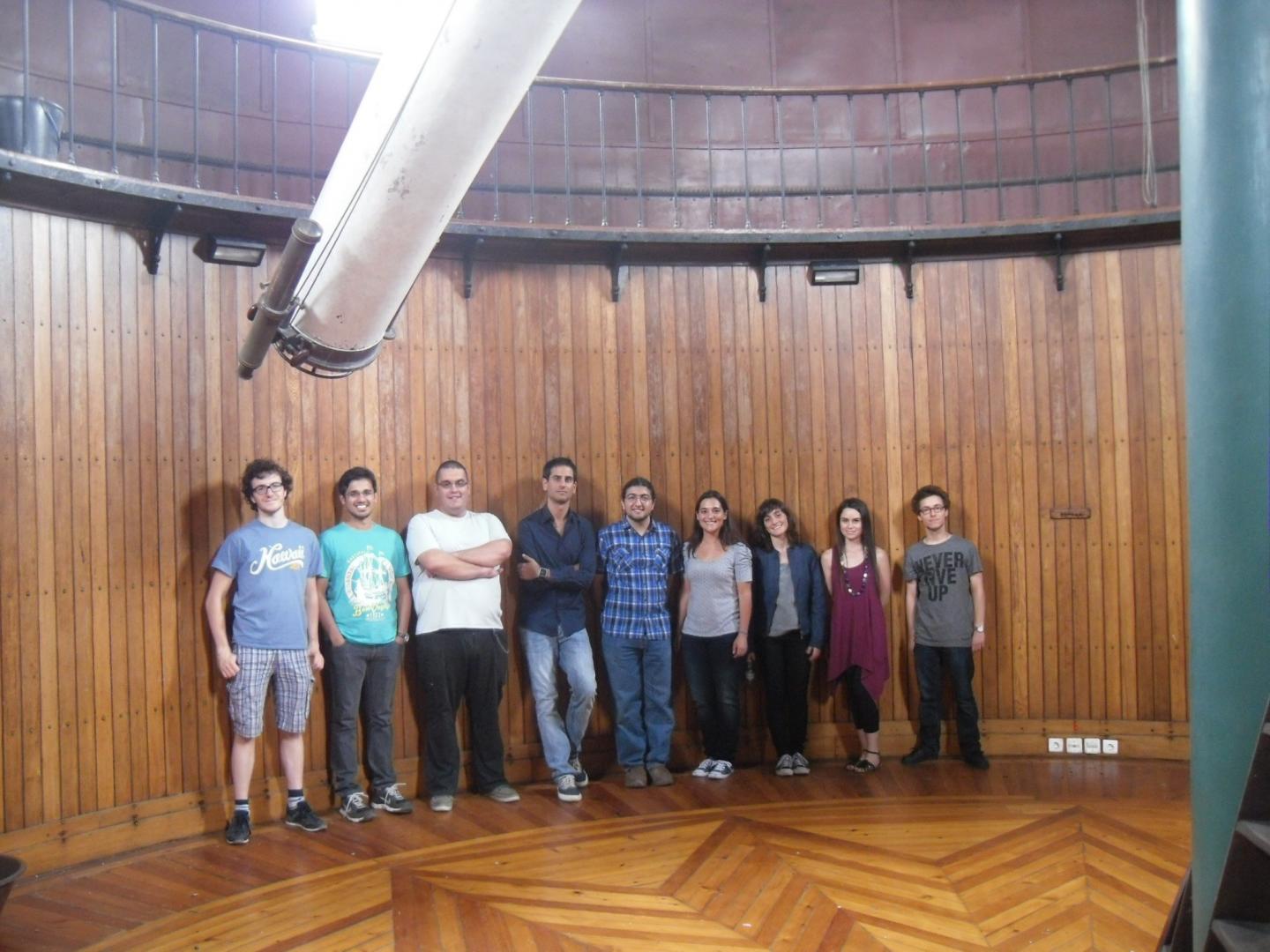
Dr Jorryt Matthee has been awarded a 25,000 € MERAC Prize by the European Astronomical Society for the Best Doctoral Thesis in the past three years.

The award is by the FONDATION MERAC (Mobilising European Research in Astrophysics and Cosmology), a non-profit foundation based in Switzerland to recognize and support early career astrophysicists.
Dr Matthee’s thesis presents spectacular results that have transformed the way we see and understand distant galaxies across time.

His PhD supervisor was Dr David Sobral of Lancaster University who said:

“Jorryt’s outstanding PhD thesis is a fantastic demonstration of the discoveries that can be made when we are truly open-minded, driven by scientific curiosity and not afraid nor limited in our scientific exploration of the entire Universe. It has been a fantastic honour to mentor and supervise Jorryt and watch him become an independent, internationally-leading scientist for whom the sky is certainly no limit.”

Together with Dr Sobral, Dr Matthee discovered some of the brightest distant galaxies, including CR7, and showed that they are much more common than previously thought, with important consequences for future space missions like Euclid.

His thesis presented spectacular results in 11 first-author papers that have transformed the way we see and understand distant galaxies across time. His own state-of- the-art observations with ALMA, Hubble and the VLT telescopes revealed that very distant galaxies are complex, actively assembling systems. He has also investigated the co-evolution of dark matter halos and galaxies in the state-of-the-art cosmological EAGLE simulation.

Jorryt’s PhD work also mapped, dissected and discussed how galaxies have evolved over the first few billion years of the Universe and how they have played a key role in dissipating the cosmic fog during the epoch of re-ionisation, including the first direct observation of a galaxy ionising the surrounding inter-galactic medium.

Jorryt’s work combined observational studies of distant galaxies with David Sobral and theoretical analysis with Joop Schaye. He currently holds a prestigious Zwicky fellowship on extragalactic astrophysics at ETH Zu?rich and he has visited, worked and given talks at Lancaster multiple times.

The PhD thesis of Jorryt Matthee was conducted at Leiden University, under the supervision of Dr David Sobral and Professors Huub Ro?ttgering and Joop Schaye.

###

Media Contact
Gillian Whitworth
[email protected]
01-524-592-612

Tags: AstronomyAstrophysicsChemistry/Physics/Materials SciencesSatellite Missions/ShuttlesSpace/Planetary ScienceStars/The Sun
Share12Tweet8Share2ShareShareShare2

Related Posts

Miniature Sensor Uses Light to Detect Touch — Chemistry

Miniature Sensor Uses Light to Detect Touch

May 8, 2026
Iron Minerals Determine Whether Dissolved Organic Matter Fuels Microbes or Becomes Long-Term Carbon Storage — Chemistry

Iron Minerals Determine Whether Dissolved Organic Matter Fuels Microbes or Becomes Long-Term Carbon Storage

May 8, 2026

Kate Evans Appointed Associate Lab Director for Biological and Environmental Systems Science at ORNL

May 8, 2026

Advancing Multiscale Modeling and Overcoming Operational Challenges in Autothermal CO₂-to-Methanol Reactors

May 8, 2026
Please login to join discussion

POPULAR NEWS

  • Research Indicates Potential Connection Between Prenatal Medication Exposure and Elevated Autism Risk

    840 shares
    Share 336 Tweet 210
  • New Study Reveals Plants Can Detect the Sound of Rain

    728 shares
    Share 290 Tweet 182
  • Salmonella Haem Blocks Macrophages, Boosts Infection

    61 shares
    Share 24 Tweet 15
  • Breastmilk Balances E. coli and Beneficial Bacteria in Infant Gut Microbiomes

    57 shares
    Share 23 Tweet 14

About

We bring you the latest biotechnology news from best research centers and universities around the world. Check our website.

Follow us

Recent News

Transforming Jellyfish Bycatch into a Valuable Collagen Source for Cosmetics and Biotechnology

New Post-Hoc Analysis Explores Daily Oral Orforglipron Use in Adults Over 65 with Obesity, Regardless of Diabetes Status

Evaluating Digoxin Use in Patients with Symptomatic Rheumatic Heart Disease

Subscribe to Blog via Email

Enter your email address to subscribe to this blog and receive notifications of new posts by email.

Join 82 other subscribers
  • Contact Us

Bioengineer.org © Copyright 2023 All Rights Reserved.

Welcome Back!

Login to your account below

Forgotten Password?

Retrieve your password

Please enter your username or email address to reset your password.

Log In
No Result
View All Result
  • Homepages
    • Home Page 1
    • Home Page 2
  • News
  • National
  • Business
  • Health
  • Lifestyle
  • Science

Bioengineer.org © Copyright 2023 All Rights Reserved.