

• HOME
  • NEWS
  • EXPLORE
    • CAREER
      • Companies
      • Jobs
    • EVENTS
    • iGEM
      • News
      • Team
    • PHOTOS
    • VIDEO
    • WIKI
  • BLOG
  • COMMUNITY
    • FACEBOOK
    • INSTAGRAM
    • TWITTER
Wednesday, June 24, 2026
BIOENGINEER.ORG
No Result
View All Result
  • Login
  • HOME
  • NEWS
  • EXPLORE
    • CAREER
      • Companies
      • Jobs
        • Lecturer
        • PhD Studentship
        • Postdoc
        • Research Assistant
    • EVENTS
    • iGEM
      • News
      • Team
    • PHOTOS
    • VIDEO
    • WIKI
  • BLOG
  • COMMUNITY
    • FACEBOOK
    • INSTAGRAM
    • TWITTER
  • HOME
  • NEWS
  • EXPLORE
    • CAREER
      • Companies
      • Jobs
        • Lecturer
        • PhD Studentship
        • Postdoc
        • Research Assistant
    • EVENTS
    • iGEM
      • News
      • Team
    • PHOTOS
    • VIDEO
    • WIKI
  • BLOG
  • COMMUNITY
    • FACEBOOK
    • INSTAGRAM
    • TWITTER
No Result
View All Result
Bioengineer.org
No Result
View All Result
Home NEWS Science News Chemistry

SpinMagIC: ‘EPR on a chip’ ensures quality of olive oil and beer

by
September 6, 2025
in Chemistry
Reading Time: 2 mins read
0
Michele
Share on FacebookShare on TwitterShare on LinkedinShare on RedditShare on Telegram

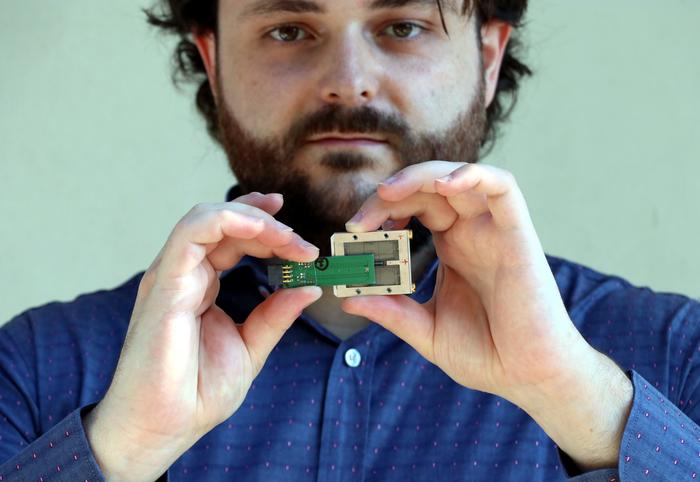
The first sign of spoilage in many food products is the formation of free radicals, which reduces the shelf-life and the overall quality of the food. Until now, the detection of these molecules has been very costly for the food companies. Researchers at HZB and the University of Stuttgart have developed a portable, small and inexpensive ‘EPR on a chip’ sensor that can detect free radicals even at very low concentrations. They are now working to set up a spin-off company, supported by the EXIST research transfer programme of the German Federal Ministry of Economics and Climate Protection. The EPRoC sensor will initially be used in the production of olive oil and beer to ensure the quality of these products.

The first sign of spoilage in many food products is the formation of free radicals, which reduces the shelf-life and the overall quality of the food. Until now, the detection of these molecules has been very costly for the food companies. Researchers at HZB and the University of Stuttgart have developed a portable, small and inexpensive ‘EPR on a chip’ sensor that can detect free radicals even at very low concentrations. They are now working to set up a spin-off company, supported by the EXIST research transfer programme of the German Federal Ministry of Economics and Climate Protection. The EPRoC sensor will initially be used in the production of olive oil and beer to ensure the quality of these products.

EPR-on-a-chip sensor

The new start-up company SpinMagIC now offers an EPR sensor that fits on a small chip. “We will produce small, portable and affordable EPR devices based on the combination of a microchip and permanent magnets that can be tailored to the customer’s needs,” explains physicist Michele Segantini (HZB), who is about to complete his PhD in Prof. Klaus Lips’ department. In addition to Segantini, the founding team includes electrical engineer Anh Chu, physicist Belal Alnajjar, both at the University of Stuttgart in the team of Professor Jens Anders, and economist Jakob Fitschen.

The development of the ERPoC goes back to an idea by Klaus Lips (HZB) and Jens Anders (University of Stuttgart), which won the HZB Technology Transfer Award in 2019. Further development was then funded by the German Federal Ministry for Education and Research BMBF. “A lot has happened since then, so that we can now plan a spin off company”, says Segantini. While the team at the University of Stuttgart optimised the ‘hardware’, Segantini investigated where this invention could be used in the market.

“We see a huge potential for applications, initially mainly in food production,” says Segantini. During his PhD, he contacted a wide range of industries and identified olive oil producers and breweries as pilot customers. Until now, these companies have tested their products using elaborate chemical methods, which produce relevant amounts of toxic waste. “EPRoC is not only much more sensitive, it is also less time-consuming, so samples can be analysed repeatedly throughout the process. This provides additional insights that can be used to optimise production processes to extend the shelf-life and oxidative resistance of the products”, Segantini points out.

In the future, the founders plan to adapt their product also to other areas of application, such as medical diagnostics, drug development, semiconductor technology and battery monitoring.



Tags: EPR-on-a-chipFood quality controlFree radicals detectionPortable sensor technologySpin-off company
Share12Tweet8Share2ShareShareShare2

Related Posts

Electric Field and Oxygen Spillover Collaborate to Control Electrode Migration in SOECs

June 24, 2026
Innovative Speckle-Based Metrology System Advances Precision Measurement of Next-Generation X-Ray Mirrors — Chemistry

Innovative Speckle-Based Metrology System Advances Precision Measurement of Next-Generation X-Ray Mirrors

June 24, 2026

Water-Activated PVA Film Transforms from Bioplastic to High-Performance Wood Adhesive

June 24, 2026

SwRI and St. Mary’s University Partner to Forecast Durability of Metal Hydride Hydrogen Storage

June 24, 2026

POPULAR NEWS

  • Saying Goodbye to PGY-6: Pediatric Fellowship Realities

    103 shares
    Share 41 Tweet 26
  • Multi-Hospital Study Reveals Long Covid Burden Is Twice as High as Current Estimates

    92 shares
    Share 36 Tweet 23
  • Detection of EDCs in Breast Milk and Infant Urine Up to Six Months Highlights Early Exposure Risks

    77 shares
    Share 31 Tweet 19
  • New Drug Candidate Developed at McMaster Shows Potential for Treating Brain Cancer

    58 shares
    Share 23 Tweet 15

About

We bring you the latest biotechnology news from best research centers and universities around the world. Check our website.

Follow us

Recent News

Building Trust as the Foundation of Digital Behavioral Health

Virtual Reality Study Conducted Remotely Advances Insights into Cybersickness

Global Drop in Intimate Partner Violence Linked to Shifts in Attitudes and Behavior

Subscribe to Blog via Email

Enter your email address to subscribe to this blog and receive notifications of new posts by email.

Join 82 other subscribers
  • Contact Us

Bioengineer.org © Copyright 2023 All Rights Reserved.

Welcome Back!

Login to your account below

Forgotten Password?

Retrieve your password

Please enter your username or email address to reset your password.

Log In
No Result
View All Result
  • Homepages
    • Home Page 1
    • Home Page 2
  • News
  • National
  • Business
  • Health
  • Lifestyle
  • Science

Bioengineer.org © Copyright 2023 All Rights Reserved.