• HOME
  • NEWS
  • EXPLORE
    • CAREER
      • Companies
      • Jobs
    • EVENTS
    • iGEM
      • News
      • Team
    • PHOTOS
    • VIDEO
    • WIKI
  • BLOG
  • COMMUNITY
    • FACEBOOK
    • INSTAGRAM
    • TWITTER
Wednesday, July 8, 2026
BIOENGINEER.ORG
No Result
View All Result
  • Login
  • HOME
  • NEWS
  • EXPLORE
    • CAREER
      • Companies
      • Jobs
        • Lecturer
        • PhD Studentship
        • Postdoc
        • Research Assistant
    • EVENTS
    • iGEM
      • News
      • Team
    • PHOTOS
    • VIDEO
    • WIKI
  • BLOG
  • COMMUNITY
    • FACEBOOK
    • INSTAGRAM
    • TWITTER
  • HOME
  • NEWS
  • EXPLORE
    • CAREER
      • Companies
      • Jobs
        • Lecturer
        • PhD Studentship
        • Postdoc
        • Research Assistant
    • EVENTS
    • iGEM
      • News
      • Team
    • PHOTOS
    • VIDEO
    • WIKI
  • BLOG
  • COMMUNITY
    • FACEBOOK
    • INSTAGRAM
    • TWITTER
No Result
View All Result
Bioengineer.org
No Result
View All Result
Home NEWS Science News Chemistry

Breakthrough on curbing dengue

Bioengineer by Bioengineer
January 16, 2020
in Chemistry
Reading Time: 2 mins read
0
IMAGE
Share on FacebookShare on TwitterShare on LinkedinShare on RedditShare on Telegram

IMAGE

Credit: CSIRO


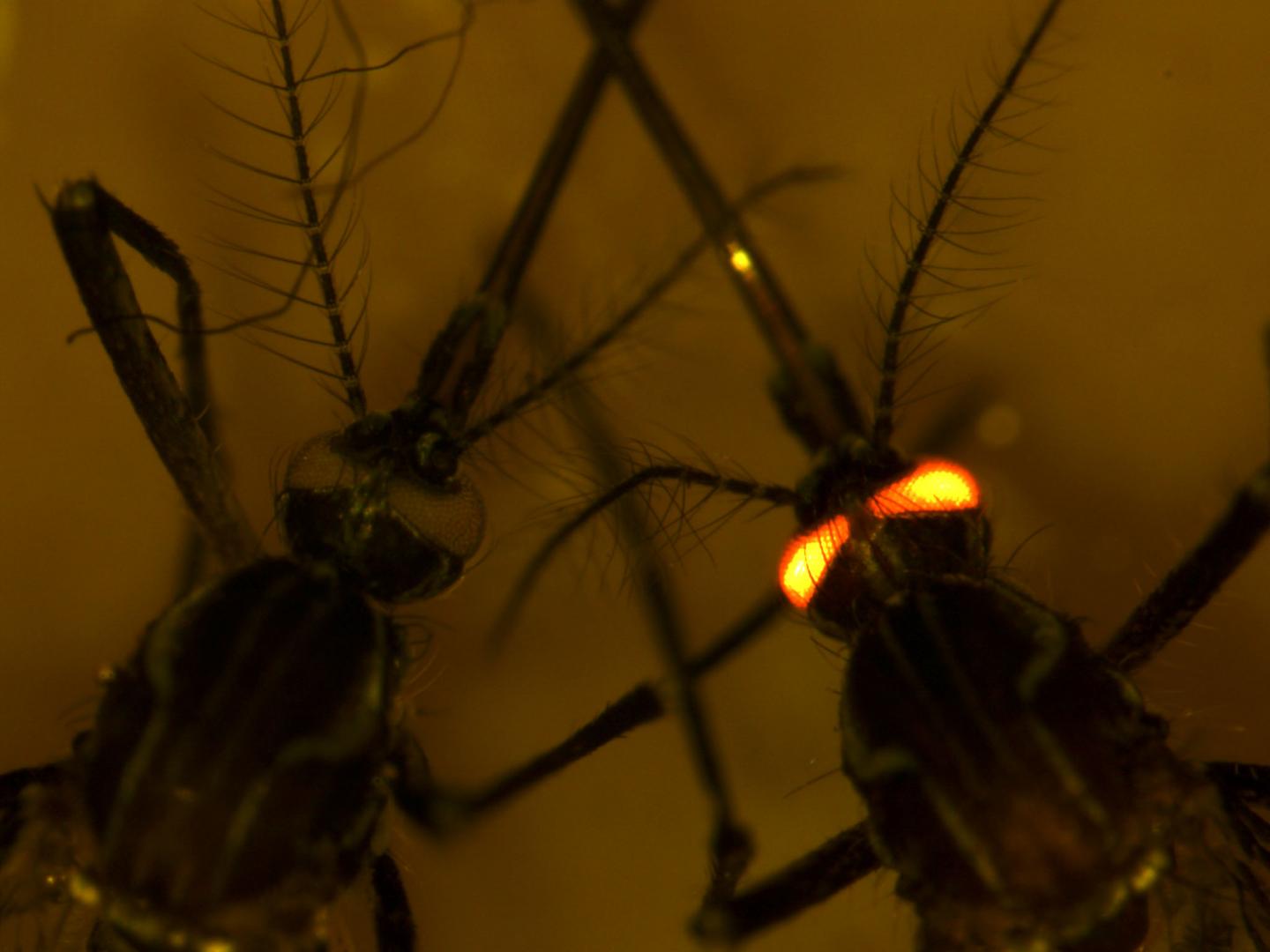
Scientists from Australia’s national science agency, CSIRO, and the University of California San Diego have engineered the first breed of genetically modified mosquitoes resistant to spreading all four types of the dengue virus.

Dengue infects more than 390 million people every year.

Typical symptoms include severe fever, headaches and muscle aches, with severe forms of the disease leading to haemorrhage, shock and even death.CSIRO Senior Research Scientist Dr Prasad Paradkar said the dengue virus was causing an epidemic in tropical and subtropical regions worldwide, with large outbreaks currently occurring in Bangladesh, Pakistan, Sri Lanka and the Philippines.

“There is a pressing global demand for effective strategies to control the mosquitoes that spread the dengue virus, as there are currently no known treatments and the vaccine that is available is only partially effective,” Dr Paradkar said.

“In this study we used recent advances in genetic engineering technologies to successfully genetically modify a mosquito, the Aedes aegypti, with reduced ability to acquire and transmit the dengue virus.

“This is the first engineered approach that targets all four dengue types, which is crucial for effective disease suppression.

“Mosquito-transmitted viruses are expected to climb over the coming years, which is why CSIRO is focussed on developing new ways to help solve this global challenge.”There have been previous attempts to synthetically engineer dengue-carrying mosquito populations to make them resistant to the virus, however these approaches had limited success due to their ability to only target one or two of the four major dengue types.

Incidences of dengue have increased dramatically in recent years, with more than half of the world’s population now at risk of infection.

Global economic losses as a result of dengue are currently estimated to be $40 billion a year.

University of California San Diego Associate Professor and study co-author Omar Akbari said this development means that in the foreseeable future there may be viable genetic approaches to controlling dengue virus in the field, which could limit human suffering and mortality.

“This breakthrough work also has the potential to have broader impacts on controlling other mosquito-transmitted viruses,” Associate Professor Akbari said.

“We are already in the early stages of testing methods to simultaneously neutralise mosquitoes against dengue and a suite of other viruses such as Zika, yellow fever and chikungunya.”

The published research paper can be found in medical journal PLOS Pathogens, Thursday 16 January 2020.

The mosquitoes were tested in the quarantined insectary at the Australian Animal Health Laboratory in Geelong, CSIRO’s national biocontainment facility designed to allow scientific research into dangerous infectious agents.

###

Media Contact
Sian Stringer
[email protected]
61-459-890-423

Tags: AgricultureBiologyChemistry/Physics/Materials SciencesMedicine/Health
Share12Tweet8Share2ShareShareShare2

Related Posts

Weakening Atlantic current drives stronger California storms

Weakening Atlantic current drives stronger California storms

July 8, 2026
New approach simplifies black hole mergers, universe’s most violent events.

New approach simplifies black hole mergers, universe’s most violent events.

July 8, 2026

Salt adaptation linked to higher disease risk, Mizzou study finds

July 6, 2026

Intelligent Microgrid Management Promises Lower Household Energy Bills and Reduced Diesel Emissions

July 4, 2026
Please login to join discussion

POPULAR NEWS

  • Detection of EDCs in Breast Milk and Infant Urine Up to Six Months Highlights Early Exposure Risks

    77 shares
    Share 31 Tweet 19
  • New Drug Candidate Developed at McMaster Shows Potential for Treating Brain Cancer

    58 shares
    Share 23 Tweet 15
  • KTU Researchers Explore Ultrasound’s Role in Enhancing Blood Flow Beyond Diagnostics

    53 shares
    Share 21 Tweet 13
  • 高齢者の骨粗鬆症治療の持続性比較

    51 shares
    Share 20 Tweet 13

About

We bring you the latest biotechnology news from best research centers and universities around the world. Check our website.

Follow us

Recent News

Breast cancer after childbirth may be more aggressive in young women

Smart textile electrodes map brain-to-muscle signals on the body surface.

Weakening Atlantic current drives stronger California storms

Subscribe to Blog via Email

Enter your email address to subscribe to this blog and receive notifications of new posts by email.

Join 83 other subscribers
  • Contact Us

Bioengineer.org © Copyright 2023 All Rights Reserved.

Welcome Back!

Login to your account below

Forgotten Password?

Retrieve your password

Please enter your username or email address to reset your password.

Log In
No Result
View All Result
  • Homepages
    • Home Page 1
    • Home Page 2
  • News
  • National
  • Business
  • Health
  • Lifestyle
  • Science

Bioengineer.org © Copyright 2023 All Rights Reserved.