• HOME
  • NEWS
  • EXPLORE
    • CAREER
      • Companies
      • Jobs
    • EVENTS
    • iGEM
      • News
      • Team
    • PHOTOS
    • VIDEO
    • WIKI
  • BLOG
  • COMMUNITY
    • FACEBOOK
    • INSTAGRAM
    • TWITTER
Wednesday, October 7, 2026
BIOENGINEER.ORG
No Result
View All Result
  • Login
  • HOME
  • NEWS
  • EXPLORE
    • CAREER
      • Companies
      • Jobs
        • Lecturer
        • PhD Studentship
        • Postdoc
        • Research Assistant
    • EVENTS
    • iGEM
      • News
      • Team
    • PHOTOS
    • VIDEO
    • WIKI
  • BLOG
  • COMMUNITY
    • FACEBOOK
    • INSTAGRAM
    • TWITTER
  • HOME
  • NEWS
  • EXPLORE
    • CAREER
      • Companies
      • Jobs
        • Lecturer
        • PhD Studentship
        • Postdoc
        • Research Assistant
    • EVENTS
    • iGEM
      • News
      • Team
    • PHOTOS
    • VIDEO
    • WIKI
  • BLOG
  • COMMUNITY
    • FACEBOOK
    • INSTAGRAM
    • TWITTER
No Result
View All Result
Bioengineer.org
No Result
View All Result
Home NEWS Science News Biology

Color change and behavior enable multi-colored chameleon prawns to survive

Bioengineer by Bioengineer
June 21, 2019
in Biology
Reading Time: 2 mins read
0
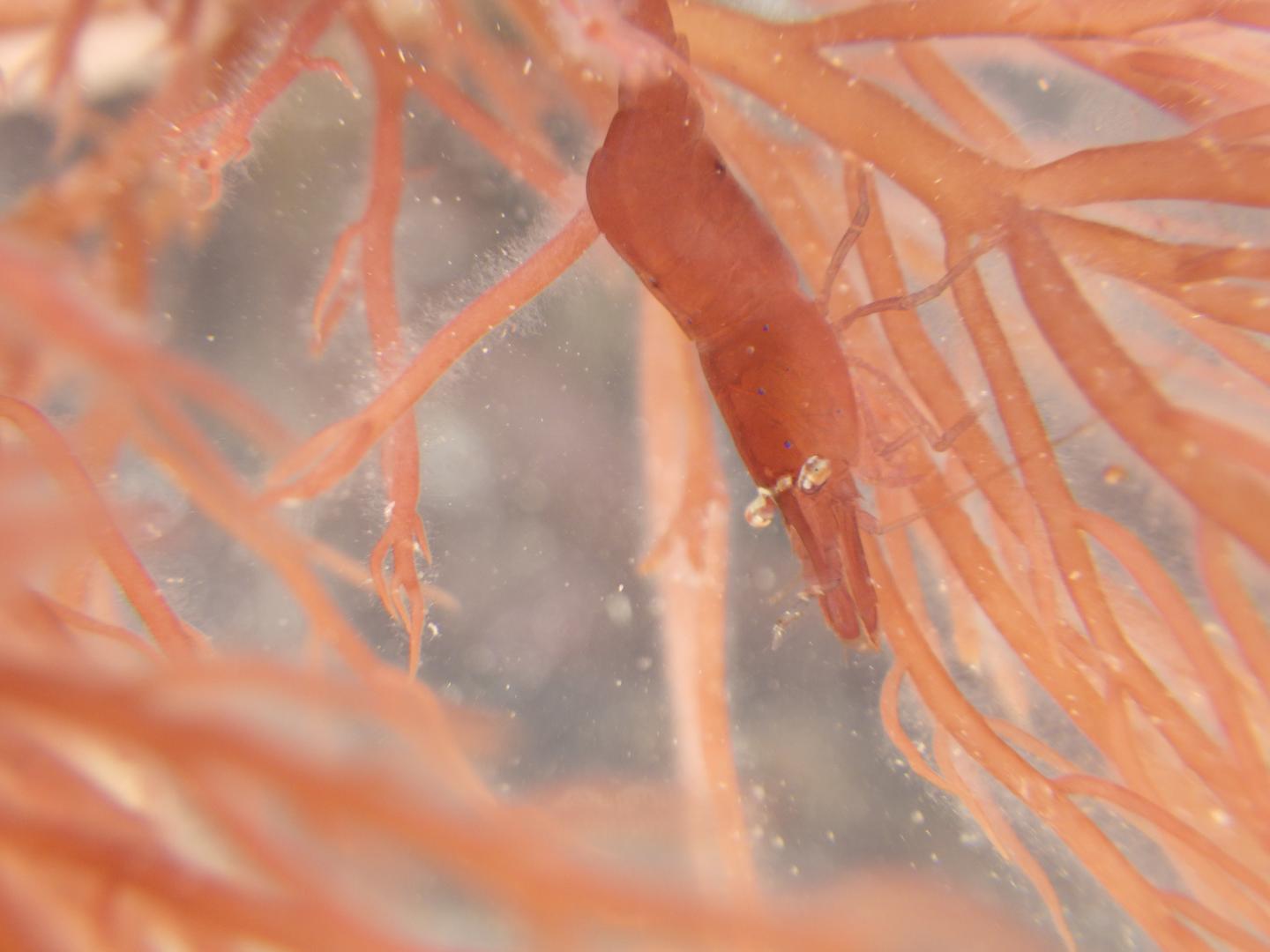
IMAGE
Share on FacebookShare on TwitterShare on LinkedinShare on RedditShare on Telegram

IMAGE

Credit: Martin Stevens

Chameleon prawns change colour to camouflage themselves as the seaweed around them changes seasonally, new research shows.

Unlike chameleons and cuttlefish, chameleon prawns (Hippolyte varians) take weeks to change colour, so the study – by the University of Exeter and the Federal University of ABC (Brazil) – shows that their abilities are suited to seasonal changes to their surroundings rather than rapidly adapting to new backgrounds.

However, rock pools are highly diverse environments, and the research also shows that in the short term the prawns can use behaviour – selecting seaweed that best matches their existing colouration.

Chameleon prawns are remarkably colourful, ranging from bright block colours to varying degrees of transparency, and are common in UK rock pools.

“Our study shows that these prawns exhibit impressive levels of camouflage on the seaweeds in which they live,” said PhD student Sam Green, of the University of Exeter.

“We measured the camouflage of prawns to the vision of their predators and recorded colour change in the lab, and found the prawns can improve camouflage against their new backgrounds over a number of weeks.

“Seaweeds vary seasonally in UK rockpools and this ability probably enables prawns to maintain camouflage throughout the year.

“However, as the rock pool environment consists of a variety of different coloured seaweed patches, our behavioural experiments show that the prawns also select backgrounds that match their existing appearance.

“This helps maintain camouflage in the short term, helping prawns to deal with the challenges of rock pool life. For example, a wave could dislodge a prawn from its chosen perch.

“This demonstrates how colour change and behaviour combine to facilitate camouflage in varying environments over different timescales.”

Professor Martin Stevens added: “The rock pool environment is an incredibly challenging place to live and is constantly changing every day and over the seasons.

“The combination of colour change and behaviour enables prawns to cope with this and reduce the chance of them becoming a meal for a hungry predator.”

Dr Rafael Duarte, a post-doctoral researcher from the Federal University of ABC (Brazil), concluded: “Similar outcomes are expected to be observed in different coloured species from a range of taxonomic groups and living both in terrestrial and aquatic habitats that vary spatially and seasonally in terms of background composition.”

The researchers studied chameleon prawns of varied sex and size, and two seaweed species – green sea lettuce (Ulva lactuca) and red dulse (Palmaria palmata) – from rock pools at Gyllyngvase beach in Cornwall.

###

The paper, published in the journal Communications Biology, is entitled: “Colour change and behavioural choice facilitate chameleon prawn camouflage against different seaweed backgrounds.”

Media Contact
Alex Morrison
[email protected]

Related Journal Article

http://dx.doi.org/10.1038/s42003-019-0465-8

Tags: BiodiversityBiologyEcology/EnvironmentEvolutionMarine/Freshwater BiologyZoology/Veterinary Science
Share12Tweet8Share2ShareShareShare2

Related Posts

Oleic Acid Blend Selectively Suppresses Vaginal Pathogens While Sparing Key Beneficial Bacterium

Oleic Acid Blend Selectively Suppresses Vaginal Pathogens While Sparing Key Beneficial Bacterium

October 7, 2026
Hospital study finds bacteria carrying both last-resort resistance genes spreading in wards

Hospital study finds bacteria carrying both last-resort resistance genes spreading in wards

October 7, 2026

Parasite Protein SporoAMA1 Emerges as Key Switch Linking Chronic Toxoplasma Infection to Transmission

October 7, 2026

Ultrafast PCR Test Identifies Lookalike Sea Squirts in Under an Hour

October 7, 2026
Please login to join discussion

POPULAR NEWS

  • Alloys That Shrink Their Own Grains: New PIX Mechanism Refines Metals With Heat Alone

    Alloys That Shrink Their Own Grains: New PIX Mechanism Refines Metals With Heat Alone

    29 shares
    Share 12 Tweet 7
  • Endurance Exercise Reshapes the Liver in Males and Females Through Distinct Molecular Routes

    29 shares
    Share 12 Tweet 7
  • Single Transcription Factor PU.1 Rapidly Converts Fibroblasts into Macrophage-Lineage Cells

    29 shares
    Share 12 Tweet 7
  • New Scale Measures How Ready Nurse Educators Really Are for the AI Era

    29 shares
    Share 12 Tweet 7

About

We bring you the latest biotechnology news from best research centers and universities around the world. Check our website.

Follow us

Recent News

Alloys That Shrink Their Own Grains: New PIX Mechanism Refines Metals With Heat Alone

Endurance Exercise Reshapes the Liver in Males and Females Through Distinct Molecular Routes

Single Transcription Factor PU.1 Rapidly Converts Fibroblasts into Macrophage-Lineage Cells

Subscribe to Blog via Email

Success! An email was just sent to confirm your subscription. Please find the email now and click 'Confirm' to start subscribing.

Join 85 other subscribers
  • Contact Us

Bioengineer.org © Copyright 2023 All Rights Reserved.

Welcome Back!

Login to your account below

Forgotten Password?

Retrieve your password

Please enter your username or email address to reset your password.

Log In
No Result
View All Result
  • Homepages
    • Home Page 1
    • Home Page 2
  • News
  • National
  • Business
  • Health
  • Lifestyle
  • Science

Bioengineer.org © Copyright 2023 All Rights Reserved.