• HOME
  • NEWS
  • EXPLORE
    • CAREER
      • Companies
      • Jobs
    • EVENTS
    • iGEM
      • News
      • Team
    • PHOTOS
    • VIDEO
    • WIKI
  • BLOG
  • COMMUNITY
    • FACEBOOK
    • INSTAGRAM
    • TWITTER
Saturday, February 7, 2026
BIOENGINEER.ORG
No Result
View All Result
  • Login
  • HOME
  • NEWS
  • EXPLORE
    • CAREER
      • Companies
      • Jobs
        • Lecturer
        • PhD Studentship
        • Postdoc
        • Research Assistant
    • EVENTS
    • iGEM
      • News
      • Team
    • PHOTOS
    • VIDEO
    • WIKI
  • BLOG
  • COMMUNITY
    • FACEBOOK
    • INSTAGRAM
    • TWITTER
  • HOME
  • NEWS
  • EXPLORE
    • CAREER
      • Companies
      • Jobs
        • Lecturer
        • PhD Studentship
        • Postdoc
        • Research Assistant
    • EVENTS
    • iGEM
      • News
      • Team
    • PHOTOS
    • VIDEO
    • WIKI
  • BLOG
  • COMMUNITY
    • FACEBOOK
    • INSTAGRAM
    • TWITTER
No Result
View All Result
Bioengineer.org
No Result
View All Result
Home NEWS Science News Biology

Medicinal mushroom newly reported from Thailand helps reveal optimum growth conditions

Bioengineer by Bioengineer
May 8, 2019
in Biology
Reading Time: 2 mins read
0
IMAGE
Share on FacebookShare on TwitterShare on LinkedinShare on RedditShare on Telegram

IMAGE

Credit: Thatsanee Luangharn

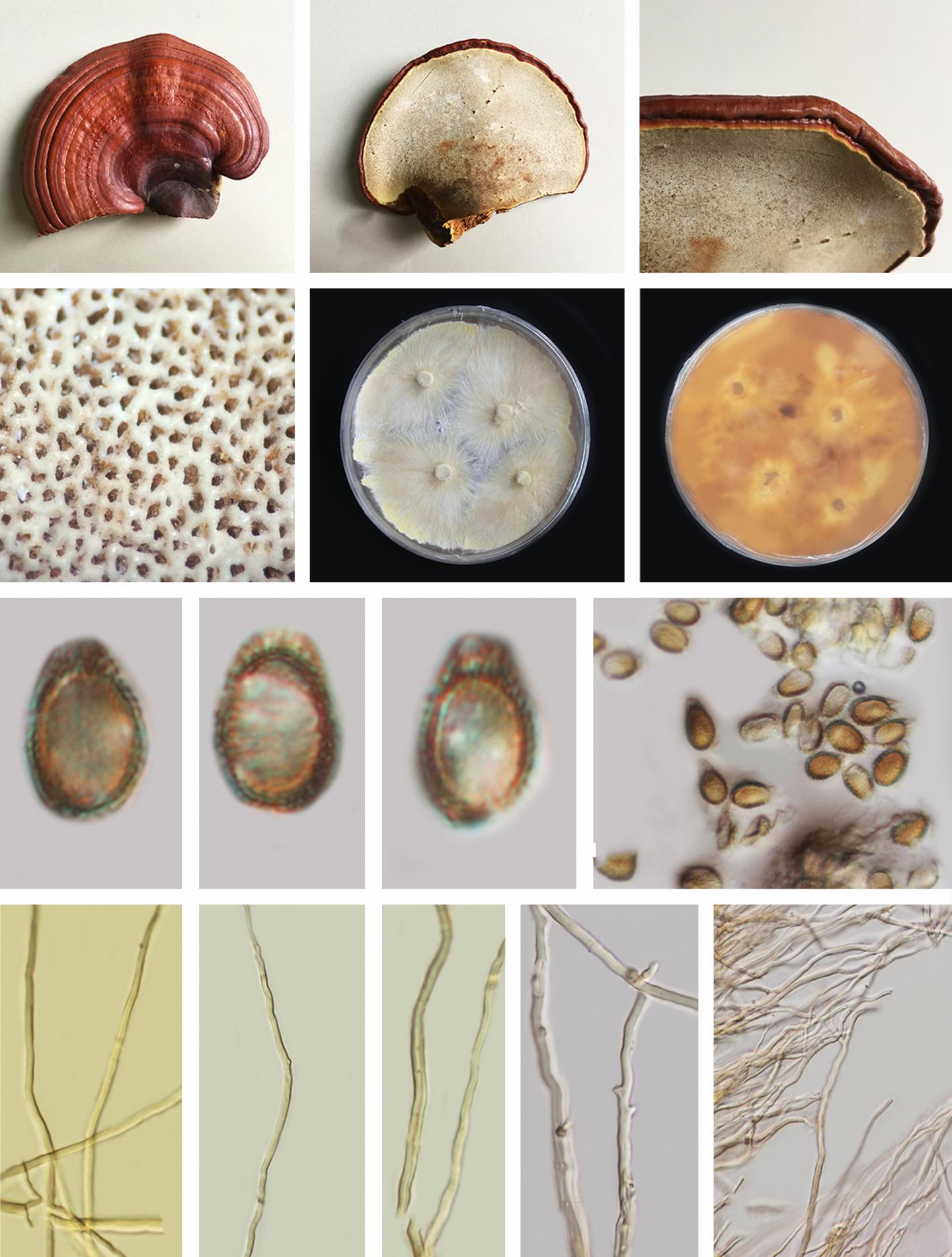
A species of globally recognised medicinal mushroom was recorded for the first time in Thailand. Commonly referred to as lingzhi, the fungus (Ganoderma tropicum) was collected from the base of a living tree in Chiang Rai Province, Northern Thailand. Additionally, the study reports the first assessment of the optimum conditions needed for the species to grow its mycelia (the vegetative part of a fungus consisting of a branching network of fine, thread-like structures) and spread its colony.

The discoveries are published in the open-access journal MycoKeys by a research team from the Chinese Academy of Sciences, University of Chinese Academy of Sciences, World Agroforestry Centre, Kunming Institute of Botany (China) and Center of Excellence in Fungal Research, Mae Fah Luang University (Thailand), led by Thatsanee Luangharn.

Over the last centuries, the studied mushroom and its related species in the genus Ganoderma have been used extensively in traditional Asian medicines due to their natural bioactive compounds, including polysaccharides, triterpenoids, sterols, and secondary metabolites, which are used in the treatment of various diseases. Other compounds derived from lingzhi, such as the studied species, also demonstrate antimicrobial activities. The medicinal use of these mushrooms is recognised by the World Health Organization and they are featured in the Chinese Pharmacopoeia.

The studied mushroom belongs to a group known to be parasitic or pathogenic on a wide range of tree species. The species is characterised with strongly laccate fruiting bodies and a cap with distinctly dark brown base colour and reddish shades. It grows to up to 7-12 cm in length, 4-8 cm in width and is up to 1.5 cm thick. While the mushroom has so far been widely reported from tropical areas, including mainland China, Taiwan and South America, it had never been recorded from Thailand.

During their research, the scientists found that mycelial production for Ganoderma tropicum is most successful on Potato Dextrose Agar, Malt Extract Agar, and Yeast extract Peptose Dextrose Agar, at a temperature of 25-28 °C and 7-8 pH. Unfortunately, mushroom fruiting was not achieved in the experiment.

###

Original source:

Luangharn T, Karunarathna SC, Mortimer PE, Hyde KD, Thongklang N, Xu J (2019) A new record of Ganoderma tropicum (Basidiomycota, Polyporales) for Thailand and first assessment of optimum conditions for mycelia production. MycoKeys 51: 65-83. https://doi.org/10.3897/mycokeys.51.33513

Media Contact
Thatsanee Luangharn
[email protected]

Related Journal Article

http://dx.doi.org/10.3897/mycokeys.51.33513

Tags: BiodiversityBiologyDevelopmental/Reproductive BiologyEcology/EnvironmentMycologyParasitologyPhysiologyPopulation Biology
Share12Tweet8Share2ShareShareShare2

Related Posts

Florida Cane Toad: Complex Spread and Selective Evolution

Florida Cane Toad: Complex Spread and Selective Evolution

February 7, 2026
New Study Uncovers Mechanism Behind Burn Pit Particulate Matter–Induced Lung Inflammation

New Study Uncovers Mechanism Behind Burn Pit Particulate Matter–Induced Lung Inflammation

February 6, 2026

DeepBlastoid: Advancing Automated and Efficient Evaluation of Human Blastoids with Deep Learning

February 6, 2026

Navigating the Gut: The Role of Formic Acid in the Microbiome

February 6, 2026
Please login to join discussion

POPULAR NEWS

  • Robotic Ureteral Reconstruction: A Novel Approach

    Robotic Ureteral Reconstruction: A Novel Approach

    82 shares
    Share 33 Tweet 21
  • Digital Privacy: Health Data Control in Incarceration

    63 shares
    Share 25 Tweet 16
  • Study Reveals Lipid Accumulation in ME/CFS Cells

    57 shares
    Share 23 Tweet 14
  • Breakthrough in RNA Research Accelerates Medical Innovations Timeline

    53 shares
    Share 21 Tweet 13

About

We bring you the latest biotechnology news from best research centers and universities around the world. Check our website.

Follow us

Recent News

Evaluating Pediatric Emergency Care Quality in Ethiopia

TPMT Expression Predictions Linked to Azathioprine Side Effects

Improving Dementia Care with Enhanced Activity Kits

Subscribe to Blog via Email

Success! An email was just sent to confirm your subscription. Please find the email now and click 'Confirm' to start subscribing.

Join 73 other subscribers
  • Contact Us

Bioengineer.org © Copyright 2023 All Rights Reserved.

Welcome Back!

Login to your account below

Forgotten Password?

Retrieve your password

Please enter your username or email address to reset your password.

Log In
No Result
View All Result
  • Homepages
    • Home Page 1
    • Home Page 2
  • News
  • National
  • Business
  • Health
  • Lifestyle
  • Science

Bioengineer.org © Copyright 2023 All Rights Reserved.