• HOME
  • NEWS
  • EXPLORE
    • CAREER
      • Companies
      • Jobs
    • EVENTS
    • iGEM
      • News
      • Team
    • PHOTOS
    • VIDEO
    • WIKI
  • BLOG
  • COMMUNITY
    • FACEBOOK
    • INSTAGRAM
    • TWITTER
Thursday, December 25, 2025
BIOENGINEER.ORG
No Result
View All Result
  • Login
  • HOME
  • NEWS
  • EXPLORE
    • CAREER
      • Companies
      • Jobs
        • Lecturer
        • PhD Studentship
        • Postdoc
        • Research Assistant
    • EVENTS
    • iGEM
      • News
      • Team
    • PHOTOS
    • VIDEO
    • WIKI
  • BLOG
  • COMMUNITY
    • FACEBOOK
    • INSTAGRAM
    • TWITTER
  • HOME
  • NEWS
  • EXPLORE
    • CAREER
      • Companies
      • Jobs
        • Lecturer
        • PhD Studentship
        • Postdoc
        • Research Assistant
    • EVENTS
    • iGEM
      • News
      • Team
    • PHOTOS
    • VIDEO
    • WIKI
  • BLOG
  • COMMUNITY
    • FACEBOOK
    • INSTAGRAM
    • TWITTER
No Result
View All Result
Bioengineer.org
No Result
View All Result
Home NEWS Science News Biology

The truth about a true frog: Unknown Costa Rican frog hidden amongst a widespread species

Bioengineer by Bioengineer
April 11, 2019
in Biology
Reading Time: 2 mins read
0
IMAGE
Share on FacebookShare on TwitterShare on LinkedinShare on RedditShare on Telegram

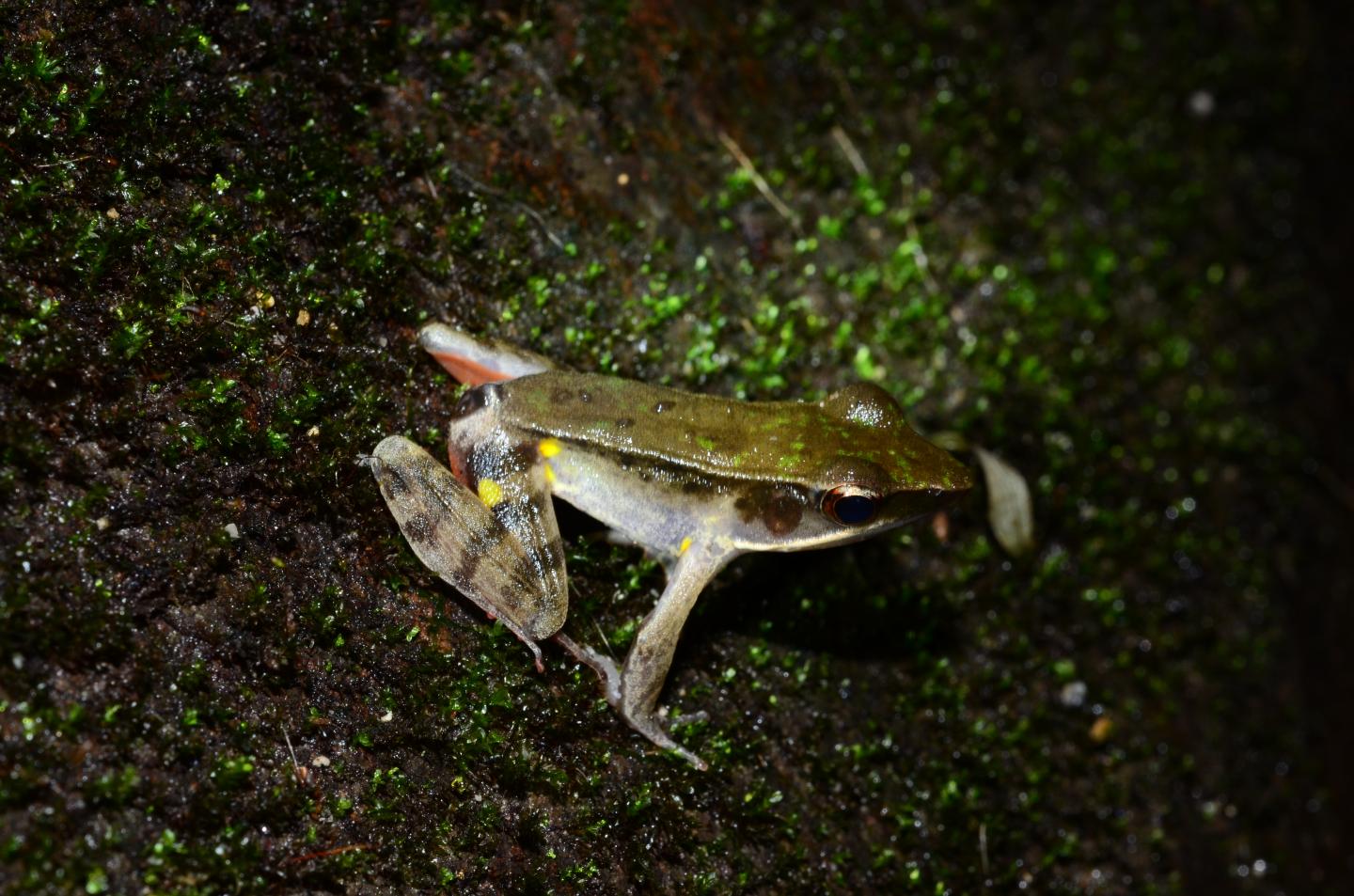
The discovery highlights the urgent need of modern DNA tools when studying rapidly declining animal groups like amphibians
IMAGE

Credit: Dr Robert Puschendorf

Known to science since 1857, a common species of true frog (a “true frog” is one assigned to the family Ranidae), found from north-eastern Honduras, through Nicaragua and Costa Rica to central Panama, turns out to have been keeping its “multiple identities” a secret all along.

According to British and Costa Rican herpetologists, who recently used DNA barcoding to study the species in question, what we currently call Warszewitsch’s frog is in fact a group of “cryptic” species. The study, conducted in the Área de Conservación Guanacaste (ACG), Costa Rica, by James Cryer, Dr Robert Puschendorf, Dr Felicity Wynne from the University of Plymouth, and Dr Stephen Price, UCL, is published in the open-access journal ZooKeys.

In their paper, the authors suggest that the well-known Central American frog species, commonly known as the Warszewitsch’s frog, may in fact consist of multiple different “cryptic” species. This phenomenon is well documented among tropical amphibian fauna, where high levels of genetic variation within populations of a single species surpass levels found between different, classified species.

By utilizing a technique known as DNA barcoding, which compares short snippets of DNA sequences between individuals sampled, the scientists analysed specimens from three different geographic areas within Costa Rica and Panama. In this case, the researchers used sequences derived from mitochondria, the energy-producing “power houses” found in animal cells. Their results indicated there was enough genetic variation to suggest cryptic species are indeed present.

The team chose this particular species because cryptic species were previously identified at two Panamanian sites. Now, the samples from Costa Rica broaden the study area, suggesting that there could be multiple species going by the name Warszewitsch’s frog all across its known distribution.

Conservation biologist and lead author James Cryer says:

“The next step will be to gather more samples throughout the full range of the species. Additionally, if we are to fully discern one species variant from another, further studies that compare the physical, behavioural and ecological characteristics of the frogs, alongside more genetic testing is needed.”

Overall, findings like these are important to help improve our understanding of amphibian biodiversity and, thus, work towards its conservation.

“If indeed there are multiple species, it may be that they have different ecological requirements, and therefore different approaches to their conservation are needed.” Cryer says. “This study further reinforces the power of DNA barcoding for rapid, preliminary species identification. Especially in the tropics, where habitat loss, climate change and infectious disease continually threaten many undescribed amphibian species.”

###

Original source:

Cryer J, Wynne F, Price SJ, Puschendorf R (2019) Cryptic diversity in Lithobates warszewitschii (Amphibia, Anura, Ranidae). ZooKeys 838: 49-69. https://doi.org/10.3897/zookeys.838.29635

Media Contact
Robert Puschendorf
[email protected]

Related Journal Article

http://dx.doi.org/10.3897/zookeys.838.29635

Tags: BiodiversityBiologyEcology/EnvironmentEvolutionPopulation BiologyZoology/Veterinary Science
Share12Tweet8Share2ShareShareShare2

Related Posts

Male-Biased Immune Changes in Late-Onset Preeclampsia

Male-Biased Immune Changes in Late-Onset Preeclampsia

December 24, 2025
blank

Mitochondrial Recombination Fuels Rapid Fish DNA Evolution

December 24, 2025

Immune Response Differences Influence Parkinson’s Disease Progression

December 24, 2025

Unlocking Xiangyang Black Pig Genetics Through Resequencing

December 24, 2025
Please login to join discussion

POPULAR NEWS

  • Nurses’ Views on Online Learning: Effects on Performance

    Nurses’ Views on Online Learning: Effects on Performance

    70 shares
    Share 28 Tweet 18
  • NSF funds machine-learning research at UNO and UNL to study energy requirements of walking in older adults

    71 shares
    Share 28 Tweet 18
  • Unraveling Levofloxacin’s Impact on Brain Function

    54 shares
    Share 22 Tweet 14
  • Exploring Audiology Accessibility in Johannesburg, South Africa

    51 shares
    Share 20 Tweet 13

About

We bring you the latest biotechnology news from best research centers and universities around the world. Check our website.

Follow us

Recent News

Navigating Dementia Care: Transitions in Home Management

ERO1A Enhances Bladder Cancer Growth via JAK-STAT

Addressing Older Adults’ Marginalization in Healthcare

Subscribe to Blog via Email

Success! An email was just sent to confirm your subscription. Please find the email now and click 'Confirm' to start subscribing.

Join 70 other subscribers
  • Contact Us

Bioengineer.org © Copyright 2023 All Rights Reserved.

Welcome Back!

Login to your account below

Forgotten Password?

Retrieve your password

Please enter your username or email address to reset your password.

Log In
No Result
View All Result
  • Homepages
    • Home Page 1
    • Home Page 2
  • News
  • National
  • Business
  • Health
  • Lifestyle
  • Science

Bioengineer.org © Copyright 2023 All Rights Reserved.