• HOME
  • NEWS
  • EXPLORE
    • CAREER
      • Companies
      • Jobs
    • EVENTS
    • iGEM
      • News
      • Team
    • PHOTOS
    • VIDEO
    • WIKI
  • BLOG
  • COMMUNITY
    • FACEBOOK
    • INSTAGRAM
    • TWITTER
Sunday, August 16, 2026
BIOENGINEER.ORG
No Result
View All Result
  • Login
  • HOME
  • NEWS
  • EXPLORE
    • CAREER
      • Companies
      • Jobs
        • Lecturer
        • PhD Studentship
        • Postdoc
        • Research Assistant
    • EVENTS
    • iGEM
      • News
      • Team
    • PHOTOS
    • VIDEO
    • WIKI
  • BLOG
  • COMMUNITY
    • FACEBOOK
    • INSTAGRAM
    • TWITTER
  • HOME
  • NEWS
  • EXPLORE
    • CAREER
      • Companies
      • Jobs
        • Lecturer
        • PhD Studentship
        • Postdoc
        • Research Assistant
    • EVENTS
    • iGEM
      • News
      • Team
    • PHOTOS
    • VIDEO
    • WIKI
  • BLOG
  • COMMUNITY
    • FACEBOOK
    • INSTAGRAM
    • TWITTER
No Result
View All Result
Bioengineer.org
No Result
View All Result
Home NEWS Science News

Zoo amphibians were on display while humans were locked away

Bioengineer by Bioengineer
July 8, 2021
in Science News
Reading Time: 2 mins read
0
IMAGE
Share on FacebookShare on TwitterShare on LinkedinShare on RedditShare on Telegram

IMAGE

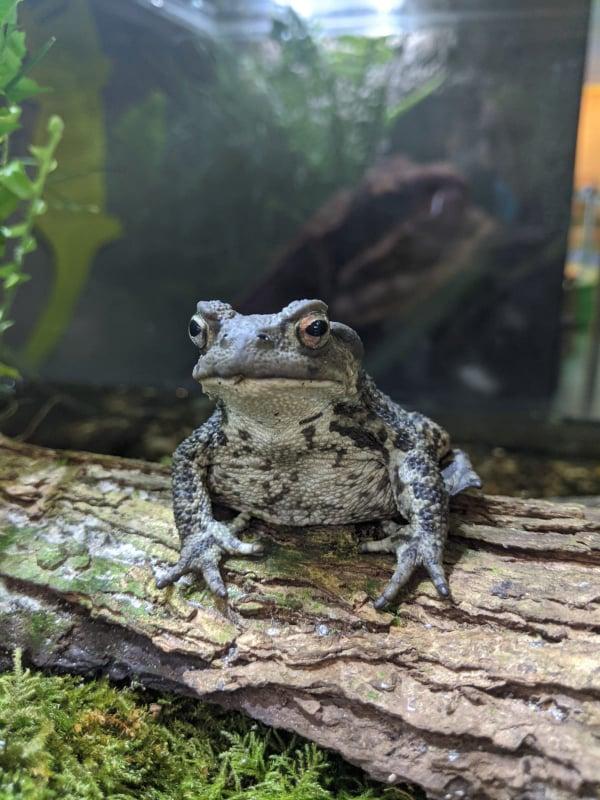
Credit: Jack Boultwood from WWT

While the UK was in lockdown, certain species of captive amphibians became more visible, a new study suggests.

The COVID-19 pandemic forced the closure of zoos across the UK for several months from March 2020, with gradual re-openings from summer into autumn and winter.

These closures provided a team of researchers, from the University of Exeter and WWT Slimbridge Wetland Centre, a unique opportunity to study the effect of visitor presence on several species of amphibian at Slimbridge.

The project assessed the number of individuals of six species – common toad, common frog, smooth newt, pool frog, golden mantella and golden poison dart frog – visible to observers while their exhibit was closed, when it partially reopened to more staff and when it reopened to visitors.

“Amphibians responded to the lack of people at the wetland centre differently,” said lead author Dr Paul Rose.

“Some species of amphibian were more likely to be on view when there were smaller numbers of visitors at their enclosure.

“These differences are probably related to the specific camouflage or anti-predation tactics of certain species, with aposematic frogs (toxic, brightly coloured species) being less impacted by visitor presence but cryptic (camouflaged species) being less visible when the public were around.”

For example, the study found the camouflaged species of common toads were most likely to be on view when the centre was in lockdown compared to when visitors returned. They also showed the most significant decline in visibility from lockdown to when more staff returned to the centre.

These findings show it may be beneficial to offer more cover and camouflage opportunities for captive common toads, in a way that allows the toads to feel hidden but can still be viewed by visitors.

The results of the study can also be used help inform husbandry, collection planning and provide a useful benchmark for further, more complex, welfare assessment measures.

###

The paper, published in the journal Animals, is entitled ‘Bold Frogs or Shy Toads? How Did the COVID-19 Closure of Zoological Organisations Affect Amphibian Activity?’

Media Contact
Lauren Batten
[email protected]

Related Journal Article

http://dx.doi.org/10.3390/ani11071982

Tags: BiodiversityBiologyEcology/EnvironmentMarine/Freshwater BiologyZoology/Veterinary Science
Share13Tweet8Share2ShareShareShare2

Related Posts

KAIST develops semiconductor neuron that harnesses noise to selectively process signals

KAIST develops semiconductor neuron that harnesses noise to selectively process signals

August 16, 2026
Imagining natural and extra robotic thumbs together strengthens kinesthetic sensorimotor networks

Imagining natural and extra robotic thumbs together strengthens kinesthetic sensorimotor networks

August 16, 2026

PARP1 Drives Neuropathic Pain Through GPX4-Dependent Ferroptosis in Injured Mice’s Sensory Neurons

August 15, 2026

Strubbelig–NHL3 Receptor Complex Helps Arabidopsis Respond to Cellulose Deficiency

August 15, 2026
Please login to join discussion

POPULAR NEWS

  • KAIST develops semiconductor neuron that harnesses noise to selectively process signals

    29 shares
    Share 12 Tweet 7
  • Imagining natural and extra robotic thumbs together strengthens kinesthetic sensorimotor networks

    29 shares
    Share 12 Tweet 7
  • PARP1 Drives Neuropathic Pain Through GPX4-Dependent Ferroptosis in Injured Mice’s Sensory Neurons

    29 shares
    Share 12 Tweet 7
  • Strubbelig–NHL3 Receptor Complex Helps Arabidopsis Respond to Cellulose Deficiency

    29 shares
    Share 12 Tweet 7

About

We bring you the latest biotechnology news from best research centers and universities around the world. Check our website.

Follow us

Recent News

KAIST develops semiconductor neuron that harnesses noise to selectively process signals

Imagining natural and extra robotic thumbs together strengthens kinesthetic sensorimotor networks

PARP1 Drives Neuropathic Pain Through GPX4-Dependent Ferroptosis in Injured Mice’s Sensory Neurons

Subscribe to Blog via Email

Enter your email address to subscribe to this blog and receive notifications of new posts by email.

Join 85 other subscribers
  • Contact Us

Bioengineer.org © Copyright 2023 All Rights Reserved.

Welcome Back!

Login to your account below

Forgotten Password?

Retrieve your password

Please enter your username or email address to reset your password.

Log In
No Result
View All Result
  • Homepages
    • Home Page 1
    • Home Page 2
  • News
  • National
  • Business
  • Health
  • Lifestyle
  • Science

Bioengineer.org © Copyright 2023 All Rights Reserved.