• HOME
  • NEWS
  • EXPLORE
    • CAREER
      • Companies
      • Jobs
    • EVENTS
    • iGEM
      • News
      • Team
    • PHOTOS
    • VIDEO
    • WIKI
  • BLOG
  • COMMUNITY
    • FACEBOOK
    • INSTAGRAM
    • TWITTER
Tuesday, May 12, 2026
BIOENGINEER.ORG
No Result
View All Result
  • Login
  • HOME
  • NEWS
  • EXPLORE
    • CAREER
      • Companies
      • Jobs
        • Lecturer
        • PhD Studentship
        • Postdoc
        • Research Assistant
    • EVENTS
    • iGEM
      • News
      • Team
    • PHOTOS
    • VIDEO
    • WIKI
  • BLOG
  • COMMUNITY
    • FACEBOOK
    • INSTAGRAM
    • TWITTER
  • HOME
  • NEWS
  • EXPLORE
    • CAREER
      • Companies
      • Jobs
        • Lecturer
        • PhD Studentship
        • Postdoc
        • Research Assistant
    • EVENTS
    • iGEM
      • News
      • Team
    • PHOTOS
    • VIDEO
    • WIKI
  • BLOG
  • COMMUNITY
    • FACEBOOK
    • INSTAGRAM
    • TWITTER
No Result
View All Result
Bioengineer.org
No Result
View All Result
Home NEWS Science News Biology

Zika study may ‘supercharge’ vaccine research

Bioengineer by Bioengineer
March 18, 2019
in Biology
Reading Time: 2 mins read
0
IMAGE
Share on FacebookShare on TwitterShare on LinkedinShare on RedditShare on Telegram

IMAGE

Credit: The University of Queensland

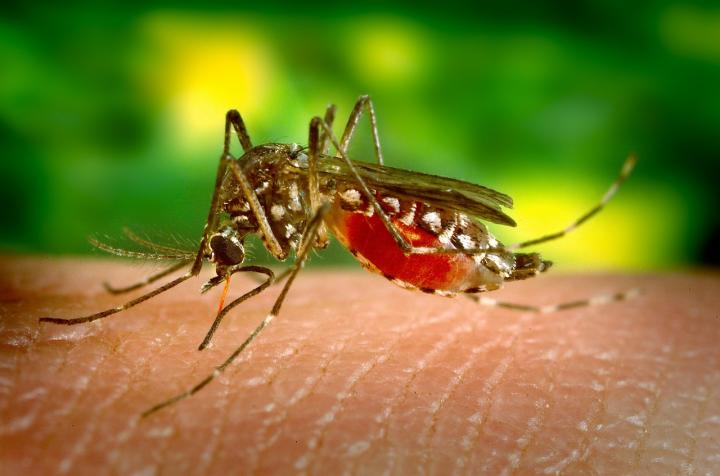
Scientists looking at the genetics of Zika virus have found a way to fast-track research which could lead to new vaccines.

The study, led by The University of Queensland and QIMR Berghofer Medical Research Institute, used a new technique to uncover Zika mutations that help foster virus replication in mosquito hosts, while hindering its ability to replicate in mammals.

Dr Yin Xiang Setoh from UQ’s School of Chemistry and Molecular Biosciences said the technique would supercharge research on Zika – which can cause birth defects – and other similar viruses.

“Viruses like Zika have adapted to grow in two contrasting systems – vertebrates, like us, and invertebrates, like mosquitos,” he said.

“We used deep mutational scanning to survey all of the possible amino acid mutations in what’s known as the envelope protein of the virus, which is responsible for how it binds with, enters and exits host cells.

“We found two mutations that resulted in a virus that grew well in mosquito cells, but very poorly in mammalian cells, revealing the amino acids that are critical for Zika virus to survive in mammals.”

Professor Andreas Suhrbier, who heads QIMR Berghofer’s Inflammation Biology laboratory, said the new technique allowed scientists to perform evolutionary virus selection in a matter of days – a process that would take tens or hundreds of years in nature.

“This technique, used in conjunction with modelling, gives us an insight into why evolution has chosen a particular path,” he said.

“We’re lifting the curtain on evolutionary processes and speeding up natural processes like never before.”

Lead researcher, Associate Professor Alexander Khromykh, who heads RNA Virology laboratory at UQ, said the fast-tracking of virus research was an exciting development.

“Using this rapid technique, we can now investigate how Zika virus can reach the placenta and cross into the foetus, and to isolate the viral genetic factors responsible,” he said.

“This could help provide crucial knowledge for developing an effective Zika vaccine.

“Indeed, Zika virus that was engineered to contain the identified two mutations showed great potential as a vaccine.

“At the same time, we might be able to identify the genetic factors behind virus replication and transmission by mosquitoes, helping us understand how Zika is transmitted in nature.”

“This technique can also be applied to investigate the development of the disease and the transmission of a range of similar viruses, transmitted by mosquitoes, ticks and other invertebrates.”

“It took us a number of years, not to mention a significant collaborative effort, to get to this stage and we’re incredibly excited to see what’s next.”

The study was initiated with seed funding from the Australian Infectious Diseases Research Centre.

The research is published in Nature Microbiology (DOI: 10.1038/s41564-019-0399-4).

###

Media Contact
Alexander Khromykh
[email protected]

Related Journal Article

http://dx.doi.org/10.1038/s41564-019-0399-4

Tags: Disease in the Developing WorldEvolutionGeneticsInfectious/Emerging DiseasesMedicine/HealthMicrobiologyMolecular BiologyPublic HealthVaccinesVirology
Share14Tweet8Share2ShareShareShare2

Related Posts

From Complexity to Clarity: Unraveling the “Topological Laws” Governing Cell Death — Biology

From Complexity to Clarity: Unraveling the “Topological Laws” Governing Cell Death

May 11, 2026
New Classification Framework Identifies Tumor-Associated Bacterial Effectors as Crucial Drivers of Tumor Biology and Immune Response — Biology

New Classification Framework Identifies Tumor-Associated Bacterial Effectors as Crucial Drivers of Tumor Biology and Immune Response

May 11, 2026

HIV-1 Strains Reveal Varied Paths to Antibody Escape

May 11, 2026

CRISPRi Screening Identifies Fungal-Specific Drug Targets

May 11, 2026
Please login to join discussion

POPULAR NEWS

  • Research Indicates Potential Connection Between Prenatal Medication Exposure and Elevated Autism Risk

    841 shares
    Share 336 Tweet 210
  • New Study Reveals Plants Can Detect the Sound of Rain

    728 shares
    Share 290 Tweet 182
  • Salmonella Haem Blocks Macrophages, Boosts Infection

    62 shares
    Share 25 Tweet 16
  • Breastmilk Balances E. coli and Beneficial Bacteria in Infant Gut Microbiomes

    57 shares
    Share 23 Tweet 14

About

We bring you the latest biotechnology news from best research centers and universities around the world. Check our website.

Follow us

Recent News

Humans and Zebra Finches Share Similar Speech Learning Techniques #ASA190

New Study Uncovers How Fungal Parasites Attack Strawberries and Raspberries

City of Hope Researchers to Present Groundbreaking Immunotherapy and Precision Medicine Advances Across Multiple Cancer Types at ASCO 2026

Subscribe to Blog via Email

Enter your email address to subscribe to this blog and receive notifications of new posts by email.

Join 82 other subscribers
  • Contact Us

Bioengineer.org © Copyright 2023 All Rights Reserved.

Welcome Back!

Login to your account below

Forgotten Password?

Retrieve your password

Please enter your username or email address to reset your password.

Log In
No Result
View All Result
  • Homepages
    • Home Page 1
    • Home Page 2
  • News
  • National
  • Business
  • Health
  • Lifestyle
  • Science

Bioengineer.org © Copyright 2023 All Rights Reserved.