


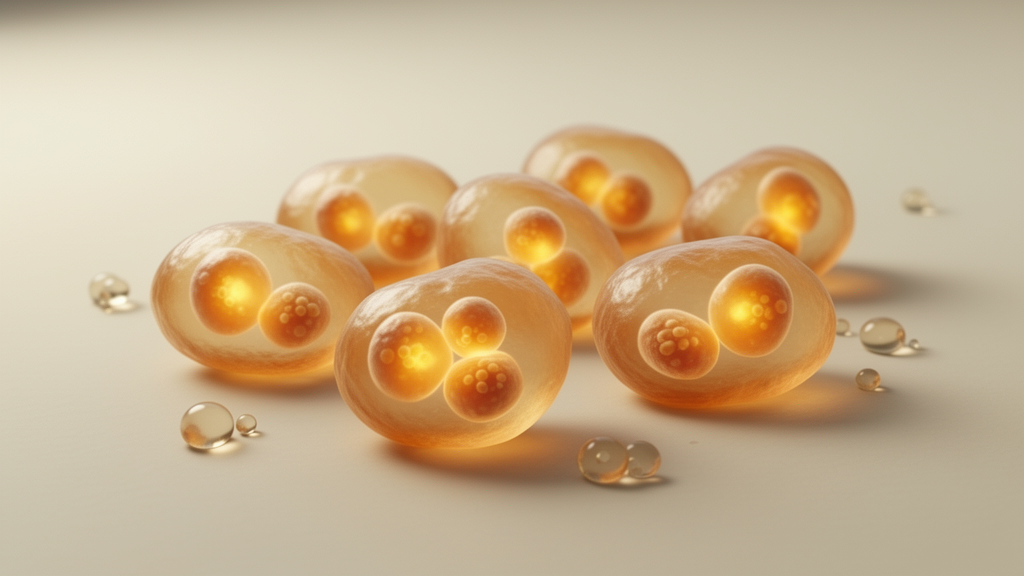
Scientists at the Korea Research Institute of Bioscience and Biotechnology in Daejeon, Republic of Korea, have assembled a high-quality draft genome of Pseudozyma sp. SY16, a yeast strain prized for its capacity to produce mannosylerythritol lipids, and uncovered an unexpected cellular feature: many of its cells carry two spatially separated DAPI-positive signals, a pattern consistent with an apparent binucleate morphology. The study, published in Frontiers in Fungal Biology, combines long- and short-read sequencing with microscopy to fill a genomic gap that has long hindered work on this non-model organism.
Mannosylerythritol lipids, or MELs, are glycolipid biosurfactants that have attracted considerable attention in cosmetic and industrial applications because of their favorable biocompatibility and stability. Pseudozyma sp. SY16 stands out as a promising MEL producer, yet until now the absence of genomic resources has limited understanding of its genetic and cellular characteristics and blocked serious attempts at metabolic engineering. The new genome sequence directly addresses that bottleneck.
The assembly itself is a technical achievement. Using a hybrid sequencing approach that merges long PacBio reads with short Illumina reads, the team assembled a 20.2 Mb genome organized into 23 nuclear scaffolds and one mitochondrial scaffold. The assembly achieved a BUSCO completeness score of 98.9 percent, indicating that nearly all expected single-copy genes are present and intact, a benchmark of assembly quality in genome science.
GenomeScope analysis of the sequencing data revealed a predominantly single-peaked k-mer distribution, but the authors report that this pattern did not provide a clear indication of either a haploid or a diploid genome. That ambiguity prompted an independent line of investigation at the cellular level.
Using confocal microscopy with DAPI staining, which labels DNA, the researchers observed frequent cells containing two spatially separated DAPI-positive signals. This finding is consistent with an apparent binucleate morphology, meaning many cells appear to house two nuclei rather than one. The authors present this as phenotypic evidence that complements, rather than resolves, the ambiguous k-mer picture, leaving the precise ploidy state of SY16 an open question for future work.
The comparative genomics portion of the study examined MEL biosynthetic genes across closely related species in the family Ustilaginaceae. Five genes central to MEL production, mac1, mac2, mat1, mmf1, and emt1, were highly conserved in both gene content and genomic organization among SY16, Pseudozyma hubeiensis, and Mycosarcoma maydis. In contrast, only mmf1 was retained in the corresponding genomic regions of Pseudozyma pruni and Pseudozyma flocculosa.
The authors interpret this contrast as evidence of lineage-specific retention and loss of MEL biosynthetic genes during the evolution of the family Ustilaginaceae.
Beyond its evolutionary insights, the study establishes a foundational genomic resource intended to support future genetic and metabolic engineering of SY16 aimed at enhanced MEL production. With a near-complete genome assembly, a mapped set of biosynthetic genes, and new observations on nuclear organization, researchers now have the tools to begin modifying this industrially relevant yeast in a targeted way. The work, received in September 2026 and accepted in October 2026, was conducted by researchers affiliated with the Korea Research Institute of Bioscience and Biotechnology and the University of Science and Technology, both in Daejeon.
Subject of Research: Draft genome assembly and phenotypic analysis of the mannosylerythritol lipid-producing yeast Pseudozyma sp. SY16
Article Title: Draft genome sequence and phenotypic analysis of Pseudozyma sp. SY16 with evidence of binucleate cells
Article References: Rho, A., Choi, D.-Y., Yun, J.-H., Park, Y., Choi, H. I., Cho, D.-H., Kim, H.-S., & Lee, Y. J. (2026). Draft genome sequence and phenotypic analysis of Pseudozyma sp. SY16 with evidence of binucleate cells. Frontiers in Fungal Biology, 7, 2001516. https://doi.org/10.3389/ffunb.2026.2001516
Image Credits: AI Generated
DOI: 10.3389/ffunb.2026.2001516
Keywords: Pseudozyma sp. SY16, mannosylerythritol lipids, genome assembly, PacBio-Illumina, BUSCO, binucleate cells, Ustilaginaceae, biosurfactants, yeast genomics, metabolic engineering, DAPI staining, comparative genomics
News Source: Juliet Wilcox. (October 29, 2026). Yeast Genome Decoded: MEL-Producing Pseudozyma sp. SY16 Shows Binucleate Cells. Scienmag.



