• HOME
  • NEWS
  • EXPLORE
    • CAREER
      • Companies
      • Jobs
    • EVENTS
    • iGEM
      • News
      • Team
    • PHOTOS
    • VIDEO
    • WIKI
  • BLOG
  • COMMUNITY
    • FACEBOOK
    • INSTAGRAM
    • TWITTER
Thursday, June 25, 2026
BIOENGINEER.ORG
No Result
View All Result
  • Login
  • HOME
  • NEWS
  • EXPLORE
    • CAREER
      • Companies
      • Jobs
        • Lecturer
        • PhD Studentship
        • Postdoc
        • Research Assistant
    • EVENTS
    • iGEM
      • News
      • Team
    • PHOTOS
    • VIDEO
    • WIKI
  • BLOG
  • COMMUNITY
    • FACEBOOK
    • INSTAGRAM
    • TWITTER
  • HOME
  • NEWS
  • EXPLORE
    • CAREER
      • Companies
      • Jobs
        • Lecturer
        • PhD Studentship
        • Postdoc
        • Research Assistant
    • EVENTS
    • iGEM
      • News
      • Team
    • PHOTOS
    • VIDEO
    • WIKI
  • BLOG
  • COMMUNITY
    • FACEBOOK
    • INSTAGRAM
    • TWITTER
No Result
View All Result
Bioengineer.org
No Result
View All Result
Home NEWS Science News Biology

Wildlife struggle to cope with extreme weather

Bioengineer by Bioengineer
December 21, 2018
in Biology
Reading Time: 2 mins read
0
IMAGE
Share on FacebookShare on TwitterShare on LinkedinShare on RedditShare on Telegram

IMAGE

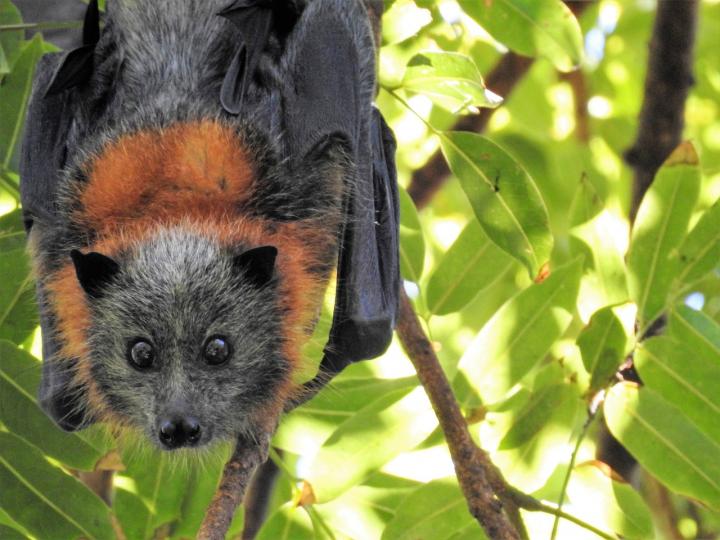
Credit: Creative Commons CC0.

The mass death of flying foxes in extreme heat in North Queensland last month underscores the importance of University of Queensland wildlife research released today.

The UQ research sheds light on how various species have responded to major climate events.

A study led by UQ School of Earth and Environmental Science researcher Dr Sean Maxwell has synthesised more than 70 years of research to quantify the responses of various species.

“The growing frequency and intensity of extreme weather events such as cyclones, droughts and floods is causing unpredictable and immediate changes to ecosystems and obstructing existing management efforts,” Dr Maxwell said.

“The deaths of up to one third of Australia’s spectacled flying foxes in an extreme heatwave north of Cairns in November comes in the wake of our research, and is a stark illustration of the importance of the study.

“Some of the negative responses we found were quite concerning, including more than 100 cases of dramatic population declines and 31 cases of local population extinction following an extreme event.

“Populations of critically endangered bird species in Hawaii, such as the palia, have been annihilated due to drought, and populations of lizard species have been wiped out due to cyclones in the Bahamas.”

Cyclones were the most prevalent extreme event for birds, fish, plants and reptiles, while mammals and amphibians were most responsive to drought events, with drought leading to 12 cases of major population decline in mammals.

Drought also led to 13 cases of breeding declines in bird populations and 12 cases of changes in the composition of invertebrate communities.

UQ Centre for Biodiversity and Conservation Science director Professor James Watson said the detailed information would help inform ecosystem management.

“The research clearly shows species will respond, often negatively, to extreme events,” Professor Watson said.

“As climate change continues to ensure extreme climate and weather events are more and more common, we now need to act to ensure species have the best chance to survive.

“Wherever possible, high quality and intact habitat areas should be retained, as these are the places where species are most resilient to increasing exposure to extreme events.”

The research is published in the journal Diversity and Distributions (DOI: 10.1111/ddi.12878).

###

Media Contact
Dr. Sean Maxwell
[email protected]
61-403-477-098

Original Source

https://www.uq.edu.au/news/article/2018/12/wildlife-struggle-cope-extreme-weather

Related Journal Article

http://dx.doi.org/10.1111/ddi.12878

Tags: Atmospheric ScienceBiologyClimate ChangeClimate ScienceEarth ScienceEcology/EnvironmentZoology/Veterinary Science
Share12Tweet8Share2ShareShareShare2

Related Posts

Decoding the Secret Code of a Crucial Immune Sensor

June 24, 2026

Decades of Data Reveal Which Orcas Call Puget Sound Home

June 24, 2026

Copal Tree Genetics Reveal Tropical Forest Connectivity

June 24, 2026

How Intestinal Mucus Influences Klebsiella pneumoniae Colonization and Antibiotic Effectiveness

June 24, 2026
Please login to join discussion

POPULAR NEWS

  • Saying Goodbye to PGY-6: Pediatric Fellowship Realities

    103 shares
    Share 41 Tweet 26
  • Multi-Hospital Study Reveals Long Covid Burden Is Twice as High as Current Estimates

    92 shares
    Share 36 Tweet 23
  • Detection of EDCs in Breast Milk and Infant Urine Up to Six Months Highlights Early Exposure Risks

    77 shares
    Share 31 Tweet 19
  • New Drug Candidate Developed at McMaster Shows Potential for Treating Brain Cancer

    58 shares
    Share 23 Tweet 15

About

We bring you the latest biotechnology news from best research centers and universities around the world. Check our website.

Follow us

Recent News

Asian Working Group Revises Sarcopenia Criteria 2019-2025

AI-Powered Platform Advances Structure-Based Drug Discovery

BALatrine Reduces Helminth Infections: Central Java Trial

Subscribe to Blog via Email

Enter your email address to subscribe to this blog and receive notifications of new posts by email.

Join 82 other subscribers
  • Contact Us

Bioengineer.org © Copyright 2023 All Rights Reserved.

Welcome Back!

Login to your account below

Forgotten Password?

Retrieve your password

Please enter your username or email address to reset your password.

Log In
No Result
View All Result
  • Homepages
    • Home Page 1
    • Home Page 2
  • News
  • National
  • Business
  • Health
  • Lifestyle
  • Science

Bioengineer.org © Copyright 2023 All Rights Reserved.