• HOME
  • NEWS
  • EXPLORE
    • CAREER
      • Companies
      • Jobs
    • EVENTS
    • iGEM
      • News
      • Team
    • PHOTOS
    • VIDEO
    • WIKI
  • BLOG
  • COMMUNITY
    • FACEBOOK
    • INSTAGRAM
    • TWITTER
Saturday, May 16, 2026
BIOENGINEER.ORG
No Result
View All Result
  • Login
  • HOME
  • NEWS
  • EXPLORE
    • CAREER
      • Companies
      • Jobs
        • Lecturer
        • PhD Studentship
        • Postdoc
        • Research Assistant
    • EVENTS
    • iGEM
      • News
      • Team
    • PHOTOS
    • VIDEO
    • WIKI
  • BLOG
  • COMMUNITY
    • FACEBOOK
    • INSTAGRAM
    • TWITTER
  • HOME
  • NEWS
  • EXPLORE
    • CAREER
      • Companies
      • Jobs
        • Lecturer
        • PhD Studentship
        • Postdoc
        • Research Assistant
    • EVENTS
    • iGEM
      • News
      • Team
    • PHOTOS
    • VIDEO
    • WIKI
  • BLOG
  • COMMUNITY
    • FACEBOOK
    • INSTAGRAM
    • TWITTER
No Result
View All Result
Bioengineer.org
No Result
View All Result
Home NEWS Science News Biology

Wild animals evolving to give birth earlier in warming climate

Bioengineer by Bioengineer
November 5, 2019
in Biology
Reading Time: 2 mins read
0
IMAGE
Share on FacebookShare on TwitterShare on LinkedinShare on RedditShare on Telegram

IMAGE

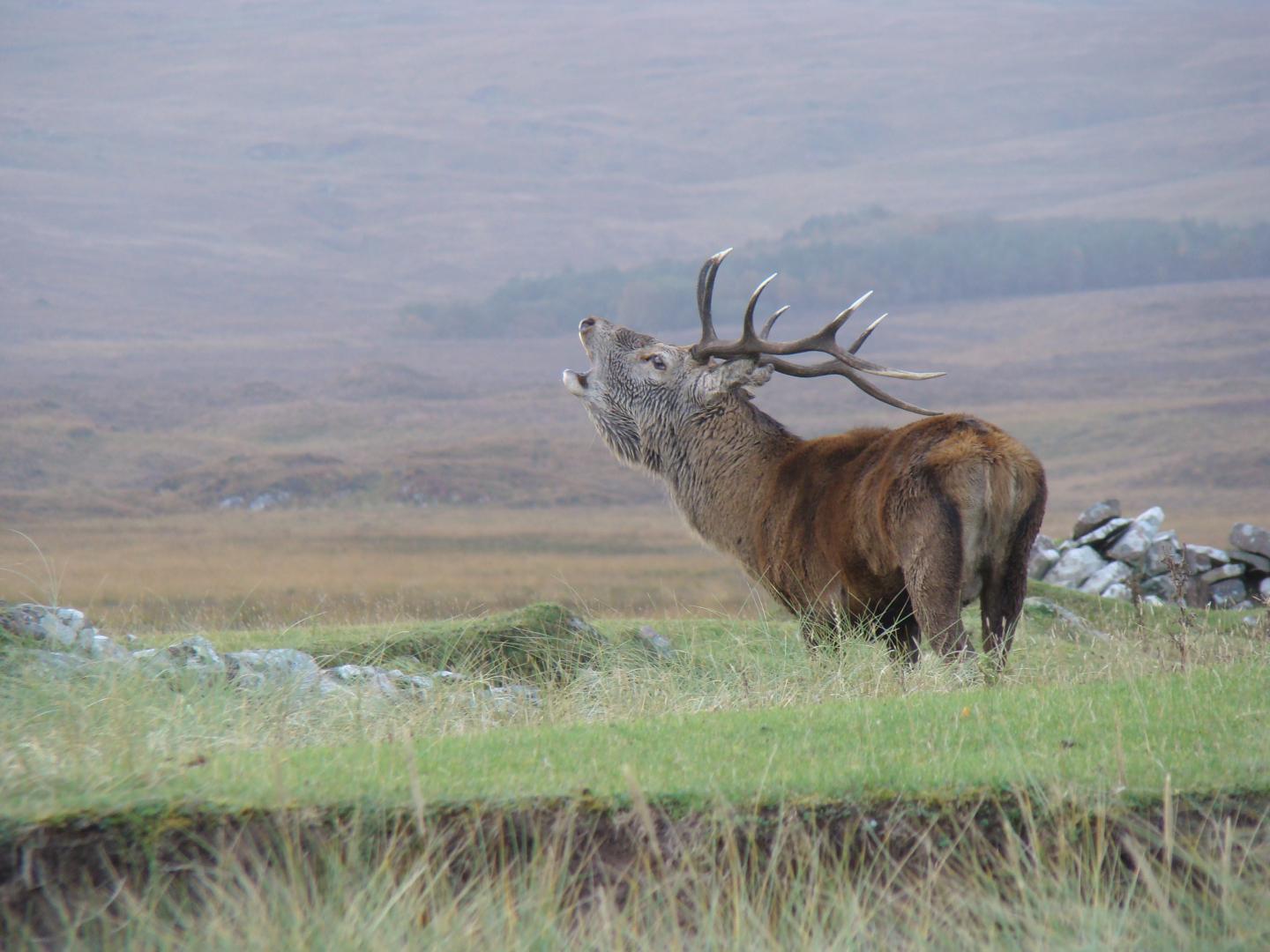
Credit: Martyn Baker

Red deer on a Scottish island are providing scientists with some of the first evidence that wild animals are evolving to give birth earlier in the year as the climate warms.

Genetic changes to red deer on the Isle of Rum – located off the west coast of Scotland – have played a key role in a rapid shift in birth dates in recent years, new research shows.

Previous studies have shown that the deer have been giving birth earlier since the 1980s, at a rate of about three days per decade, partly due to the effects of warmer temperatures on the deer’s behaviour and physiology.

Now, scientists have revealed that genetic changes caused by natural selection – the theory of evolution developed by Charles Darwin – are also involved.

The study provides a rare example of evolution happening quickly enough to be detected over only a few decades.

A team including scientists from the University of Edinburgh made the discovery using field records and genetic data collected on Rum over a 45-year period since 1972.

Female red deer – called hinds – give birth to a single calf each year, and those that reproduce earlier in the year have more offspring over their lifetime, researchers say.

Their findings show that this is partly because of an association between the genes that make hinds give birth earlier and higher overall reproductive success. As a result, genes for breeding earlier have become more common in the Rum deer population over time.

The research, published in the journal PLOS Biology, involved scientists from the Australian National University and the universities of St Andrews and Cambridge. It was funded by the Natural Environment Research Council. The Isle of Rum National Nature Reserve is managed by Scottish Natural Heritage.

Dr Timothée Bonnet, of the Australian National University, who led the study, said: “This is one of the few cases where we have documented evolution in action, showing that it may help populations adapt to climate warming.”

Professor Josephine Pemberton, of the University of Edinburgh’s School of Biological Sciences, who was also involved in the study, said: “Long-term studies of individual lifetimes are one of the few ways to understand how populations respond to environmental change and how to manage its effects.”

Sally Thomas, Scottish Natural Heritage’s Director of People and Nature, said: “These findings are a fascinating example of the impact climate change may be having on wildlife. More and more research is demonstrating climate change is influencing species across the UK and the world.”

###

Media Contact
Corin Campbell
[email protected]
44-131-650-6382

Tags: BiologyClimate ChangeClimate ScienceDevelopmental/Reproductive BiologyEcology/Environment
Share12Tweet8Share2ShareShareShare2

Related Posts

Single mother must adapt swiftly — the survival of her colony depends on it — Biology

Single mother must adapt swiftly — the survival of her colony depends on it

May 15, 2026
Why Are Nearly Everyone Right-Handed? It Might Be Linked to How We Learned to Walk — Biology

Why Are Nearly Everyone Right-Handed? It Might Be Linked to How We Learned to Walk

May 15, 2026

Excessive Neuronal Activity Initiates Severe Autoimmune Brain Disorder

May 15, 2026

Precision Anti-Aging Strategies Focus on Eliminating Harmful Senescent Cells While Preserving Beneficial Ones

May 15, 2026
Please login to join discussion

POPULAR NEWS

  • Research Indicates Potential Connection Between Prenatal Medication Exposure and Elevated Autism Risk

    843 shares
    Share 337 Tweet 211
  • New Study Reveals Plants Can Detect the Sound of Rain

    730 shares
    Share 291 Tweet 182
  • Salmonella Haem Blocks Macrophages, Boosts Infection

    62 shares
    Share 25 Tweet 16
  • Breastmilk Balances E. coli and Beneficial Bacteria in Infant Gut Microbiomes

    58 shares
    Share 23 Tweet 15

About

We bring you the latest biotechnology news from best research centers and universities around the world. Check our website.

Follow us

Recent News

Nurse Care Reduces Hospital Use in Multimorbid Patients

Epinephrine vs. Saline in Neonatal Resuscitation Study

Hepatitis C Elimination via Risk-Based Screening, Decentralized Care

Subscribe to Blog via Email

Enter your email address to subscribe to this blog and receive notifications of new posts by email.

Join 82 other subscribers
  • Contact Us

Bioengineer.org © Copyright 2023 All Rights Reserved.

Welcome Back!

Login to your account below

Forgotten Password?

Retrieve your password

Please enter your username or email address to reset your password.

Log In
No Result
View All Result
  • Homepages
    • Home Page 1
    • Home Page 2
  • News
  • National
  • Business
  • Health
  • Lifestyle
  • Science

Bioengineer.org © Copyright 2023 All Rights Reserved.