• HOME
  • NEWS
  • EXPLORE
    • CAREER
      • Companies
      • Jobs
    • EVENTS
    • iGEM
      • News
      • Team
    • PHOTOS
    • VIDEO
    • WIKI
  • BLOG
  • COMMUNITY
    • FACEBOOK
    • INSTAGRAM
    • TWITTER
Saturday, June 27, 2026
BIOENGINEER.ORG
No Result
View All Result
  • Login
  • HOME
  • NEWS
  • EXPLORE
    • CAREER
      • Companies
      • Jobs
        • Lecturer
        • PhD Studentship
        • Postdoc
        • Research Assistant
    • EVENTS
    • iGEM
      • News
      • Team
    • PHOTOS
    • VIDEO
    • WIKI
  • BLOG
  • COMMUNITY
    • FACEBOOK
    • INSTAGRAM
    • TWITTER
  • HOME
  • NEWS
  • EXPLORE
    • CAREER
      • Companies
      • Jobs
        • Lecturer
        • PhD Studentship
        • Postdoc
        • Research Assistant
    • EVENTS
    • iGEM
      • News
      • Team
    • PHOTOS
    • VIDEO
    • WIKI
  • BLOG
  • COMMUNITY
    • FACEBOOK
    • INSTAGRAM
    • TWITTER
No Result
View All Result
Bioengineer.org
No Result
View All Result
Home NEWS Science News Biology

Wild African ape reactions to novel camera traps

Bioengineer by Bioengineer
March 14, 2019
in Biology
Reading Time: 3 mins read
0
IMAGE
Share on FacebookShare on TwitterShare on LinkedinShare on RedditShare on Telegram

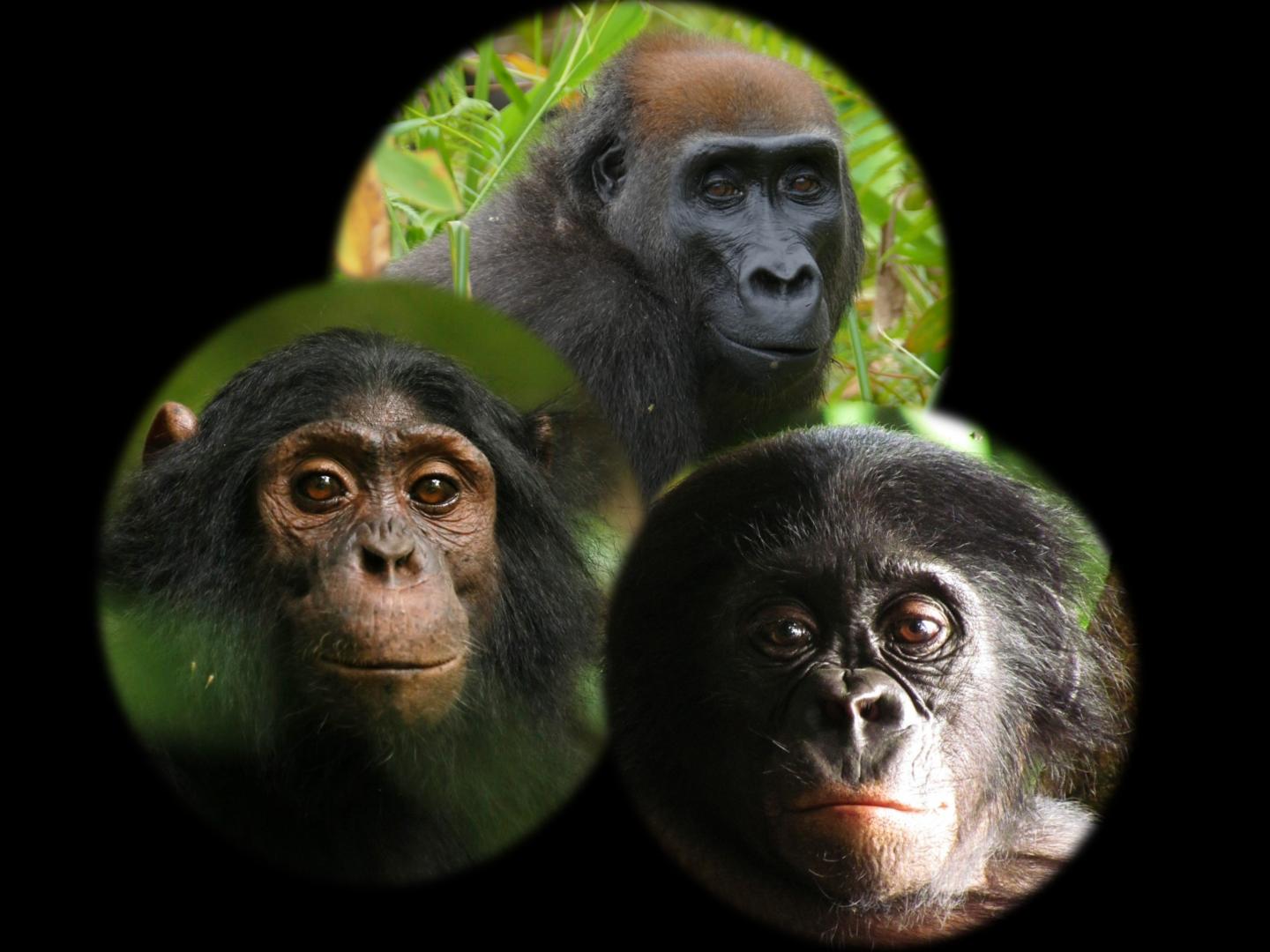
African wild apes notice and often react to novel items in their environment
IMAGE

Credit: © K. Langergraber, M. Robbins, S. Lucchesi

“Our goal was to see how chimpanzees, bonobos, and gorillas react to unfamiliar objects in the wild since novel object experiments are often used in comparative psychology research, and we wanted to know if there were any differences among the three great apes,” says Ammie Kalan, a primatologist at the Max Planck Institute for Evolutionary Anthropology. “We were specifically surprised by the differences in reactions we observed between the chimps and bonobos. Since they’re sister species and share a lot of the same genetic makeup, we expected them to react similarly to the camera, but this wasn’t the case.”

“The chimpanzees were overall uninterested in the camera traps–they barely seemed to notice their presence and were generally unbothered by them,” Kalan says. “Yet the bonobos appeared to be much more troubled by camera traps; they were hesitant to approach and would actively keep their distance from them.”

Individuals within a species reacted differently to the cameras as well. For example, apes living in areas with more human activity, such as near research sites, can get desensitized to unfamiliar items and become indifferent toward such encounters in the future. However, another member of the same species who has had less exposure to strange or new items, might be more interested in them. The age of the ape plays a similar role. “Younger apes would explore the camera traps more by staring at them for longer periods of time,” Kalan says. “Like human children, they need to take in more information and learn about their environment. Being curious is one way of doing that.”

The range of responses shown by the apes, and the complex differences both between species and within a single species, demonstrates a need for scientists to consider how animals will respond to the presence of unfamiliar monitoring equipment in their natural habitats. “The within and between species variation in behavior towards the unfamiliar items might be problematic when trying to collect accurate monitoring data,” Kalan says. “To curb this effect, it would be worth having a familiarization period, where the wild animals can get used to the new items.”

Despite this potential complication, using camera traps to monitor populations of animals in the wild is still one of the most useful options. “Our knowledge tends to be limited by the number of groups or number of populations we’re able to study, but using monitoring technology like camera traps is an effective way of solving that problem,” Kalan says. “I think it’s really interesting from a behavioral flexibility perspective to consider how wild animals react to these new technologies. I would love for more researchers to investigate novelty responses while doing monitoring surveys.”

###

Original publication:

Ammie Kalan, et al.

Novelty Response of Wild African Apes to Camera Traps

Current Biology, 14 March 2019

Contact:

Dr. Ammie Kalan

Max Planck Institute for Evolutionary Anthropology, Leipzig

+49 341 3550-205

[email protected]

Media Contact
Sandra Jacob
[email protected]

Related Journal Article

http://dx.doi.org/10.1016/j.cub.2019.02.024

Tags: BehaviorBiodiversityBiologyEcology/EnvironmentSocial/Behavioral ScienceZoology/Veterinary Science
Share12Tweet8Share2ShareShareShare2

Related Posts

Natural Hallucinogens: Evolution’s Ecological Tools, Not Mere Chemical Byproducts

June 25, 2026

This Famous Butterfly Revealed: Three Distinct Species Hidden in One

June 25, 2026

Scientists Attack Soybean Cyst Nematode by Starving Its Food Source

June 25, 2026

Decoding the Secret Code of a Crucial Immune Sensor

June 24, 2026
Please login to join discussion

POPULAR NEWS

  • Saying Goodbye to PGY-6: Pediatric Fellowship Realities

    103 shares
    Share 41 Tweet 26
  • Multi-Hospital Study Reveals Long Covid Burden Is Twice as High as Current Estimates

    92 shares
    Share 36 Tweet 23
  • Detection of EDCs in Breast Milk and Infant Urine Up to Six Months Highlights Early Exposure Risks

    77 shares
    Share 31 Tweet 19
  • New Drug Candidate Developed at McMaster Shows Potential for Treating Brain Cancer

    58 shares
    Share 23 Tweet 15

About

We bring you the latest biotechnology news from best research centers and universities around the world. Check our website.

Follow us

Recent News

Tracking Lanthanide-Labeled Microplastics in Plants

POSTECH Researchers Slash Cost of Reconstituted Cell-Free Systems by 95%

AI and Physics Collaborate to Design Advanced Hydrogen Storage Materials

Subscribe to Blog via Email

Success! An email was just sent to confirm your subscription. Please find the email now and click 'Confirm' to start subscribing.

Join 82 other subscribers
  • Contact Us

Bioengineer.org © Copyright 2023 All Rights Reserved.

Welcome Back!

Login to your account below

Forgotten Password?

Retrieve your password

Please enter your username or email address to reset your password.

Log In
No Result
View All Result
  • Homepages
    • Home Page 1
    • Home Page 2
  • News
  • National
  • Business
  • Health
  • Lifestyle
  • Science

Bioengineer.org © Copyright 2023 All Rights Reserved.