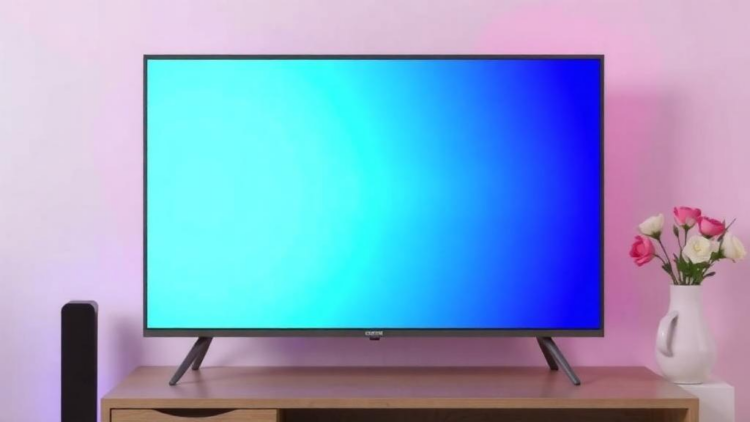
The vivid colors on a modern television or smartphone screen are not experienced in exactly the same way by everyone who watches them. A new computational model developed by researchers at the Institute of Ophthalmology at University College London now offers a detailed explanation of why this happens, and the work could reshape how displays are designed and calibrated in the years ahead. The research, published in the Optica Publishing Group journal Optics Express, addresses a growing problem in display technology: as screens have become capable of producing a wider and more saturated range of colors, the differences in color vision from one person to another have become far more visible in everyday viewing.
To understand the problem, it helps to look at how displays create color in the first place. Every television, monitor, and cinema projector builds its images from three primary light sources: red, green, and blue. By mixing these primaries in different proportions, the device can reproduce a broad spectrum of colors. On older displays, the primary emissions were relatively broad in their spectral output, which meant that even though individual viewers differed in their color vision, those differences tended to average out and the colors looked broadly similar to most people. The technology was, in a sense, forgiving of human variability.
Modern wide-gamut displays are far less forgiving. To achieve more vivid and saturated colors, manufacturers have turned to narrowband primary sources, which emit light concentrated in a very tight band of wavelengths. This produces a larger color gamut, meaning the display can show a wider range of colors, but it also amplifies the consequences of individual differences in color vision. When the light sources are narrow, small shifts in a viewer’s visual sensitivity translate into noticeable shifts in perceived color. Two people watching the same calibrated screen may therefore see subtly, and sometimes not so subtly, different images.
Andy Rider of the Institute of Ophthalmology at University College London, one of the researchers behind the new model, framed the challenge in terms of the people who make the content. The people who produce films and television shows want their work to look the same whatever device it is being viewed on, a goal that is complicated both by differences in people’s color vision and by outdated calibration methods. The new model takes into account individual variability in color vision and can be used to determine how best to adjust the three primary colors of a specific display to provide the best viewing experience for as many people as possible.
At the heart of the research is a physiological model of human color vision that captures how perception actually differs between individuals. One of the variations the researchers modeled is deuteranomaly, a common form of red-green color vision deficiency that affects roughly one in twenty men. In the model, this condition is represented by shifting the wavelengths detected by the eye’s cone cells, the photoreceptors responsible for color vision. By simulating how those shifted sensitivities interact with the narrowband light emitted by modern displays, the model can predict where colors will appear mismatched for affected viewers.
The model also accounts for changes in the eye’s lens. The lens filters out a portion of short-wavelength light before it reaches the retina, and the amount of that filtering varies both with age and from person to person. By varying the short-wavelength filtering in their simulations, the researchers could represent how the same display might appear to a younger viewer compared with an older one, or to two people of the same age whose lenses differ naturally. These physiological parameters, combined with the spectral properties of the display primaries, form the basis of the model’s predictions.
A crucial part of the work involves bridging two worlds that rarely meet: the physiology of vision and the engineering of display calibration. Rider explained that the researchers combined their realistic model of human color vision with displays that are usually calibrated and analyzed in a more engineering-based framework. Calibration is normally performed with instruments such as photometers and colorimeters, which measure light output but poorly simulate its effect on human vision. The new model helps improve those simulations, offering a way to predict not just what light a display emits but what a range of actual human observers will perceive.
To test the model’s usefulness, the researchers applied it to sixteen different displays, including consumer televisions, professional monitors used in film production, and cinema projectors. The analysis revealed that some displays exhibit much larger color discrepancies between observers than others. In other words, the choice of display technology and primary spectra directly determines how much a given screen’s colors will diverge across a population of viewers. This finding gives manufacturers a concrete, quantitative tool for evaluating whether a particular design will deliver consistent color to a broad audience or only to a narrow slice of it.
The model also yielded a practical insight about which parts of the display spectrum matter most for which viewers. The spectrum of the blue primary light strongly influences how displays are seen by people of different ages, because of its interaction with the lens’s short-wavelength filtering. Meanwhile, the spectra of the red and green primaries are what drive mismatches for people with different kinds of red-green color vision deficiency. This separation suggests a clear path forward: by changing the spectra of the primary light sources, engineers could reduce the mismatches seen by different observers without sacrificing the wide color gamut that makes modern displays appealing.
The implications extend beyond screens. Rider noted that although the research focused on displays, the modeling approach can also be used to examine similar color discrepancies, such as those arising from energy-efficient LED lighting compared with traditional incandescent lightbulbs, or in other color applications where dyes and pigments change how objects reflect or absorb light. Any situation in which a light source’s spectrum interacts with the variability of human vision could benefit from the same analysis, from architectural lighting to printed materials and signaling systems.
The researchers are careful to note the limits of the current work. Their model is based on a physiological framework of color vision that draws on their own research, but the model’s predictions have not yet been verified with real human observers. Validation is the next step, and the team plans to use what they learn to guide the development of displays that produce a wide gamut of vivid colors with better color consistency across viewers. One possibility they raise is the use of more than three primary light sources in a display, which would allow finer adjustments to produce accurate colors for a wider range of people.
The underlying tension the research exposes is one that has been building in the display industry for years. Calibration standards in common use today were developed about a hundred years ago and, as Rider pointed out, do not align with normal color vision. This can make modern displays look wrong even when they have been calibrated to look the same, because the standard observer on which calibration is based does not represent the real diversity of human eyes. A century-old reference, designed for a different era of light sources, is now being asked to govern screens whose narrowband primaries were unimaginable when it was created.
What makes this research notable is that it turns a vague complaint, that colors look different on different screens or to different people, into a quantifiable, physiologically grounded problem with an engineering solution. By simulating how narrowband red, green, and blue primaries interact with shifted cone sensitivities and age-related lens filtering, the model identifies exactly where and why color reproduction goes wrong, and points to adjustments in primary spectra as the fix. If validated with human observers, the approach could influence the next generation of televisions, professional monitors, and cinema projectors, bringing the industry closer to the ideal that filmmakers have always pursued: a film that looks the same, in every color, for everyone watching.
Subject of Research: Individual differences in human color vision and their effect on modern wide-gamut display color perception
Article Title: New research reveals why modern display colors can look different to different people
Article References: New research reveals why modern display colors can look different to different people. (n.d.). Original publication
Image Credits: AI Generated
DOI: Not provided
Keywords: color vision, display technology, wide color gamut, deuteranomaly, cone cells, display calibration, narrowband primaries, Optics Express, University College London, color perception, lens filtering, computational modeling
Cite Scienmag News
APA
MLA
Chicago
Bethany Barker. (October 3, 2026). Why Your TV’s Colors Look Different to Everyone Else, Explained by New Vision Model. Scienmag. https://scienmag.com/why-your-tvs-colors-look-different-to-everyone-else-explained-by-new-vision-model/
Bethany Barker. “Why Your TV’s Colors Look Different to Everyone Else, Explained by New Vision Model.” Scienmag, 3 October 2026, https://scienmag.com/why-your-tvs-colors-look-different-to-everyone-else-explained-by-new-vision-model/. Accessed 3 October 2026.
Bethany Barker. “Why Your TV’s Colors Look Different to Everyone Else, Explained by New Vision Model.” Scienmag. October 3, 2026. https://scienmag.com/why-your-tvs-colors-look-different-to-everyone-else-explained-by-new-vision-model/
Copy citation
Download RIS
Tags: advances in display color accuracycolor perceptionColor perception variabilityColor visioncomputational modelingcomputational models for color perceptioncone cellsdeuteranomalydisplay calibrationdisplay calibration challengesdisplay technologyeffects of saturated colors on viewershuman color vision differencesimpact of individual color vision on media viewingimplications for TV and smartphone display designlens filteringmodern display technologynarrowband primariesophthalmology research on color perceptionOptics Expresspersonalized display calibrationUniversity College Londonwide color gamutwide color gamut screens