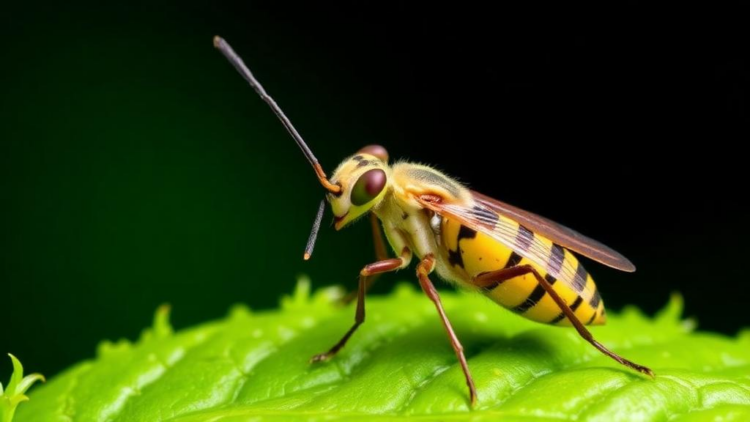
Every insect carries an invisible cargo of microorganisms. Bacteria, fungi, and other microbes live on the cuticle, in the gut, in the hemocoel, and even inside specialized cells called bacteriocytes, forming partnerships that can determine whether an insect thrives or perishes. A new review published in the journal Crop Health argues that these intimate relationships, collectively known as insect–microbe symbioses, represent one of the most promising yet underexploited frontiers in sustainable pest management. Written by Chao Lv, Yan-Zhen Huang, and Jun-Bo Luan of Shenyang Agricultural University, the review synthesizes decades of research showing that the microbes insects depend upon can be turned against them, offering a route to crop protection that sidesteps many of the environmental and health costs of chemical pesticides. As global agriculture faces mounting pressure to feed a growing population while reducing its ecological footprint, the timing of this synthesis could hardly be more significant.
The logic behind symbiosis-based pest control rests on a fundamental biological reality: insects with nutritionally unbalanced diets often cannot survive without their microbial partners. Sap-feeding insects in the order Hemiptera, which includes some of the world’s most devastating agricultural pests, consume plant phloem that lacks essential amino acids and B vitamins. Their symbiotic bacteria synthesize these indispensable nutrients, allowing the insects to flourish on diets that would otherwise be lethal. Tsetse flies and bed bugs, which feed on B-vitamin-deficient vertebrate blood, harbor symbionts such as Wigglesworthia morsitans and Wolbachia that manufacture these vitamins for them. Storage pests like the cigarette beetle and the drugstore beetle, along with the African cotton stainer, similarly rely on bacterial partners for vitamin production. In leafhoppers, the division of labor is even more elaborate: one symbiont, Sulcia, provides eight essential amino acids, while a second partner, Baumannia, supplies two additional amino acids and a suite of B vitamins. Sever these partnerships, the review suggests, and the pests collapse.
Symbionts do more than feed their hosts. They also serve as chemical bodyguards and environmental shields. The bacterium Pseudomonas living in the rove beetle Paederus fuscipes produces polyketide toxins that deter predators, while the aphid symbiont Regiella helps defend its host against the pathogenic fungus Pandora neoaphidis. Burkholderia gladioli, a symbiont of the false ground beetle, generates antibiotics that protect the host’s eggs from microbial attack. Symbionts can even buffer insects against abiotic stress: strains of Serratia and Rickettsia in the pea aphid improve survival under heat stress, and gut Burkholderia strains help stinkbugs degrade the insecticide fenitrothion, conferring resistance to chemical control. These protective and metabolic services explain why disrupting them, or weaponizing them, holds such tactical appeal for pest managers seeking alternatives to broad-spectrum insecticides.
The most mature application of symbiont-based control involves Wolbachia, a widespread bacterial endosymbiont that has already been deployed at scale against disease vectors. Wolbachia spreads rapidly through insect populations by inducing cytoplasmic incompatibility, a reproductive manipulation that makes infected males unable to produce viable offspring with uninfected females. Beyond suppressing populations, Wolbachia also interferes with pathogen transmission. Field programs have demonstrated that Wolbachia-infected mosquitoes show reduced capacity to transmit dengue virus, and laboratory work has shown that introducing virus-inhibiting Wolbachia strains into planthoppers reduces their ability to transmit plant viruses that damage rice. These successes, the review notes, provide a template for extending symbiont-based strategies from human health into crop protection, where the same principles could blunt the impact of insect-vectored plant pathogens.
Genetic engineering takes the approach a step further through paratransgenesis, the modification of symbiotic bacteria to express anti-pest or anti-pathogen effector molecules. Because symbionts already colonize and persist within their hosts, they can serve as delivery vehicles for molecules that the insects cannot avoid. Researchers have engineered Serratia, a bacterium naturally resident in the mosquito gut, to express antimalarial proteins that interrupt the infection and transmission of mosquito-borne pathogens. In honey bees, the gut bacterium Snodgrassella alvi has been genetically modified to induce RNA interference responses in the host, suppressing bee mite parasitism and altering bee physiology in controllable ways. Against Chagas disease, antitrypanosomal effector genes introduced into the midgut symbiont of the cone nose bug allow the insect to express proteins that inhibit the development of the Trypanosoma parasite within its own gut. These laboratory demonstrations, the review emphasizes, now need validation in open-field environments to confirm their real-world effectiveness.
A second strategy exploits the bioactive compounds that symbionts naturally produce. As the discovery rate of natural products from traditional sources has declined, insect-associated microbes have emerged as a rich and largely untapped chemical reservoir. One striking example comes from the malaria vector Anopheles sinensis, whose gut symbiont Serratia ureilytica Su_YN1 secretes an antimalarial lipase that kills malaria parasites, revealing a molecular mechanism that could be harnessed for disease control. Symbiont chemistry can also manipulate pest behavior rather than killing directly. The gut bacterium Pantoea agglomerans in desert locusts converts the insect’s digestive byproducts into precursors of aggregation pheromones, the chemical signals that drive the formation of devastating locust swarms. Conversely, a microsporidian parasite of locusts suppresses hindgut bacteria, thereby inhibiting pheromone synthesis and preventing swarming. In fruit flies, symbiotic Klebsiella oxytoca and Citrobacter freundii produce volatile compounds such as 3-methyl-1-butanol and 2-phenylethanol that attract female flies, offering bait candidates for trapping programs.
The third strategy is disruption: deliberately breaking the symbiotic partnership on which a pest depends. Agricultural antibiotics, which are microbial secondary metabolites that are environmentally friendly and easily degradable, have shown promise here. Specific fungicides significantly reduce populations of yeast-like symbionts in the brown planthopper, a major rice pest, increasing the insect’s mortality, and the antibiotic zhongshengmycin inhibits three of the planthopper’s symbionts, suggesting that combining antimicrobial agents with chemical pesticides could improve control of this notorious pest. A more surgical variant targets horizontally transferred genes, sequences that insects have acquired from bacteria and that complement functions their symbionts can no longer perform. In whiteflies, horizontally transferred genes provide biotin and cooperate with the symbiont Portiera in lysine synthesis, boosting fecundity. Researchers have used an engineered begomovirus vector to silence these genes in whiteflies, successfully repressing pest performance in both laboratory and greenhouse trials. Symbionts can also be hijacking points for pathogen control: Rice Dwarf Virus binds to the outer membrane of the leafhopper symbiont Sulcia through a specific capsid protein interaction, and antibodies or antibiotics targeting that membrane protein can block viral transmission.
None of this is without obstacles, and the review is candid about the challenges. Engineered symbionts must remain genetically stable and persist within their hosts; modifications intended to enhance pest control can impair a bacterium’s ability to colonize, eroding efficacy over time. Environmental adaptability is another hurdle, since symbionts sensitive to temperature, humidity, or sunlight may fail under field conditions, as illustrated by the heat-sensitive gut symbionts of the green vegetable bug Nezara viridula. Non-target effects loom equally large: generalist microbial agents could harm beneficial insects or destabilize ecosystems, whereas specialist agents, by analogy with selective algicidal bacteria, might spare them. Resistance is a further concern. Just as pests evolve resistance to chemical pesticides, they may mutate the genetic sequences targeted by engineered symbionts, suppress toxic effector molecules, or restructure their microbiomes to exclude engineered strains, potentially spreading resistance rapidly through populations.
The path forward, the authors argue, lies in precision and integration. CRISPR/Cas9-based tools could enable on-demand gene activation or repression within symbionts, allowing microbes to respond dynamically to the presence of pests or pathogens, while synthetic biology may yield adaptive strains that maintain efficacy as pest populations evolve. Multi-strain microbial consortia, each targeting a different pest pathway, could add redundancy and reduce the chance of resistance. Long-term ecological monitoring and field trials will be essential to track the spread and stability of engineered microbes and to detect any cascading effects on biodiversity. Ultimately, the review concludes, symbiosis-based strategies will be most powerful not as standalone replacements for pesticides but as components of integrated pest management, woven together with biological control agents, crop rotation, habitat manipulation, and the judicious use of chemicals. If that integration succeeds, the smallest partners of the insect world may become some of agriculture’s most valuable allies.
Subject of Research: Insect–microbe symbiosis-based strategies for managing insect pests and their transmitted pathogens
Article Title: Insect‒microbe symbiosis-based strategies offer a new avenue for the management of insect pests and their transmitted pathogens
Article References: Lv, C., Huang, Y.-Z., & Luan, J.-B. (2024). Insect‒microbe symbiosis-based strategies offer a new avenue for the management of insect pests and their transmitted pathogens. Crop Health, 2(1), Article 18. https://doi.org/10.1007/s44297-024-00038-9
Image Credits: AI Generated
DOI: 10.1007/s44297-024-00038-9
Keywords: insect symbiosis, symbiotic microorganisms, pest control, Wolbachia, paratransgenesis, brown planthopper, whitefly, horizontal gene transfer, agricultural antibiotics, integrated pest management, sustainable agriculture, CRISPR
Cite Scienmag News
APA MLA Chicago
Gavin Prescott. (October 3, 2026). Turning Insect Microbes Against the Pests That Threaten Global Crops. Scienmag. https://scienmag.com/turning-insect-microbes-against-the-pests-that-threaten-global-crops/
Gavin Prescott. “Turning Insect Microbes Against the Pests That Threaten Global Crops.” Scienmag, 3 October 2026, https://scienmag.com/turning-insect-microbes-against-the-pests-that-threaten-global-crops/. Accessed 3 October 2026.
Gavin Prescott. “Turning Insect Microbes Against the Pests That Threaten Global Crops.” Scienmag. October 3, 2026. https://scienmag.com/turning-insect-microbes-against-the-pests-that-threaten-global-crops/
Copy citation Download RIS
Tags: agricultural antibioticsbiological pest managementbrown planthopperCRISPRcrop health and microbial relationshipsenvironmentally friendly pest managementglobal agriculture pest challengeshorizontal gene transferinsect symbiosisInsect-microbe symbiosis for pest controlintegrated pest managementmicrobial partnerships in insectsmicrobiome influence on insect survivalmicrobiome manipulation for crop protectionmicrobiota-based pest control strategiesparatransgenesispest controlreducing chemical pesticide reliancesustainable agriculturesustainable crop protectionsymbiosis in Hemiptera pestssymbiotic microorganismswhiteflyWolbachia